
50 chicken coop
I’ve spent more dawns than I can count walking out to a noisy coop, hot coffee in one hand, feed bucket in the other. If you’re dreaming of a 50 chicken coop, you’re about to learn how to give your birds room, safety, and comfort without turning your yard into a muddy mess or a fox buffet.
Let me walk you through what actually works on a real American farmyard, not in a glossy catalog photo.
Let me see options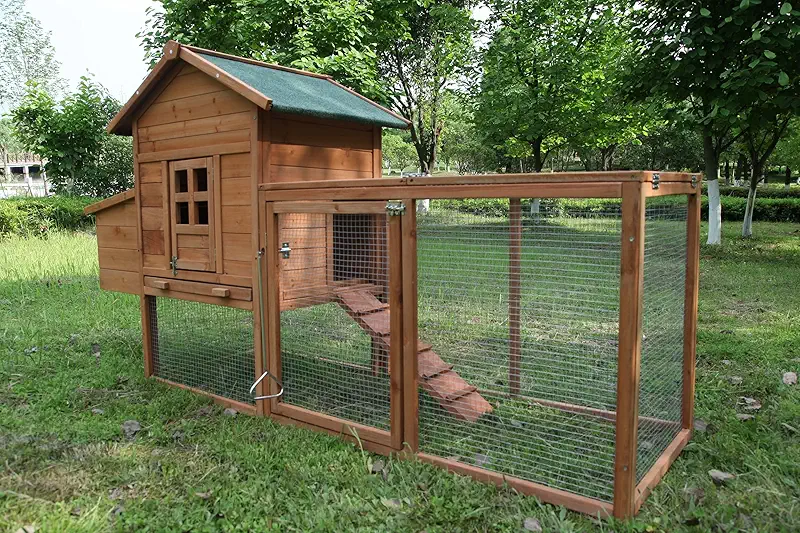
How Big Should A 50 Chicken Coop Really Be?
On paper, folks will tell you “3–4 square feet per bird inside the coop, 8–10 in the run.” That’s a nice start. But birds don’t live on paper; they live in mud, dust, snow, and summer heat.
For a 50 chicken coop, I think in real-world space, not just numbers. When I first bumped my flock up to fifty hens, I thought I was being generous with space. Turned out my birds disagreed, loudly, and with a lot of feather pulling.
Here’s what has worked well for me:
- Inside the coop: 200 sq ft is my bare minimum for 50 hens. 250 sq ft is better.
- Outdoor run: At least 500 sq ft, but 700–800 makes behavior much calmer.
- Roosting space: Around 8–10 linear feet of roost per 10 birds, so 40–50 feet total.
- Nest boxes: 1 box for every 4–5 hens. Around 10–12 boxes for 50 ladies.
If you keep your birds confined more often (cold winters, heavy predators, small yard), lean toward the bigger numbers. Chickens forgive a lot of things; crowding is not one of them.
Choosing A Style For Your 50 Chicken Coop
When people ask me what kind of coop they should use for fifty birds, I answer with a question: “How much do you like chores?” The more awkward the layout, the more you’ll mutter under your breath on a cold, wet morning.
For a larger flock, I usually recommend walk-in coops you can stand inside. Crawling on your knees under a low roof to grab an egg behind a stubborn hen gets old fast, especially when she pecks your knuckles.
Common layouts that work for a 50 chicken coop:
- Barn-style coop: Simple rectangle, full-height door, easy to clean with a shovel or broom.
- Modular panel coop: Pieces you can add on later if your flock “accidentally” grows.
- Raised coop on stilts: Good for wet ground, gives shade under the coop.
I lean barn-style because I’m not as young as I once was, and my back thanks me every time I can work upright. Good ventilation up high and solid walls down low is my sweet spot.
I’ll check some coops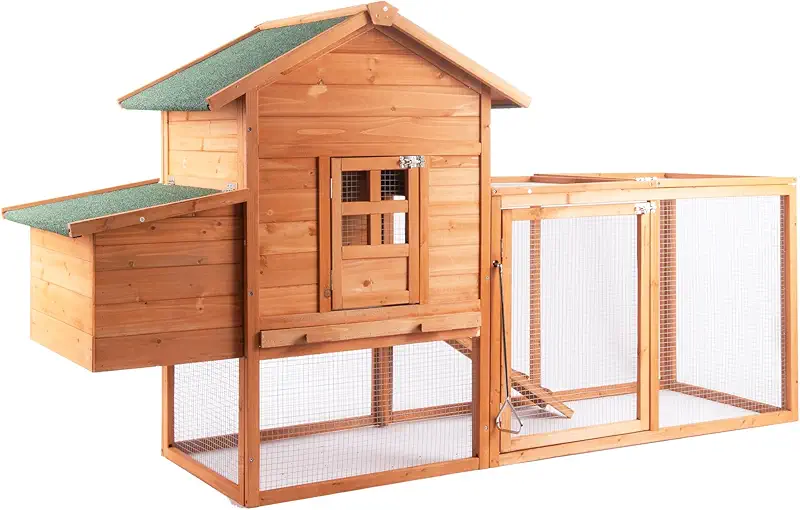

Predator-Proofing A 50 Chicken Coop
Let me tell you, every predator in the county sends a group text as soon as you set up a 50 chicken coop. Raccoons, foxes, coyotes, hawks, neighborhood dogs – they all figure out pretty quick that you’ve opened a hen buffet.
I lost some good birds in my early days by trusting flimsy wire and wishful thinking. Now I build as if the predators have bolt cutters and a toolbox.
Here’s what I insist on these days:
- Hardware cloth, not chicken wire. Chicken wire keeps chickens in; it does not keep predators out.
- Buried apron: Wire skirt at least 12–18 inches out from the run, buried or staked down.
- Solid latches: Use two-step latches raccoons can’t easily figure out. They’re clever little bandits.
- No big gaps: If a rat can get in, it will. If a weasel can squeeze in, it will.
- Lockdown at dusk: Automatic doors help when you can’t be there exactly at dark.
I like my birds to go to bed once, not permanently. Predators don’t forgive weak spots, so take your time on this part. You’ll sleep better, and so will your hens.


Ventilation, Litter, And Smell Control
Fifty hens can turn a fresh coop into a barnyard in just a few days if you don’t plan for it. I like my coop to smell like clean straw and a little chicken, not like something you’d cross the road to avoid.
Good ventilation is the secret. Not drafts at bird-level, but steady air movement up high. Moist air is your enemy in winter; that’s what gives you frostbite on combs.
In my bigger coops I use what I call the “lazy farmer method”:
- Deep litter bedding: Start with several inches of dry shavings or chopped straw.
- Regular top-ups: Add fresh bedding when things look messy, rather than stripping it all out each time.
- Big clean-outs: Once or twice a year, I pull everything, lime the floor, and start fresh.
- Dry first: Wet spots from leaks or drinkers get cleaned immediately. Wet plus manure equals stink.
With a 50 chicken coop, moisture and ammonia can build fast. If you walk in and your eyes sting, your birds’ lungs are already complaining. Fix the air, not just the smell.

Nesting Boxes, Roosts, And Layout That Actually Works
With fifty hens, mornings can feel like rush hour at the egg station. If you don’t give them enough cozy, quiet spots and strong roosts, they’ll make their own plans – and you’ll be hunting eggs in hay bales and under bushes.
For a 50 chicken coop, here’s the setup that’s treated me well:
Nesting Boxes
- 10–12 boxes, each about 12x12x12 inches, slightly dark and private.
- Mounted lower than the roosts so hens don’t sleep in them.
- Low lip at the front to keep bedding and eggs from rolling out.
- Soft, dry bedding – I like a mix of shavings and straw.
Even with a dozen boxes, you’ll still have a line of hens waiting for “the favorite box.” Chickens are stubborn like that. As long as eggs are clean and not getting broken, I let them argue it out.
Roost Bars
- Round or slightly rounded 2x4 boards laid flat so they can cover their toes in winter.
- All roosts at similar height so there’s less fighting over “high spots.”
- Enough length so each hen gets about 8–10 inches.
I place droppings boards or pans under roosts in my larger coops. Takes me ten minutes in the morning to scrape them clean and the whole coop stays fresher. Future you will thank current you for that little habit.


Feeding And Watering Fifty Hens Without Chaos
A 50 chicken coop at feeding time is something to see – feathers flying, everybody talking at once, and all of them convinced they’re starving. I’ve tried a lot of different setups, and a few have failed in “real chicken conditions.”
What I’ve learned:
- Multiple feeders: Two or three large feeders beat one giant one. Keeps bullies from guarding the food.
- Hang them chest-high: Cuts down on scratching and waste.
- Plenty of water points: In hot weather, I run at least three drinkers for 50 hens.
- Shade for water: Cool water gets drunk; hot water gets ignored.
I also toss a little scratch grain late afternoon, not too much. It keeps them busy, warms them for the night, and gives me an excuse to stand there and enjoy their company for a few minutes. Free therapy, paid in eggs.
My First 50 Chicken Coop: What I’d Do Differently Now
When I built my first coop for fifty birds, I was younger, poorer, and stubborn. I figured if I could hammer it together, it was “good enough.” The hens quickly explained otherwise.
Mistakes I made on that first big coop:
- Too few windows. Humidity climbed, and so did respiratory issues.
- Doors too small. Carrying out big waterers felt like wrestling a bull through a dog door.
- Low roof. I hit my head more than the rafters deserved.
- Run on a low spot in the yard. Every rain turned it into a chicken swamp.
I fixed each of those over time – cut more vents, changed door swings, raised a new run on higher, drier ground. I also learned that for a 50 chicken coop, planning for “future me” is more important than building for “today’s budget.”
These days, when I look at ready-made coops or plans, I ask myself:
- “Can I clean this fast on a winter morning before work?”
- “Can I fetch a sick bird from the far corner without crawling?”
- “Will this hold up to three good winters and one bad one?”
If the answer is yes to those, I’m interested. If not, I keep walking.
Show me sturdy onesFrequently Asked Questions About A 50 Chicken Coop
If you’re ready to turn that idea in your head into a real, working 50 chicken coop, take your time, trust your common sense, and choose something that will still make you smile on a cold, muddy morning.
I want to see coops