How Big Should A 6-8 Chicken Coop Really Be?
When folks ask me about a 6-8 chicken coop, the first thing they ask is, “How much space do I really need?”
I smile, because I once tried to squeeze eight hens into a tiny little coop the catalog swore was “spacious.”
The catalog lied. The chickens told me the truth. Loudly.
For laying hens, I like to see at least 4 square feet of indoor coop space per bird.
For 6–8 chickens, that means:
- 24–32 square feet inside the coop (for sleeping and bad weather days)
- 8–10 square feet per bird in the run, if they’re not free-ranging much
So if you’re looking at a 6-8 chicken coop, something around 4x6 feet or 4x8 feet inside
is a solid, practical size. Bigger never hurts. Cramped birds get cranky, and cranky birds start pecking,
and that turns into a whole soap opera you don’t want to watch.
Farmer tip: If a product says “up to 8 chickens,” I read that as
“comfortably fits 4–6 hens” unless the measurements prove otherwise. Marketing people
don’t have to clean up chicken drama. You do.
If you plan to keep heavier breeds like Orpingtons or Brahmas, aim for the higher end of the size range.
Smaller, lighter breeds like Leghorns can get by with less, but I still like to give them elbow room.
Or wing room, I guess.
What I Look For In A 6-8 Chicken Coop
Over the years I’ve built coops out of scrap wood, old sheds, and one questionable playhouse
the grandkids outgrew. I’ve also tested a bunch of ready-made coops sized for 6–8 hens.
No matter where the coop comes from, I always check the same basics.
| Feature |
What Actually Matters |
| Floor space |
At least 4 sq ft per bird indoors, more is better. |
| Run size |
8–10 sq ft per bird if they’re locked in most days. |
| Nest boxes |
1 box for every 3–4 hens. For 6–8 hens, 2–3 boxes. |
| Roost bars |
8–10 inches of roost per bird, higher than nest boxes. |
| Ventilation |
Openings up high, covered with hardware cloth, no drafts at chicken level. |
| Predator proofing |
Strong locks, buried wire around the run, real hardware cloth, not thin mesh. |
In a 6-8 chicken coop, layout makes a big difference too. I prefer:
- Nest boxes low and off to one side
- Roost bar higher than the nest boxes
- Pop door that opens into a dry run, not a mud pit
- Human-size door big enough for a shovel and a bucket
One winter I learned the hard way that a tiny access door means you spend twice as long
scooping out bedding and half as long feeling your fingertips. So when you pick a 6-8 chicken coop,
don’t just think about the hens. Think about future you, out there in the cold, cleaning it.
Choosing A Style: Walk-In Or Compact 6-8 Chicken Coop?
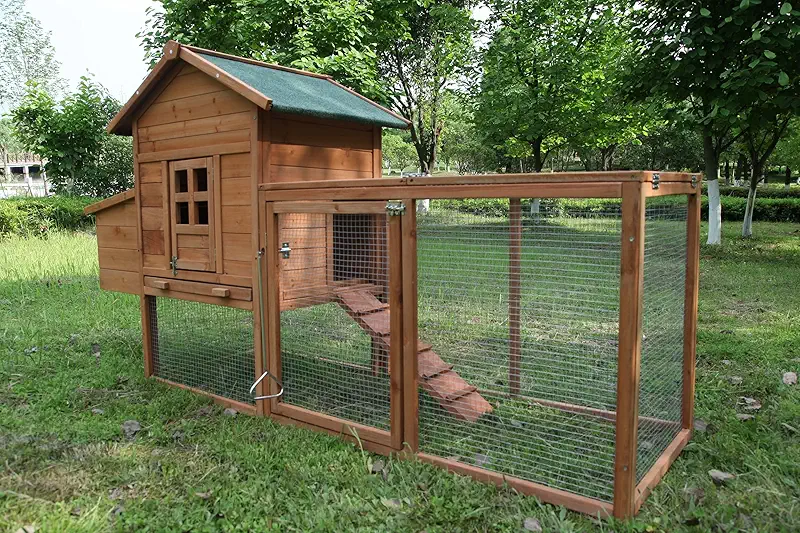
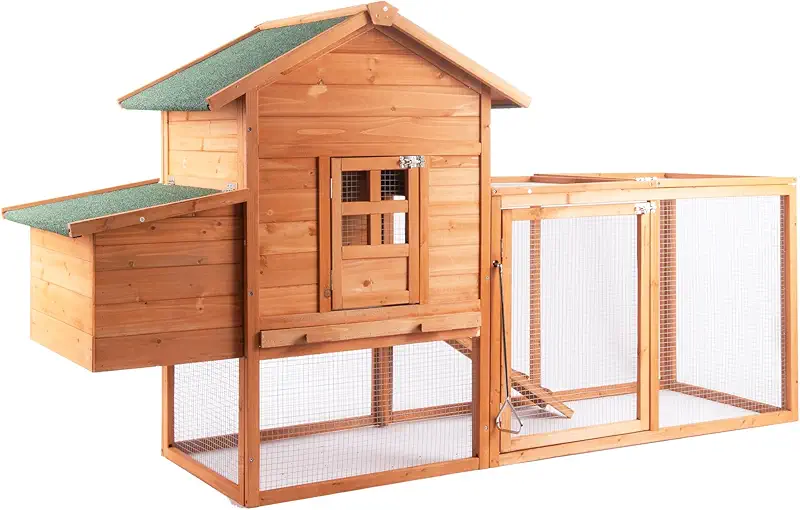
For a small flock, you’ll usually be choosing between a compact raised coop with an attached run
and a walk-in coop or small shed. I’ve used both with 6–8 hens, and each has its place.
Raised Coops With Attached Run
These are the classic “backyard coops” you see in photos. The hens sleep in the upper house,
and there’s a run under and beside it. They’re tidy and fit nicely in a suburban yard.
- Good if you’re short on space
- Easy to keep the floor dry and off the ground
- Looks nice if the neighbors are watching
- Run sometimes a bit small for 8 full-size hens
Walk-In Coops And Small Sheds
A walk-in 6-8 chicken coop is my personal favorite. When you can stand up inside, life gets easier:
easier to clean, easier to grab a hen that’s acting off, and easier to adjust roost bars or hang a feeder.
- Great for cold climates and deep litter bedding
- Room for storage of feed, buckets, and grit
- More forgiving if you “accidentally” add a few more hens later
- Takes up more yard space and can cost more
If you think chickens might turn from a little hobby into a big habit,
a walk-in style coop for your 6–8 hens gives you breathing room. I never met a chicken keeper yet
who didn’t say, “Maybe just two more hens…” at least once.
Setting Up A Healthy Home For 6–8 Laying Hens
A good 6-8 chicken coop is more than boards and screws. It’s a little house that keeps your
hens healthy, dry, and stress-free. When the coop is right, egg production usually follows.
Ventilation Without Drafts
Chickens breathe out a lot of moisture. In winter, that moisture can freeze on combs and cause frostbite,
even when the air temperature isn’t that bad. That’s why I like:
- Vents up high under the eaves, covered with hardware cloth
- A window you can crack on milder days
- No strong wind blowing across the roost at night
In a 6-8 chicken coop, you don’t need a fan or anything fancy, just smart openings up high
so warm, damp air can escape without chilling the birds.
Bedding That Actually Works
I’ve tried straw, pine shavings, and once, in a moment of weakness, old newspapers.
Don’t do the newspaper thing. It turns into a slippery mess. For a coop this size, I like:
- Pine shavings for most folks: easy to clean, smells decent
- Straw or hay only if you can keep it dry and fluffed
- Deep litter (building layers over time) if you don’t mind a little extra know-how
With 6–8 hens, I usually do a light cleanout weekly in summer and a deeper clean monthly,
unless they’ve decided the nest boxes are a public restroom again.
Feed, Water, And Daily Rhythm
Your coop is also where the routine happens. For a small flock:
- Keep feed in a hanging feeder at chest height, so they don’t scratch it out
- Use clean, fresh water every day, more often in summer
- Offer oyster shell and grit free-choice in separate containers
When you set up a 6-8 chicken coop, leave room to walk, even if it’s just one narrow path.
If you have to yoga your way around feeders and waterers, you won’t enjoy caring for the birds
as much as you should.
Predator-Proofing A 6-8 Chicken Coop
Out here, everything seems to like chicken. Fox, raccoons, hawks, stray dogs, you name it.
A small flock in a 6-8 chicken coop is the perfect size for a hungry raccoon family supper,
unless you make things difficult for them.
The Hardware Cloth Rule
I only trust hardware cloth (that stiff wire mesh) for openings and runs.
Chicken wire is fine to keep chickens in, but not to keep predators out.
- Cover windows and vents with 1/2" hardware cloth
- Use strong latches or carabiners that raccoons can’t twist open
- Check every corner of the coop and run for gaps bigger than a finger
Protecting The Run
For a 6-8 chicken coop with a fixed run, I like to:
- Run hardware cloth down at least 12 inches below ground, or
- Lay a 24-inch apron of hardware cloth flat on the ground outward from the run
- Use a solid roof or strong netting on top if hawks are around
One summer I skipped burying the wire on a new run. The foxes sent me a thank you note in the form
of an empty coop. I haven’t skipped that step since.
My Routine For A 6–8 Hen Flock
Taking care of 6–8 laying hens doesn’t have to eat your day. With a well-thought-out coop,
you can be in and out in a few minutes, with time left to drink your coffee before it goes cold.
Morning
- Open the coop door and let them into the run or yard
- Top off clean water and check the feeder
- Quick look at each hen: bright eyes, clean vents, moving well
Evening
- Count heads on the roosts (I like to count “one, two, three” out loud; hens don’t mind)
- Close and latch all doors and windows
- Grab any late eggs and check nest boxes for messes
Weekly
- Freshen bedding where it’s damp or smelly
- Rinse waterers and scrub if there’s slime
- Look over the coop for signs of chewing, digging, or leaks
A tidy, sturdy 6-8 chicken coop makes it much easier to build habits like these.
When the coop is a pain to use, people cut corners. The birds pay the price,
and sooner or later, so does the egg basket.
Seasonal Care: Keeping 6–8 Hens Comfortable Year-Round
Chickens handle cold better than heat, but your coop still has to help them out
through the seasons. A 6-8 chicken coop is small enough that temperature swings
show up pretty fast.
Winter
In winter, I focus on dry, draft-free, and well-ventilated. I don’t worry
too much about making the coop warm like a house.
- Extra dry bedding on the floor and in nest boxes
- Make sure vents are open but above roost height
- Use wide roosts (like a 2x4 laid flat) so hens can cover their toes
Summer
Heat is tougher on chickens than cold. For hot days:
- Open every safe vent and window you can
- Provide shade over at least part of the run
- Keep water in the shade and refill often
For both seasons, a coop that’s easy to open up and easy to close tight is worth its weight in eggs.
When you look at a 6-8 chicken coop, picture it in the hottest week of July and the coldest week of January.
Common Mistakes Folks Make With A 6-8 Chicken Coop
After watching neighbors, friends, and my own younger self make a mess of things,
I see the same mistakes with small coops over and over.
- Trusting the “chicken capacity” number instead of the actual measurements.
- Ignoring ventilation because “it’ll be too cold in winter.”
- Too little run space, so hens start pecking and bullying.
- Building on low, soggy ground and then fighting mud forever.
- No plan for cleaning, then dreading every coop day.
I’ve made most of those mistakes once. Only once, though. Chickens are good teachers
if you pay attention. When you pick or build a 6-8 chicken coop, try to learn
from others’ missteps instead of having to live them yourself.
Bottom line: For 6–8 hens, you want a coop that’s sturdy, roomy enough,
easy to clean, and simple to secure. Fancy colors and cute trim don’t matter much to a hen.
Dry bedding, fresh air, and safe roosts do.
Picking The Right 6-8 Chicken Coop For Your Yard
Every yard and every family is different. The “perfect” 6-8 chicken coop for me,
out on several acres, might not be right for a fenced suburban yard. When you look at different options,
think about these questions:
- How much room do you really have for a coop and run?
- Will the hens free-range at all, or stay mostly in the run?
- Who will clean and care for the birds most days?
- What kind of predators do you have around?
Answer those honestly, and a lot of choices make themselves. A sturdy, well-ventilated coop that fits your space
and your routine will serve you and your flock for many years. And if you’re anything like me,
those first 6–8 hens won’t be your last.
I’ll browse some coops