
A frame chicken coop
I’ve been raising hens out here in the States long enough to have more gray hair than I planned on. Over the years I’ve tried just about every style of coop you can think of, from old garden sheds to fancy walk‑ins. The a frame chicken coop keeps coming back as one of my favorites, especially when folks want something simple, sturdy, and easy to move.
On our place, the A‑frame style has seen blizzards, sideways rain, summer heat, and one very determined fox who still looks annoyed when he walks by it. In this guide I’ll talk to you like I would to a neighbor over the fence, sharing what has worked, what hasn’t, and how an A‑frame can make your hens happy and your chores lighter.
I’m not here to impress you with big words. I’m here to help you get more good eggs and fewer headaches. If that sounds about right, grab your coffee and let’s walk through what makes an a frame chicken coop such a handy little workhorse.
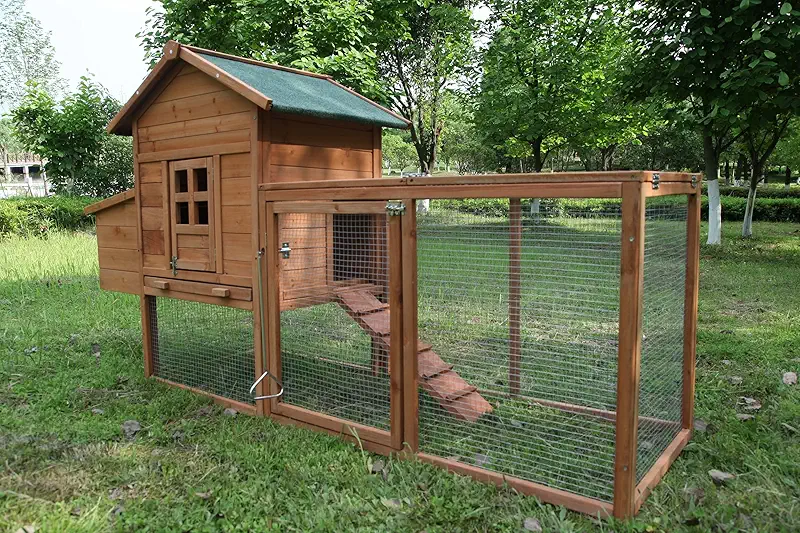
Why an A frame chicken coop just works
The basic shape is like a little roof all the way to the ground, forming a triangle. That slope sheds rain and snow better than some houses I’ve seen. When wind hits it, the air just rolls up and over instead of slamming into a big flat wall. Out here, where a breeze can turn into a full‑on shove, that makes a difference.
I still remember one winter storm that snapped branches and knocked over trash cans down the road. I walked out next morning expecting a mess. That old A‑frame was sitting there like nothing happened, hens clucking for breakfast, looking at me like, “You’re late.” That’s when this simple little shape earned my respect.
Main perks of an A‑frame
- Strong against wind thanks to the low profile.
- Sheds rain and snow quickly, so it dries fast.
- Simple frame, usually lighter and easier to move.
- Great for small flocks in backyards or homesteads.
- Less lumber than many big “barn style” coops.
Things to keep in mind
- Interior headroom can be tight for tall folks.
- Ventilation must be planned, not guessed.
- Access doors need to be smart, or cleaning is a pain.
- Space is best for smaller flocks, not huge operations.
- Predator protection depends on good hardware cloth and latches.
None of those drawbacks are deal breakers. They just mean you need to choose or build your a frame chicken coop with your land, your weather, and your usual chore routine in mind. I’ll walk you through exactly what to look for so you don’t end up crawling on your knees with a shovel, mumbling words your grandmother wouldn’t approve of.
How many hens fit in an A frame chicken coop?
The first mistake I see folks make is stuffing too many hens into a little triangle and then wondering why the egg basket is light and the hens are cranky. Crowded birds peck, stress, and stop laying. I’ve learned that the hard way, and so have my fingers.
As a rule of thumb, aim for about 4 square feet of indoor coop space per standard hen. If your A‑frame has a run attached underneath or on the sides, give them at least 8–10 square feet of outdoor run per bird, more if you can.
Simple sizing guide I use
- 2–3 hens → small compact A‑frame.
- 4–6 hens → medium A‑frame with attached run.
- 8–10 hens → larger, often walk‑in A‑frame, or multiple smaller units.
Bantams can handle a bit less space, big heavy breeds like Brahmas need more elbow room.
Out here I keep my A‑frame coops mostly for small groups: a breeding trio, a group of pullets, or a handful of older “retired ladies” I still spoil with the good scraps. When I stick to generous space numbers, the hens stay calmer, and egg production stays steady instead of boom‑and‑bust.
Key features to look for in an a frame chicken coop
Whether you’re building your own or looking at ready‑made options through this selection of coops, there are a few things that make daily life a whole lot easier. These are lessons paid for in sweat, splinters, and one memorable incident involving a low doorway and a shovel handle.
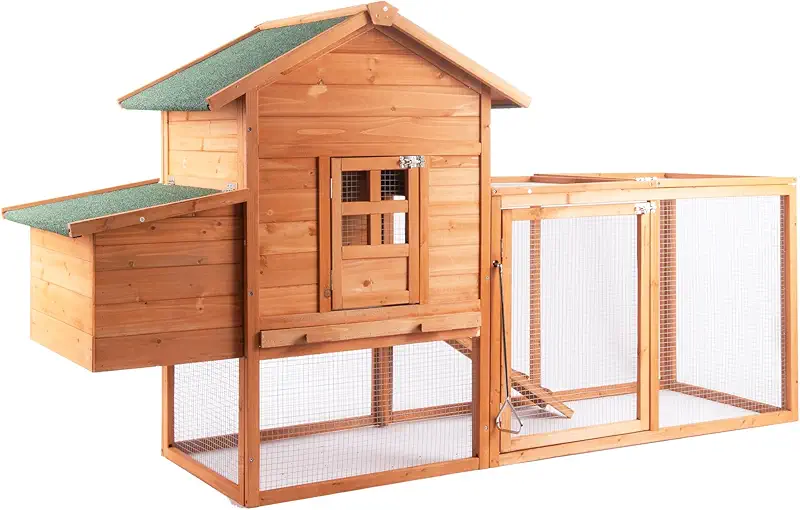

1. Solid floor and easy clean‑out
I like a coop where I can either pull out a tray or swing open a big door and rake everything into a wheelbarrow. Some A‑frames put the sleeping area up high with a pull‑out dropping tray. That keeps the mess off the ground and makes cleaning quicker than a short summer rain.
If the coop floor is wire, be sure the mesh is gentle enough for feet. Bare wire under roosts can be hard on hens if it’s too open. For my birds, I prefer a solid floor with deep bedding.
2. Ventilation without drafts
Chickens handle cold better than damp, stale air. A good a frame chicken coop has vents up high under the peak where warm, moist air can slip out, while the hens sit lower in calmer air.
Any opening bigger than your thumb should be covered with hardware cloth, not chicken wire. Chicken wire keeps chickens in. Hardware cloth keeps predators out. There’s a big difference.
3. Safe, simple latches
Raccoons have more patience and better hands than most toddlers. Use latches that take two motions to open, or carabiners on simple hasps. I once lost birds to a coon that worked out a cheap latch, and I still don’t forgive myself for that.
When you look at a coop, picture your tired self in the dark, in the rain, closing it up. If the latch looks fiddly even when you’re dry and rested, pick a different design.
4. Run height and access
Many A‑frames put the run under the sleeping area. That’s handy, but make sure you can reach into every corner. Birds always seem to lay an egg in the one spot you can’t reach if you give them the chance.
Side doors or big lift‑up panels on the run area make life much easier, especially when you need to catch a hen who has decided she does not want her medicine today.
Setting up your A frame chicken coop for happy laying hens
The shape of the coop is just the start. How you set it up inside matters just as much. I’ve seen folks blame the coop when the real problem was no nesting boxes, poor roosts, or bedding that looked like a dust storm waiting to happen.


Nesting boxes that actually get used
Hens love dark, quiet corners. In an a frame chicken coop, nesting boxes usually sit along one side or at the back with an outdoor access door. That’s handy, but make sure the boxes are a little lower than the roosts, or your hens will sleep in them and you’ll collect poop instead of eggs.
I aim for one nest box for every 3–4 hens. They’ll all try to lay in the same favorite box anyway, but having extras prevents arguments. A bit of fake egg or a golf ball in the boxes helps train new layers where to go.
Roosts: where hens sleep safe
Chickens are happier sleeping up off the ground. In an A‑frame, roosts usually run along the length of the coop, a little below the peak. Use wide wooden roosts, about the width of a 2x3 or 2x4 with the wide side up, so they can sit and cover their toes in cold weather.
Don’t stack roosts like a ladder where the birds on top poop on the ones below. Either make them all the same height or step them so droppings fall clear. I learned that lesson, and so did the poor hen who picked the low spot.
Bedding and cleaning routine
In the sleeping area of my a frame chicken coop, I like a good layer of pine shavings or chopped straw. I stir it every day or two, and top it up as needed. About once a month, or sooner if it gets damp, I do a full clean‑out.
If your A‑frame has a pull‑out tray under the roosts, you can scrape and dump that into your compost pile in a few minutes. Chicken manure, mixed with bedding, turns into garden gold after it sits and breaks down. Spread it raw and you’ll “burn” plants, so give it time.
Where to place your A frame chicken coop on the property
A good coop in a bad spot can still cause headaches. I’ve moved my a frame chicken coop more times than I care to admit. The hens probably thought they were on some kind of slow‑motion road trip.


Sun and shade balance
Hens like morning sun to dry things out and get them moving, but they also need shade in big summer heat. I try to face the open side of the coop toward morning sun and give them some afternoon shade, either from a tree, a fence, or a simple shade cloth.
Drainage and mud control
Never park an A‑frame in a low spot that turns into a puddle. Wet ground means muddy feet, worms, and more smell than you want near the porch. A gentle slope with good drainage keeps the run dry and the hens healthier.
Predator paths
Look around at where predators travel: tree lines, fence rows, creek beds. I keep my a frame chicken coop in more open sight lines, where a coyote or fox feels a little exposed walking up. A motion light never hurts either.
Human convenience
Last but not least, think about the tired version of you carrying a water bucket at dusk. Don’t make yourself hike across the back forty every morning and night. A coop that’s easy to get to is a coop that actually gets cared for on the bad weather days.
Mobile A frame chicken coops: pasture on a schedule
One of my favorite uses for an A‑frame design is as a mobile coop, sometimes called a “chicken tractor.” With a lighter frame and a pair of handles or wheels, you can move your hens to fresh grass every day or two. They fertilize the ground, eat bugs, and you get cleaner eggs and happier birds.
My grandkids think moving the a frame chicken coop is like driving a slow little train. I tell them it’s more like steering a shopping cart full of flapping groceries—takes some practice, but you get there.

When you’re looking at mobile A‑frames, pay close attention to weight and balance. Too heavy and you’ll dread moving it. Too light and a strong gust might drag it or flip it. I like coops with skids or small wheels, and a long enough handle that I don’t have to bend like a pretzel.
Rotating the coop across a yard or pasture also helps break up parasite cycles. The hens don’t stay parked on the same patch of ground long enough for problems to build up. That’s yet another reason this simple triangle design has earned a permanent place on my farm.
Frequently asked questions about an A frame chicken coop
In most of the U.S., yes, if you set it up right. Chickens handle cold better than wind and damp. With solid walls, good bedding, draft‑free vents up high, and a windbreak on the windiest side, an a frame chicken coop keeps hens comfortable. In real deep‑freeze country, I add extra straw, a tarp windbreak outside, and make sure water doesn’t freeze solid on them.
If the design has good access doors or a pull‑out tray, it’s pretty simple. I like coops where I can open a big panel and rake out bedding in a few minutes. Small side doors that make you reach and twist are a pain. When I look at an A‑frame, I ask myself, “Can I clean this in my chore boots without crawling?” If the answer is no, I keep looking.
They can be. Many folks use an a frame chicken coop as a safe night shelter while letting hens free range during the day. The coop gives them a dry place to roost and lay, and the run area underneath works as a backup for days when you want them contained. Just remember, if your birds free range, predators can too, so stay on top of closing the coop at dusk.
Around here we see raccoons, foxes, hawks, owls, coyotes, and the neighbor’s dog when he gets ideas. Wherever you live, assume something wants your chickens. That’s why I insist on hardware cloth on windows and vents, sturdy locks on every door, and secure edges around the base. An A‑frame is only as safe as its weak spot, so walk around it and think like a hungry raccoon.
First, count your hens and give them more room than the listing promises. Then look closely at the photos: see how the access doors open, where the nesting boxes sit, how the run is fenced, and what the frame is made from. I prefer solid wood frames, hardware cloth, and simple roofs that shed water. If you’d like to see different styles side by side, you can browse a range of a frame chicken coop options through this link and compare what matches your weather, yard, and flock size.
Final thoughts from an old farm gate
After decades of chicken chores in all kinds of weather, I’ve come to like things that are simple, sturdy, and forgiving when I’m not at my best. The a frame chicken coop checks a lot of those boxes. It doesn’t need to be fancy to keep your hens safe and laying. It just needs to be solid, dry, and easy enough that you don’t dread walking out to it.
If you give your birds enough space, good ventilation, safe roosts, and nesting boxes they can trust, they repay you in eggs and that peaceful clucking sound that makes a place feel like home. And if you pick an A‑frame that fits your yard and your back, you’ll still have energy left after chores to enjoy the sunset instead of just collapsing in a chair.
When you’re ready to look over different styles, take your time, picture your daily routine, and let plain common sense be your guide. That approach has worked well for me, and for more hens than I can count.