
Bird netting for chicken coop
Bird Netting For Chicken Coop
If you care about your hens like family, a good layer of bird netting over the coop and run is one of the kindest things you can give them. Let me walk you through it like we were leaning on the fence together.
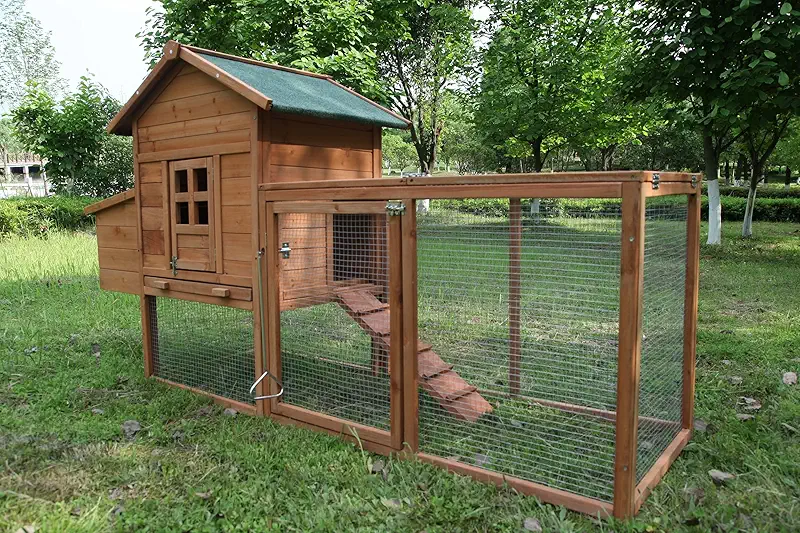
Why bird netting belongs on every chicken run
I’ve been raising laying hens here in the States long enough to measure time in molting seasons instead of years. I’ve seen hawks get bold, crows get clever, and neighborhood dogs learn to jump higher than they should. One simple tool has saved me more headaches than almost anything else: good bird netting for the chicken coop and run.
When I first started, I figured “they’re birds, they’ll just fly away from trouble.” That fantasy lasted until the day a red‑tailed hawk dropped out of the sky so fast my coffee didn’t even have time to cool. Thankfully, it missed. That same afternoon I put up bird netting. Since then, the air‑attacks have turned into nothing more than frustrated hawks circling and giving me the stink eye.
Bird netting for chicken coop setups does a few quiet, powerful things:
- Stops hawks and owls from diving into your run.
- Discourages wild birds that bring mites and disease.
- Keeps adventurous hens from flying up and out.
- Catches falling leaves and sticks instead of your head.
It’s not fancy. It’s not high‑tech. But it works, and it lets your hens scratch and sunbathe in peace. Around here, that peace of mind is worth more than a new pair of boots.
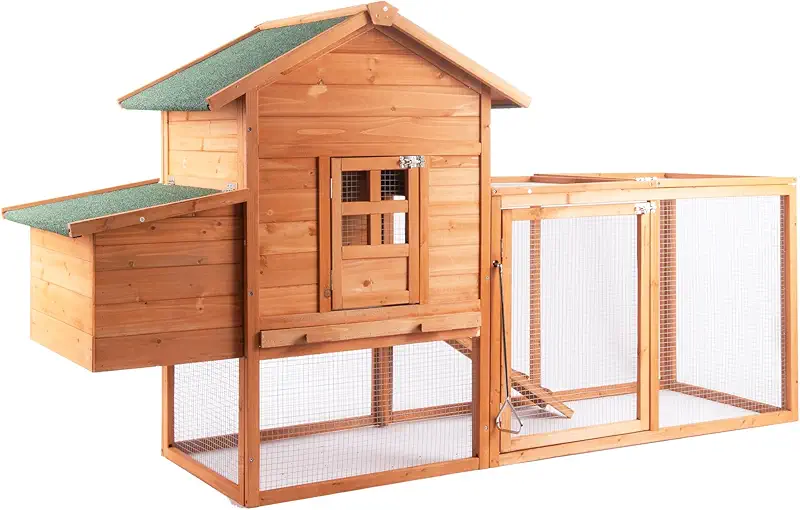
Wide, open runs like this stay much safer when they’re topped with strong bird netting. Hawks hate surprises.
Types of bird netting and what actually holds up
Not all bird netting is the same, and the cheap stuff can turn into a tangled, ripped mess faster than a raccoon at a corn buffet. Over the years I’ve tried more rolls of netting than I care to admit, and here’s what I’ve learned.
Heavy‑duty vs. flimsy garden netting
Light garden netting is fine for keeping sparrows off your strawberries, but it’s not what you want for a chicken run. Hawks hit hard. Owls land heavy. You want bird netting that:
- Feels thick and tough in your hands, not like spiderwebs.
- Has knots or sturdy joints at each square, so it doesn’t rip in long lines.
- Is UV‑resistant, so the sun doesn’t make it crumble after one summer.
On my main run, I use a heavy, square‑mesh bird netting that’s been up for several seasons. It’s seen ice, snow, hail, and one particularly angry hawk. Still up there, still doing its job, looking a little dusty but honestly, so am I.
Mesh size: small enough for hawks, big enough for sanity
For bird netting for chicken coop runs, I like mesh openings around 1 inch to 2 inches. Big enough that leaves and light snow mostly slide through, but small enough that even a determined hawk can’t squeeze its wings through.
Very tiny mesh can be a pain to work with and holds snow like a blanket. Oversized mesh lets small birds slip in and steal feed, dropping who‑knows‑what into your hens’ food. Balance is key.

A tight, even mesh makes it easier to stretch the netting without sagging pockets where snow and leaves can sit.
How I install bird netting step by step
Let me walk you through how I usually put bird netting over a coop run. You don’t need fancy tools, but you do need patience, a decent ladder, and maybe someone to stand below and say, “Careful now,” every few minutes.
1. Plan your support frame
Bird netting is only as good as what it’s attached to. On one of my earlier coops, I strung netting from fence post to fence post with nothing in the middle. Looked fine, until the first wet snow turned the whole thing into a sagging hammock full of slush.
Now I do this instead:
- Run a strong wire or rope around the top perimeter of the run.
- Add one or two cross supports, like clotheslines, across the middle.
- If the run is wide, I’ll prop up a center “ridge pole” with a tall post so rain and snow slide off.
2. Stretch the netting, don’t just toss it up
I like to unroll the bird netting along the ground beside the run first. That way I can see if it’s long enough and where the seams will fall. Then:
- Hook one corner at the far end of the run.
- Walk the roll down the length, pulling it snug but not ripping it.
- Attach it every foot or so along the top edge with zip ties or hog rings.
- Come back and tighten the loose spots so there are no big sagging pockets.
Bird netting for chicken coop setups works best when it’s stretched like a drum skin, not drooping like an old hammock.
3. Close the gaps predators love
Hawks no longer bother me much, but raccoons and climbing critters still try their luck. They look for gaps:
- Between the netting and the coop roof.
- At the gate or door corners.
- Along the back where the net meets trees or fences.
I walk the whole edge and pull the netting down a little past the top rail, then fasten it. If there’s a tricky corner, I overlap a small extra piece of netting like a patch. Predators are lazy; make it awkward, and most will give up.

Strong corner posts and a simple top frame make netting easier to stretch and keep tight all year.
4. Make a simple “people door” in the netting
One mistake folks make is sealing the top so well they can’t get in to clean or rake. Then suddenly the bird netting is “in the way” and gets cut and torn.
I do one of two things:
- Hang a small section of netting from hooks over the gate like a curtain, so I can flip it up.
- Or run the netting to a crossbar just above head height and leave the gate area open but framed.
Either way, the goal is simple: the hens stay safe, and I don’t have to wrestle netting every time I carry a bag of feed.
How bird netting protects your hens and eggs
Laying hens aren’t just egg machines to me. They’re coworkers with feathers. When they’re calm and feel safe, they lay better, eat better, and start fewer drama fights in the yard. Bird netting over the coop run plays a big role in that calm.
Shielding from sky predators
Where I live, red‑tailed hawks and Cooper’s hawks are the main troublemakers. They like to perch on the power lines and stare down at the run like it’s a drive‑thru. Once the netting went up, the script changed. Now they swoop closer, see that dark layer over the run, and peel off at the last second.
Owls, especially in winter, can be even sneakier. I’ve walked out at night and seen one sitting quietly on top of the netting, confused and annoyed. The girls never even knew it was there. That’s what I want: calm hens, frustrated predators.
Keeping wild birds and disease out
Another big reason I use bird netting for chicken coop protection is to keep wild birds out of the feed. Wild birds:
- Steal expensive layer pellets.
- Leave droppings in the feeders and waterers.
- Can bring mites, lice, and illnesses you don’t want near your flock.
Netting doesn’t stop every little sparrow, but it cuts the traffic way down. My feed lasts longer, and I don’t worry as much about what’s getting tracked into the coop.

A covered run gives hens a safe place to scratch and dust‑bathe without keeping one eye on the sky all day long.
Helping calm nervous hens
I’ve had some lines of hens that spook at every shadow. Before I added netting, a hawk flying over could set off a full‑blown panic, birds crashing into walls and piling up in corners. Not good for eggs, and definitely not good for their health.
With the netting in place, the sky looks “softer,” and those moving shadows don’t trigger such a strong fear reaction. The girls scratch, dust‑bathe, and gossip like normal, and the egg basket tells the story: steady, reliable laying, even when the hawks are active.
Pros and cons of using bird netting
Nothing on a farm is perfect. Bird netting for chicken coop runs has its strong points and its annoyances. Let me lay them out so you walk in with your eyes open.
What I love about it
- Cheap insurance compared to losing hens.
- Lightweight and easier than building a full solid roof.
- Lets in sun and rain, so the run doesn’t feel like a cave.
- Simple to cut, shape, and patch.
- Helps keep leaves and big debris out of the run.
What can be annoying
- Can sag if not supported well.
- Collects wet snow if the mesh is too small.
- Needs checking for tears after big windstorms.
- Cats and raccoons sometimes chew on loose edges.
- Cheap netting can tangle and waste your time.
Even with the small irritations, I wouldn’t run an open‑top chicken yard without bird netting again. I’ve seen what a determined hawk can do in ten seconds. Fixing a little sag in the net is easier on the heart than burying a good layer.
Maintenance: keeping your bird netting working for years
Once bird netting is up, it doesn’t need much, but “set it and forget it” isn’t quite right either. A few quick habits keep it doing its job instead of turning into farmyard decoration.
Seasonal checks I like to do
- After big wind or hail: I walk the perimeter and look for torn spots, stretched areas, or places where branches fell and pulled the net.
- After heavy snow: If I know a wet snow is coming, I sometimes tap the underside with a long pole to shake it off before it builds up.
- Each spring: I trim back tree limbs that have gotten too cozy with the netting.
Quick repairs that actually hold
I keep a small bucket of zip ties, short lengths of wire, and some leftover net scraps right in the coop shed. When I spot a problem, I fix it right then:
- Small hole? Patch it with a scrap and zip tie it around the edges.
- Loose edge? Pull it tight and tie to the nearest support.
- Saggy middle? Add a new support rope or a taller post to lift it.

Strong top rails, simple posts, and snug netting: it doesn’t need to be fancy to work all year long.
How long does good bird netting last?
The better rolls I’ve used have lasted me several years in full sun. Cheaper garden netting might give you a season or two before it starts getting brittle. For a main coop run that houses your best layers, I lean toward the heavier, UV‑resistant kind and treat it as a long‑term tool, not a throwaway.
Fitting bird netting to different coop styles
Every backyard and every farm corner looks a little different, but bird netting for chicken coop protection can be made to fit most setups if you think it through first.
Small backyard runs
For a little suburban flock of 4–6 hens, you might have a narrow run up against a fence. In that case:
- Attach netting from the fence top to the coop roof, forming a slanted “lean‑to” top.
- Use a 1–2 inch mesh so it doesn’t look too closed‑in from below.
- Keep the top high enough that you can still step inside to rake and clean.
Large walk‑in runs
Bigger flocks and walk‑in runs need more support, but the idea is the same. I like to think of it like putting a light blanket over the whole thing:
- Run sturdy posts around the perimeter at least 6–7 feet high.
- String a few rows of wire or rope across the top like rafters.
- Stretch bird netting across those rafters and secure the edges all around.
Mobile tractors and open yards
For portable chicken tractors that move over pasture, I sometimes use bird netting like a temporary lid. A light frame and some clips hold it in place during the day. At night the hens go inside the secure tractor, and I pull the netting off if storms are coming.
If you free‑range your birds without a fence at all, bird netting is trickier. In that case I like to at least give them a covered “safe zone” near the coop, with netting on top, so they have a place to dash if a hawk swings by.

Big walk‑in runs benefit the most from strong, well‑supported bird netting stretched tight overhead.
Real‑life story: the day the hawk bounced
One fall afternoon, I was splitting wood within sight of the coop. The girls were out in the run, scratching through leaves like tiny feathered tractors. Out of nowhere, a hawk came in low, hugging the tree line, fast and quiet.
I barely had time to shout when it hit the bird netting with a loud “whump,” folded its wings, and dropped to the ground outside the run, more surprised than hurt. The hens froze for a second, then went right back to scratching, like, “Well, that was weird.”
That hawk flew up to a nearby branch and stared down, clearly offended that the easy meal had turned into a brick wall it couldn’t see. It circled once more and took off. That was the day I stopped wondering if bird netting was worth the hassle.

A quiet, safe run means calmer hens, better laying, and fewer heart‑stopping moments for you.
FAQ about bird netting for chicken coop runs
For daytime attacks from above, yes, good bird netting makes a huge difference. Hawks use speed and surprise. When they see or hit that barrier, they usually give up and move on. You still need solid fencing or wire around the sides and bottom for dogs, foxes, and raccoons, but for the sky, netting does the heavy lifting.
In most backyard situations, it will. Some lighter breeds can fly pretty well, but when there’s a roof of netting above them, they learn quickly that going up isn’t worth it. You may still get the occasional escape artist, but it turns a “fly over the fence” situation into just a bit of harmless flapping against the net until you help them down.
Heavy, wet snow is the real test. That’s why support matters. Strong netting, stretched over good cross supports with a little slope, handles normal snow just fine in my experience. If I know a big, wet storm is coming, I’ll step out once or twice and tap the underside with a long pole to knock snow off before it piles up.
Used right, yes. My hens rarely bother with it at all. Every once in a while a young pullet will flap up and catch a toe or feather, but they usually drop back down with nothing more than a ruffled ego. The real trick is keeping the netting stretched tight and not leaving loose, low‑hanging loops where birds can get snagged.
Think about three things: size of your run, strength of local predators, and your weather. Bigger runs need heavier netting and more support. Lots of hawks and strong winds? Go for a thicker, UV‑resistant mesh with good knots. Heavy snow? Avoid super‑tiny mesh that holds snow like a blanket. Once you know those pieces, it’s much easier to pick a roll that fits your chicken yard instead of fighting it later.
Wrapping it up: a simple layer of safety
At the end of the day, bird netting for chicken coop runs is just a thin layer between your hens and a rough world. But that thin layer can be the difference between a relaxed flock and a yard that feels like a battlefield every time a hawk passes by.
If you’re raising hens for eggs, for family, or just for the pleasure of watching them putter around, they’re counting on you to think ahead. Strong bird netting is one of those quiet, thoughtful choices that pays you back every morning when you step outside, hear contented clucks, and see a run full of birds who feel safe enough to just be chickens.
Take a little time, measure your space, and pick the kind of netting and supports that match your yard. Do it once with care, and most days you’ll hardly notice it—until the next time a hawk circles, looks down, and decides your coop isn’t worth the trouble.