Chicken coop 15 chickens
Chicken Coop 15 Chickens
If you want a happy flock and a basket full of eggs, the right chicken coop 15 chickens is where it all begins.
I have raised laying hens most of my life out here in the American countryside, and I can tell you this: give your birds a good home, and they will pay you back in breakfast.
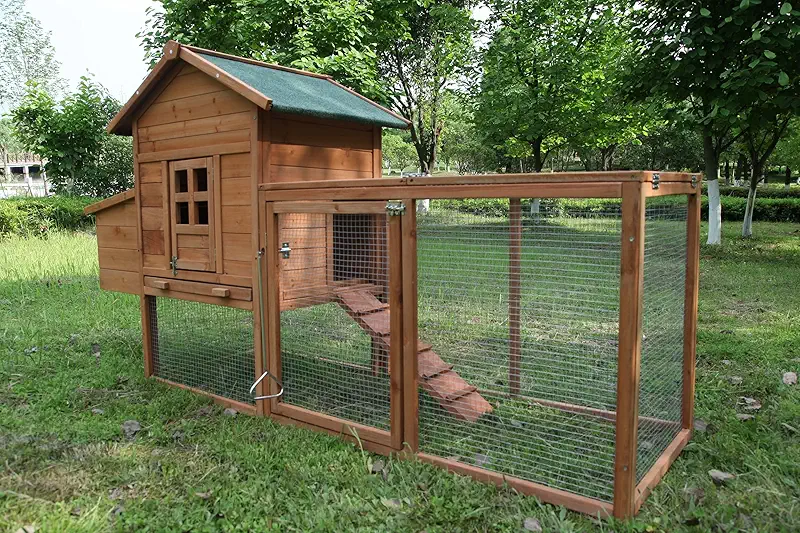
Farmer-tested advice
When folks ask me how big a coop they need for around fifteen hens, I always smile and say,
"Big enough that you are not apologizing to your birds every morning." Space, fresh air, and safety are the three big pillars.
The good news is, you do not have to build a barn to make fifteen hens comfortable, but you do have to think things through.
On my farm, I have tried tiny coops, long coops, mobile coops, and a few mistakes I would rather forget.
Over the years, I have learned what really works for a chicken coop 15 chickens set up for eggs, not headaches.
I will walk you through what has worked for me, what I would not do again, and how you can choose a ready-made coop
that fits both your birds and your backyard.
We will talk about space, roosts, nest boxes, ventilation, cleaning, predators, and a bit of farmer common sense
that does not always show up on a product page. Grab a cup of coffee, and let us plan a coop your hens will brag about.
How big should a chicken coop 15 chickens really be?
Numbers on paper are one thing, but watching birds move around is another. Inside the coop,
I like to give at least 4 square feet per hen. For fifteen hens, that means around
60 square feet of indoor floor space as a good target. You can squeeze a little tighter if they have a big run,
but do not get greedy. Crowded birds get cranky, and cranky birds peck and break eggs.
For the outdoor run, I aim for 8–10 square feet per hen at a minimum.
More is always better. If you can give them 150–200 square feet of run space, you will notice calmer birds and cleaner bedding inside.
Simple rule of thumb for 15 hens:
- Indoor coop: around 60 sq ft or more.
- Outdoor run: 150+ sq ft if you can.
- Roost space: 8–10 inches of perch per hen.
- Nest boxes: 4–5 boxes for 15 hens.
Years ago, I tried to "make do" with a smaller coop for about that many birds.
It looked fine in summer, when everybody spent the day outside, but winter told the truth.
Birds were bickering, feather picking started, and egg production dipped.
Once I gave them more room, the drama in the henhouse went down overnight.
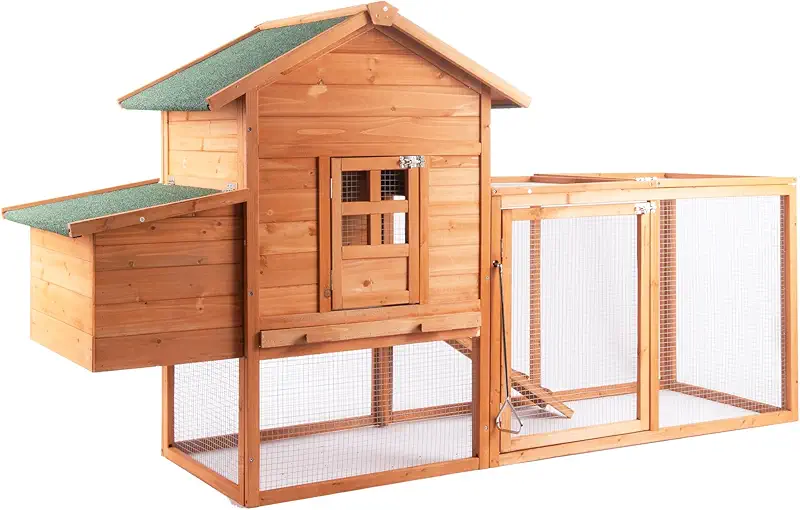
A practical chicken coop 15 chickens can share comfortably, with room to move and perch.
Key features to look for in a chicken coop 15 chickens will love
When you are choosing a ready-made coop for fifteen hens, ignore the big bold “capacity” claims for a minute.
Look closely at the details. That is where you find out whether the coop was designed by someone who has ever chased a chicken in a thunderstorm.
1. Solid frame and weather protection
Your coop should feel like a small shed, not a toy house.
Look for a sturdy frame, decent thickness on the walls, and a roof that will not cry uncle after the first winter.
I lean toward sloped metal or asphalt roofs that shed water and snow.
If the coop looks like a strong wind could move it, your birds will figure that out before you do.

A sturdy frame and tight roof keep your flock dry and calm in wild weather.
2. Enough doors and human-sized access
It is cute when a coop has little barn doors and tiny windows.
It is not cute when you are trying to clean out wet bedding through a hole the size of a mailbox.
Make sure there is at least one good-sized access door for you, not just for the chickens.
Removable trays under the roosts are a nice touch.
I used to shovel everything out by hand, and my back still sends me angry letters about that.
3. Roosts that match how chickens sleep
Chickens like to roost at night, shoulder to shoulder like folks on an old church pew.
For a chicken coop 15 chickens, you want sturdy roost bars,
ideally at a similar height so the birds do not fight over the “top bunk”.
Round or gently rounded edges are easier on their feet than sharp 2x2s.

Thoughtful roost and nest box layout makes bedtime calm and egg collecting simple.
4. Nest boxes that keep eggs clean
For fifteen hens, four to five nest boxes is usually enough.
They will all pick the same two favorites anyway—chickens are like that.
The important part is that the boxes are slightly lower than the roosts so the birds do not sleep in them.
Hens that sleep in nest boxes mean eggs that look like they survived a mudslide.
5. Ventilation without drafts
A coop should smell like dry straw and chickens, not like a swamp in July.
Good ventilation is vital. You want vents high on the walls so moisture and ammonia can escape while the birds stay out of the draft.
Wire-covered windows are perfect for summer, and closable vents help in winter.
Quick check before you decide:
- Can you see vents high on at least two sides of the coop?
- Are openings covered with hardware cloth, not just chicken wire?
- Is there a solid door or panel you can close if the wind howls from one direction?
Wood vs. metal vs. plastic for a chicken coop 15 chickens
People often ask me which coop material is “best.” Truth is, every material has good sides and headaches.
The trick is knowing what fits your climate and the way you like to work.
Wooden coops
- Warm look, fits in most yards.
- Easier to insulate for cold climates.
- Can be repaired with basic tools.
- Needs paint or stain every so often.
- Watch for rot if your ground stays wet.
Metal coops
- Very durable if built right.
- Resists chewing and pecking.
- Can get hot in full sun.
- Noisy in heavy rain—some birds do not care, some do.
- Condensation can be an issue without good airflow.
Plastic & composite coops
- Easy to wash and disinfect.
- Often lighter and more portable.
- Can feel cramped if the design is small.
- Some models age poorly in strong sun.
- Good option for damp climates with mite problems.
My main layer coop is wood, because our winters bite, and wood holds warmth better.
But I also keep a small plastic coop for quarantine or new birds, because it is so easy to clean.
For a chicken coop 15 chickens, wood is still what I see most folks use, and it works well if you keep it painted and off soaking-wet ground.
Predator protection for a chicken coop 15 chickens
Out here, everything from foxes to raccoons to the neighbor’s dog would love a chicken dinner.
I always say, "If you think nobody wants your chickens, leave the door open one night." You will find fans quickly.
When you choose a coop, do not just look at the pretty paint.
Look at how the doors close, what kind of wire is used, and how the floor is built.

Strong mesh, solid latches, and secure doors are non‑negotiable for a flock this size.
-
Hardware cloth, not chicken wire: Chicken wire keeps chickens in,
but it does not keep predators out. I like 1/2" hardware cloth on windows and lower walls.
-
Good latches: Raccoons are little bandits with hands.
Simple hooks are easy for them. Choose latches that take a bit of thought to open.
-
Solid floor or buried wire: If your coop sits right on dirt,
consider burying hardware cloth around the perimeter to stop diggers.
-
Lock up at night: An automatic door can be a blessing
if you cannot always be there at sunset.
One summer I lost three hens to a fox that found a gap under the old coop.
I had “meant” to fix that spot for weeks. The fox did not wait.
Ever since, every coop I set up for fifteen hens or more gets the full fortress treatment from day one.
Keeping a chicken coop 15 chickens clean and healthy
A coop that is hard to clean is a coop that will not get cleaned enough.
That is just human nature. I have never met a person who woke up excited to shovel chicken manure, myself included.
When you look at coop designs, imagine cleanup day.
Can you reach every corner? Can you pull out trays or slide a shovel in?
Are there spots where moisture will hide under roosts or in tight corners?
My simple cleaning routine
- Daily: Quick scrape under the roosts, check waterers and feeders.
- Weekly: Stir or top up bedding where it cakes, wipe obvious messes.
- Monthly: Deeper clean of nest boxes and corners, fresh bedding where needed.
- Seasonal: Full clean-out, scrub surfaces, check for mites and repair any damage.

Wide doors and pull‑out trays turn cleaning from a chore into a quick habit.
For bedding, I like dry pine shavings or chopped straw.
With fifteen hens, you will be surprised how quickly they turn bedding into compost.
That is not a problem if you stay ahead of it. A clean chicken coop 15 chickens
will smell more like a barn and less like a science experiment, and your birds will stay healthier.
Feeding and watering hens in a chicken coop 15 chickens
Feed and water setups are part of the coop decision too.
A beautiful coop is not much use if there is no good place to hang a feeder or run a water line that does not freeze solid in January.
Feeders for a medium flock
For fifteen layers, I like to have at least two feeder spots.
That keeps the bossy hens from shoving everyone else aside.
Hanging feeders work well in most coops and keep feed off the floor and out of the droppings.
Water in all seasons
Waterers are trickier if you live where things freeze.
I have used everything from simple buckets to heated waterers and nipple systems.
In a chicken coop 15 chickens, make sure there is a level area for the waterer and an easy way to refill it without spilling half of it on your boots.
Feeding tips from the henhouse:
- Place feeders where they will not get pooped on from the roosts.
- Keep feed dry and protected from wind and rain.
- Offer oyster shell and grit in separate containers.
- Do not overdo treats—too many snacks mean fewer eggs.
My experience setting up a new chicken coop 15 chickens
A few years back, I helped a neighbor set up their first serious coop for fifteen hens.
They had been using a little starter coop meant for four birds and wondering why they were only getting a few eggs.
We moved them into a proper coop with room to walk, better roosts, and real nest boxes.
Within three weeks, their egg basket went from "Well, that is cute" to "We need more cartons."
What changed was not the birds; it was their home.
Once they had space, steady light, and a dry place to sleep, they settled right down.
Bullying almost disappeared, and the hens went about their day like they had a job to do—which they did.
That is what a good chicken coop 15 chickens can do.
It turns chicken keeping from a string of little emergencies into a calm daily rhythm.
A few minutes of care each day, and the coop just works.
How to choose the right style of chicken coop 15 chickens for your yard
Every yard, and every family, is different. Some folks want the coop tucked back by the tree line.
Others want it close to the kitchen door so they can gather eggs in slippers. Nothing wrong with either approach.

Choose a coop design that fits your space, your chores, and your weather, not just your photos.
Things to think about before you decide
- Distance from the house: Closer means easier winter chores and faster egg runs.
- Sun and shade: A bit of shade in summer is a gift. Too much shade in winter can mean ice and damp.
- Wind direction: Face the pop door away from the prevailing winter wind if you can.
- Neighbors and noise: Hens are not nearly as loud as roosters, but they do talk. Place the coop with that in mind.
When I look at ready-made coops online, I picture them in real weather.
Where will the rain hit? Where will the snow slide off the roof?
Is there a dry, level spot for the coop and run?
Think through those little details and your chicken coop 15 chickens will be a pleasure instead of a project.
Why a good chicken coop 15 chickens is worth it
You can make chickens live in almost anything.
I have seen birds roosting in old cars, leaning sheds, and once in an unused doghouse.
But there is a big difference between just keeping chickens alive and giving them a place where they can thrive and lay well.

A well‑planned coop pays you back in healthy hens and steady baskets of eggs.
A solid chicken coop 15 chickens is an investment you feel every morning
when you open the door and see calm birds and clean nest boxes.
It is also something you feel every evening when you close that door and know they are safe for the night.
Over the years, the coop usually costs less than the feed you pour into your flock.
But it shapes everything—health, egg numbers, and how much you enjoy the whole habit.
When the coop works, keeping hens fits into life easily, and you start to wonder why
you ever bought eggs at the store in the first place.
If you are ready to see different shapes, sizes, and layouts for a chicken coop 15 chickens,
there are plenty of options that beat cobbling something together in the rain.
Take your time, think about your birds and your yard, and choose a coop you would be happy to sleep in, if you had feathers.
Let me compare coops
FAQ about a chicken coop 15 chickens
How many nest boxes do I need for 15 laying hens?
For a chicken coop 15 chickens, four to five nest boxes is usually just right.
Hens like to share and will often all want the same two boxes, so having a couple of “backup” spots keeps the peace.
Make sure boxes are slightly lower than the roosts so birds do not sleep in them.
Can a small prefab coop really hold 15 chickens?
Many prefab coops claim big numbers, but they often count birds packed tighter than I would ever do.
For fifteen hens, look beyond the label and check the actual floor space.
You want around 60 square feet inside. If the coop looks more like a playhouse than a shed, it is probably too small.
Do I need an attached run for a chicken coop 15 chickens?
An attached run makes life easier and safer, especially if you cannot free-range every day.
Fifteen hens can turn a small yard into bare dirt fast, so giving them a dedicated run with some shade and things to peck at keeps them busy and protected when you are not around.
How often should I clean a coop for 15 hens?
With a chicken coop 15 chickens, I like a quick daily tidy-scrape under the roosts,
a weekly touch-up of bedding, and a deeper clean every month or so.
In hot or very damp weather, I move a little faster.
Your nose will tell you when it is time—if you smell ammonia, clean sooner, not later.
Is it okay to mix younger and older hens in the same coop?
You can mix ages, but do it carefully. Older hens usually rule the roost and can bully younger birds.
I like to introduce new pullets only when they are close to full size and give them places to hide and escape in the run.
In a medium flock like a chicken coop 15 chickens, space and extra feeders really help new birds fit in.
Ready to see what kind of home your future flock could enjoy?
Take a relaxed look through different designs and imagine your own hens scratching around, filling those nest boxes, and greeting you at the door.
Show me all coops