
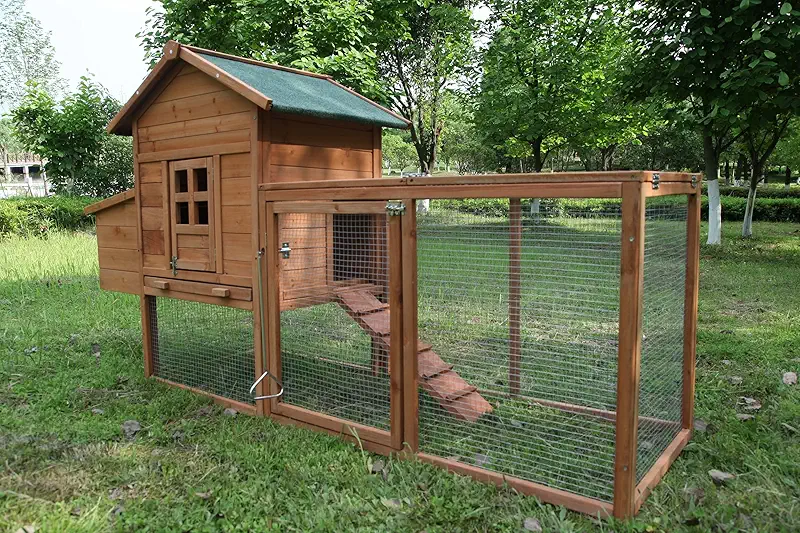
How much space does a chicken coop 30 chickens really need?
On paper, folks like to say “3–4 square feet per bird inside, 8–10 outside.” On the farm, things are a little messier. I’ve tried the minimums. The hens told me, loud and clear, that “minimum” means stressed birds, pecked backs, and cranky roosters.
For a chicken coop 30 chickens, I aim for:
- Indoor coop floor: 5–6 square feet per bird if they’re inside a lot
- Outdoor run: 10–15 square feet per bird, more if you can spare it
That means I’m happiest with something around 150–180 square feet inside for 30 hens, and 300–450 square feet outside. They won’t send you a thank‑you card, but they’ll pay you in eggs.
One winter I cut corners and packed birds tighter, thinking I’d be clever and keep them warmer. All I got was feather picking and a few hens that decided they liked the taste of eggs. Lesson learned: it’s cheaper to build a coop a bit larger than to replace stressed hens and lost eggs.
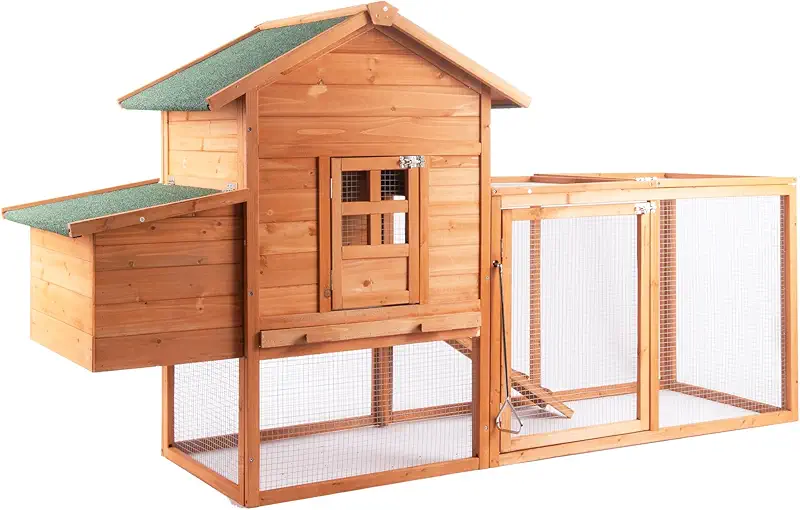
When you look at any prefab or kit that says it can handle “up to 30 chickens,” squint at those numbers. I always divide that claim by at least a third and ask, “Would my birds be happy in there through mud, snow, and rainy weeks?” That keeps me honest.
Nesting boxes for 30 laying hens
You don’t need one nest for every hen, unless you enjoy building furniture for birds that refuse to use it. A good rule that has held up in my yard is:
- 1 nesting box for every 4–5 hens for a flock of 30
That puts us at 6–8 nesting boxes. I keep it closer to 8 because I’ve always got a few hens who like to lay in the “popular” box, and they’ll queue up like they’re waiting for a bathroom at the county fair.
Here’s what works well in a chicken coop 30 chickens:
- Box size: roughly 12” wide x 12” deep x 12”–14” high
- Height from floor: about 18”–24” off the ground
- Front lip: a 3–4” board to keep bedding and eggs from rolling out
I like to line my boxes with pine shavings and a handful of straw. It’s like making a little hotel bed. The better the nest feels, the fewer eggs you’ll find on the floor, or smashed where the hens sleep.

With 30 hens, you’ll be gathering a good armful of eggs. I collect once in the morning and once in the evening when I’m up there shutting the doors. If I skip a day, the girls sometimes get ideas about going broody or pecking soft shells. Regular collection keeps everybody honest.
Roosts and sleeping space: keeping 30 hens off the floor
Chickens feel safest when they roost up off the ground. A crowded roost can lead to pecking and piles of birds that don’t let the smaller girls get any peace.
For 30 birds, I plan 8–10 inches of roost space per bird. That comes out to about 20–25 feet of total roost length.
A few roost rules that years of dirty boots have taught me:
- Use rounded 2x4 boards laid flat, so their feet stay warm in winter
- Keep roosts all the same height or close, so everyone has a fair shot at a spot
- Leave at least 12” between bars to avoid “droppings from above” disasters
- Place roosts higher than nest boxes, so they sleep on the bar, not in the boxes

One winter I made the mistake of giving them beautiful nest boxes higher than the roosts. Looked great; smelled terrible. Every morning I was cleaning out droppings where eggs were supposed to be. I fixed it by raising the roosts, dropping the boxes, and the hens sorted themselves out in a day.
Ventilation and climate for a chicken coop 30 chickens
Fresh air beats fancy paintThe biggest mistake I see with folks planning a chicken coop 30 chickens is thinking they’re building a tiny house. Chickens don’t need insulation like we do; they need dry, draft‑free, well‑ventilated air.
With 30 birds, you have a lot of moisture and ammonia rising from droppings every night. You want:
- High vents near the roof line for stale air to escape
- Low inlets or windows you can crack for fresh air
- Cross‑ventilation that keeps air moving without putting a draft right on the roosts
On my place, I keep hardware‑cloth‑covered vents up top that stay open year‑round. In the dead of winter, I’ll shut the windward side and leave the leeward side cracked. The birds are tougher than we think, but damp air will chill them faster than a cold breeze.
If you walk into the coop and it stings your nose, that’s your sign you need more ventilation. Your lungs and theirs are both complaining.

Predator protection for a flock of 30
Where I live, everything seems to love chicken as much as my family does. Fox, raccoon, possum, dogs, hawks – they all take an interest as soon as they hear clucking.
A chicken coop 30 chickens is a loud, smelly “open for business” sign to predators, so I take security serious:
- Hardware cloth, not chicken wire for lower walls and windows
- Buried apron of wire 12–18” in the ground or laid outward around the run
- Solid latches that require two motions – raccoons are clever little bandits
- Covered run or at least some netting and overhead cover from hawks

The first time I lost a hen, I blamed the fence. Truth was, I’d been lazy about locking up at dusk. Now I do a head‑count and a walk‑around every night. Takes five minutes, saves a lot of heartbreak.
Daily routine inside a chicken coop 30 chickens
People ask if 30 chickens is “too many.” I say it’s just the right number if you’ve got a simple routine. Here’s how my day usually goes with a similar‑sized flock:
- Early morning: Open the pop door, quick look at feeders and water
- Midday: Toss some scratch or greens, check eggs if I’m nearby
- Evening: Gather eggs, shut doors, quick scan for limping or rough feathers
With a well‑designed coop, those chores stay quick. Wide doors, easy‑to‑reach nest boxes, and a floor you can shovel or rake without doing gymnastics make all the difference.
When I pick out or build anything for a chicken coop 30 chickens, I picture myself in January, half awake, in heavy boots, carrying a bucket of water in one hand and a feed scoop in the other. If I can work the doors, reach the roosts, and step inside without ducking, it passes the test.

Deep litter or quick clean? Managing mess for 30 hens
Thirty chickens can turn clean bedding into a barnyard in no time. You’ve basically got tiny manure machines with feathers. I use two main approaches depending on the season.
Deep litter method
In winter, I like deep litter on a solid floor:
- Start with a few inches of dry shavings or chopped straw
- Add fresh layers every week or so as things pack down
- Stir with a rake now and then to keep it from getting slimy
This works well in a chicken coop 30 chickens because their body heat and the slow composting action keep the floor a little warmer. In spring, I muck it all out to the compost pile and let it finish breaking down for the garden.
Quick clean style
In summer, when it’s hot and humid, I prefer lighter bedding and more frequent cleanouts. Moisture plus heat equals flies, and I’ve had my fill of those.

I don’t aim for “showroom clean.” This is a coop, not a living room. But if my boots sink into muck or I smell ammonia, it’s time to get the fork and wheelbarrow.
Choosing the right setup for your land
Every yard is different, and so is every family. The best chicken coop 30 chickens for me might not be the best for you. Here are a few things I look at before settling on any coop or kit:
- Do I need to move it? If yes, I lean toward a modular or mobile style.
- How bad are my winters? Colder areas need tighter builds and more sheltered runs.
- Who’s doing the chores? Kids and grandparents both appreciate doors they can handle.
- Can I expand later? Chicken math is real. Thirty hens can become forty faster than you think.
I’ve pieced together coops from old sheds, bought kits, and built from scratch with rough‑cut lumber. All of them worked once I respected those basics: space, dry bedding, fresh air, and good fences.
If you like to tinker, you might enjoy building your own. If you’d rather skip to gathering eggs, there are plenty of ready‑made options sized for a chicken coop 30 chickens that you can set up, tweak a little, and call it good.
When I’m looking around for coop ideas or ready‑to‑go setups that can handle a flock around 30 birds, I like to see a bunch of different styles side by side – big barn‑style houses, walk‑in coops, and covered runs that don’t turn into mud pits.
Let me browse coops