
Chicken coop 5 chickens
Chicken Coop 5 Chickens
How I keep five hard‑working hens happy, dry, and laying steady eggs all year long.
I’ve been raising hens here in the States longer than some of my neighbors have been alive. Over the years I’ve built coops out of old pallets, barn scraps, and one very questionable fishing shack. What I’ve learned the hard way is this: a chicken coop 5 chickens can be simple, but it can’t be sloppy. When space, air, and safety are right, those five hens will pay you back in eggs, compost, and a lot of quiet joy.
On this page I’ll walk you through how I’d set up a coop for a small backyard flock of five, the mistakes I’ve made, and what I look for when I check out new ready–made coops online. I’ll keep the talk plain and honest, same as if we were leaning on the fence together.
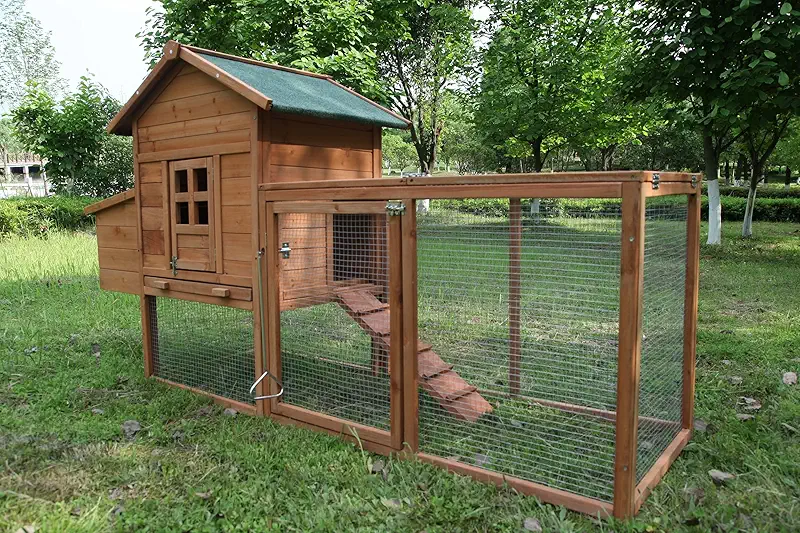
How big should a chicken coop 5 chickens really be?
Folks love to argue coop size like it’s politics. My rule of thumb has been tested through snow storms, heat waves, and one very angry rooster: aim for at least 4 square feet of indoor coop space per bird if you keep them inside a lot. For a chicken coop 5 chickens, that means 20 square feet indoors as a good starting point. Think something like 4 feet by 5 feet of interior floor.
If your hens free‑range all day and only sleep in the coop, you can get by with a little less indoor room, but I still don’t like to crowd them. When birds are packed tight, they start picking feathers, bullying the low girls on the pecking order, and laying eggs in every wrong corner they can find. Give them a bit of elbow room and they calm right down.
Outside, a run of 10 square feet per bird is a fine goal. More is better. For five hens, that’s about 50 square feet of run, like 5 by 10 feet. I’ve seen fancy backyard setups with big covered runs where the birds hardly touch the grass because there’s so much space. Those are some happy hens.
Key features I want in a coop for five hens
When I look at any chicken coop 5 chickens, whether I’m building it or checking out a ready‑made one online, I run through the same checklist in my head. I’ve learned it by losing a few birds to raccoons, frostbite, and plain old poor design.
1. Strong frame and tight wire
Predators are patient. Raccoons have hands like little mechanics and plenty of time at night. I want:
- Solid wood or strong metal frame, not wobbly thin stuff.
- ½‑inch hardware cloth, not chicken wire, around the run.
- Good latches that a raccoon can’t flip open like a door handle.
Chicken wire keeps chickens in; it doesn’t keep trouble out. That’s a lesson I paid for with a missing pullet one summer.
2. Dry floor, dry birds
Wet bedding is the enemy. It brings smell, flies, and foot problems. For a chicken coop 5 chickens I like:
- A raised floor so rain can’t wash in.
- A roof with a good overhang.
- No big gaps where wind and snow can blow straight across the roost.
If you step into the coop and your boots squish, the design needs help.
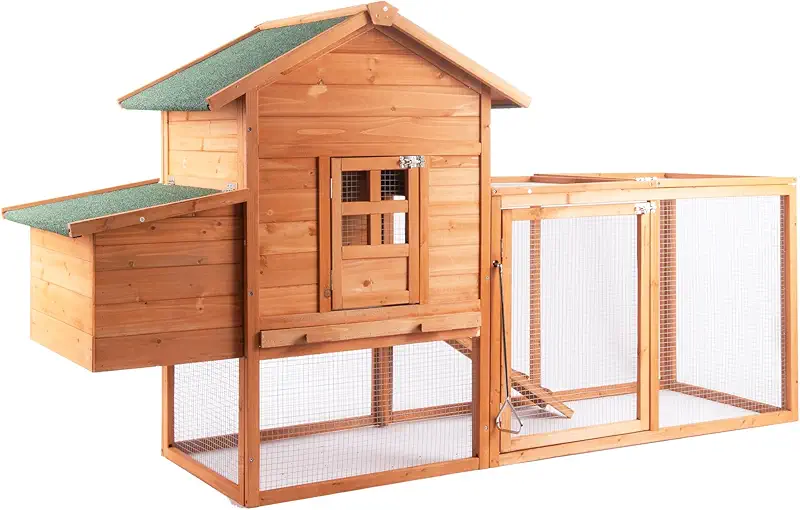
3. Nesting boxes that are actually used
For five hens, I like two nesting boxes, maybe three if you have the room. They’ll still all line up and fight over the same favorite box, but that’s chicken logic for you. I want nests that are:
- Placed lower than the roosts so they don’t sleep in them.
- Easy to reach from outside, with a lid that lifts safely.
- Dark and a bit cozy; hens like privacy for serious egg business.
My best layers always choose the box that looks least impressive to me. One year they all insisted on laying behind the feed bin instead of the fancy nest I’d built. Shows what I know.
4. Roost space for five sleepy birds
A chicken coop 5 chickens should have enough roost bar that everyone can sit side by side with a bit of space. I aim for 8–10 inches of roost per bird. For five birds, a 4‑foot bar does the job, but I often go longer so no one gets pushed off the ends.
I use a 2×4 board with the wide side up in colder places, so their feet stay warm. If the coop you’re looking at uses skinny little dowels, I imagine how my own feet would feel wrapped around an icy pipe in January. Not good.

Ventilation: the secret that keeps hens healthy
If there’s one thing new chicken keepers underestimate in a chicken coop 5 chickens, it’s air. Birds breathe out a lot of moisture. Their droppings give off ammonia. In winter especially, that damp air causes frostbite on combs long before the actual temperature does.
I want a coop with:
- Vents high up under the roof on at least two walls.
- Wire‑covered windows I can open in summer and partly close in winter.
- No big draft directly across the roosts where they sleep.
A good test is this: walk into the coop in the morning before you let them out. If you get hit with a strong smell or the air feels heavy, they’re breathing that all night. When I opened my first properly vented coop, it smelled more like dry straw than a barn. That’s what you want.
My daily routine with a chicken coop 5 chickens
With just five hens, chores don’t have to be a big production. Here’s how my normal day looks with a flock that size in a well‑set‑up coop.
Morning: let the ladies out
I head out with coffee in one hand and scratch grain in the other. I:
- Open the pop door and watch them trot into the run.
- Check water first thing; clean and refill if needed.
- Top off the feeder if it’s running low.
With a good chicken coop 5 chickens, this takes maybe five minutes. If you find yourself wrestling with stuck doors or fighting mud to get close, the setup needs work.
Midday: quick walk‑by
I like to swing by once during the day. I check:
- Is everyone walking normal and scratching around?
- Any strange sounds from the coop, like loud wheezing or sneezing?
- Is the run dry or has something flooded in?
While I’m there, I’ll grab whatever eggs are already in the nests. Keeps them clean and discourages egg‑eating habits.
Evening: lock up tight
As the light fades, I go out one last time:
- Count heads on the roost. Five birds, five heads.
- Latch the pop door and main door securely.
- Listen a second. Quiet coop is a good coop.
Predators get bold in the dark. A strong door and simple routine keep them from turning your coop into a midnight buffet.
Setting up the run so five hens stay busy
A chicken coop 5 chickens isn’t just the little house. The run matters just as much. Bored hens turn into feather‑pickers. Busy hens stay out of trouble.
In every run I keep, I try to include:
- Different levels – a branch or low perch to hop on.
- Dust bath area – dry loose soil or sand where they can roll.
- Shade and cover – boards, shrubs, or a roof so they feel safe.
When I added an old stump to one run, you’d have thought I brought them a carnival ride. They took turns jumping on and off it all afternoon.

Ground and bedding in the run
If your run sits on bare dirt, it turns to mud in a hard rain and dust in summer. I like to toss in:
- Leaves and grass clippings.
- Wood chips (not cedar).
- A little straw now and then.
The hens will scratch it all up, mix it with their droppings, and hand you the start of good compost. Free garden gold, right under their feet.

Nesting boxes and egg habits in a five‑hen flock
Five hens, if they’re good layers, can put a surprising number of eggs in your basket. With a solid chicken coop 5 chickens and decent feed, don’t be shocked to see three to five eggs a day in peak season.
To keep eggs clean and shells strong, I:
- Keep nests bedded deep with straw or shavings.
- Pull out broken eggs fast so the habit doesn’t start.
- Collect at least morning and evening.
When a hen goes broody and insists on sitting, I either let her hatch a few (if I’m ready for more mouths) or move her gently out of the box a couple of times a day until she gives up on motherhood. With five hens, one broody girl can really slow down your egg count.
Cleaning and upkeep: how often for a chicken coop 5 chickens?
The nice thing about a small flock is that chores stay manageable. But letting things slide catches up fast. I learned that when I skipped spring cleaning one year and ended up with mites and a very long weekend of scrubbing.
My cleaning rhythm
- Daily: Scoop the worst under the roosts, top off bedding if needed.
- Weekly: Stir and fluff bedding, quick check for leaks or chewed spots.
- Seasonally: Full clean‑out, new bedding, and a good look at the structure.
A good chicken coop 5 chickens helps you here. I look for big doors, removable trays, and enough headroom that I’m not crawling around like a mole.
Smell test and neighbor peace
If you can smell the coop from your porch, something’s off. With five birds, it’s usually a sign of wet bedding or a leaky roof corner. Fix the water issue first, then change bedding. Your neighbors may not say it out loud, but they’ll appreciate it, and so will your birds.
Common mistakes with a coop for five hens
I’ve made just about every mistake short of building a coop upside‑down, so you don’t have to. Here are the ones I see most when someone asks me to “come take a look” at their chicken coop 5 chickens.
Too cute, not enough tough
There are some handsome little coops out there that look lovely in a photo. Painted trim, fancy windows, the whole bit. Then I tap the wall and realize my toolbox is sturdier. I’d rather have something a little plain that can take a storm and a raccoon than a Barbie dream coop that blows over in the first wind.
Forgetting future you
A lot of folks buy or build the tiniest possible coop for five hens, then a year later they message me, “Well, we added three more…” If you suspect chicken math will catch you, consider a coop that comfortably handles five and can stretch to seven or eight.

Not thinking about your climate
The right chicken coop 5 chickens in Arizona won’t look the same as the right one in Minnesota. In hot states, I care more about shade, cross‑breeze, and big windows. Up north I want tight walls, covered runs, and the ability to close things up without choking off ventilation.
Before you settle on a coop, picture your worst weather week of the year and ask yourself, “Would I want to be in there with just feathers on?”

How I choose a ready‑made chicken coop 5 chickens will thrive in
When I browse online, I don’t just look at the pretty front picture. I scroll every angle like a nosy neighbor. For a chicken coop 5 chickens I pay attention to:
- Dimensions written clearly, not just “for 4–6 hens”.
- Close‑ups of joints and latches, to see if they’ll last.
- Roof shape and whether rain and snow will slide off or sit.
- How the floor looks – raised or right on the ground.
Reviews also tell a story. I look for folks mentioning how it holds up a year or two later. A coop that goes soft after one winter costs you more in the long run than a sturdier one that might take a little more up front.
Little extras that make coop life easier
Once the basics are right, a few simple touches make a chicken coop 5 chickens even nicer to live with:
- Hang‑up feeder and waterer to keep bedding out.
- Small shelf or hook near the door for your scoop and gloves.
- Bucket or bin right by the coop for used bedding and manure.
- Solar light outside so you can lock up after dark without a flashlight in your teeth.
One of my favorite “extras” is just a simple chair nearby. I sit, watch the girls scratch around, listen to them mutter, and let the day settle. The eggs are nice, but the peace and quiet are worth just as much.
FAQ about a chicken coop 5 chickens will love
Two is plenty for a chicken coop 5 chickens. Three won’t hurt if the coop has room, but they’ll most likely share one favorite box anyway. The important part is keeping them clean, dry, and bedded, not how many you have.
They can, but the question is whether they should. Some small prefab coops advertised “for 4–6 hens” are right on the edge for space. I like to see at least 20 square feet inside for five birds plus a good‑sized run. If the measurements seem tiny, I treat the coop as a starter or grow‑out pen, not a long‑term home.
I’ve run flocks with and without power. For a simple chicken coop 5 chickens, you don’t have to have electricity if your winters are mild. In colder areas, a safe heated waterer is the one thing I really appreciate. Light on a timer can keep eggs coming in the dark months, but it isn’t strictly necessary if you’re fine with a seasonal slow‑down.
With good ventilation and dry bedding, a quick tidy every day or two and a deeper clean every few weeks works well. In my own chicken coop 5 chickens setup, I do a bigger clean when the seasons change. If you smell ammonia or see wet clumps building up, it’s a sign to clean more often.
A small flock of five hens is usually quieter than most dogs on the block. You’ll hear a little egg‑song clucking and some chatter when you bring feed, but nothing like a rooster’s crow. A well‑kept chicken coop 5 chickens with clean bedding and a set routine is more likely to be a neighborhood curiosity than a nuisance.
Bringing it all together for your five‑hen coop
If you’ve read this far, you’re already ahead of where I was when I built my first coop out of whatever boards I could drag out of the shed. A chicken coop 5 chickens doesn’t have to be perfect. It just needs to be:
- Safe from predators.
- Dry, with good airflow.
- Big enough that five hens don’t crowd.
- Easy for you to clean and care for.
Get those pieces right and the rest can be adjusted as you go. Chickens are forgiving little creatures. They don’t mind if your paint lines aren’t straight or your hinges squeak. They care that they’re fed, watered, and have a snug place to tuck their heads under their wings at night.
When you’re ready to look over different coop styles and see what feels right for your yard, your weather, and your hens, you can browse a whole range sized well for small backyard flocks.

Take a quiet moment, picture your five hens scratching around out back, and pick the kind of home that feels right for all of you.
See all chicken coops