
Chicken coop and run plans
I’ve been raising laying hens in the States for more years than I care to count, through blizzards, heat waves, raccoon raids and the occasional escaped goat. In this guide I’ll walk you through real‑world chicken coop and run plans that actually work, not just what looks pretty in a sketch.
When folks ask me about chicken coop and run plans, I always smile. My very first coop was held together with hope, bent nails, and a door that only shut if you talked nice to it. The hens didn’t mind much, but the raccoons thought I’d built them a buffet. Over time, with a lot of early mornings and a few hard lessons, I learned what a coop and run really need to keep hens safe, dry, and laying steady.
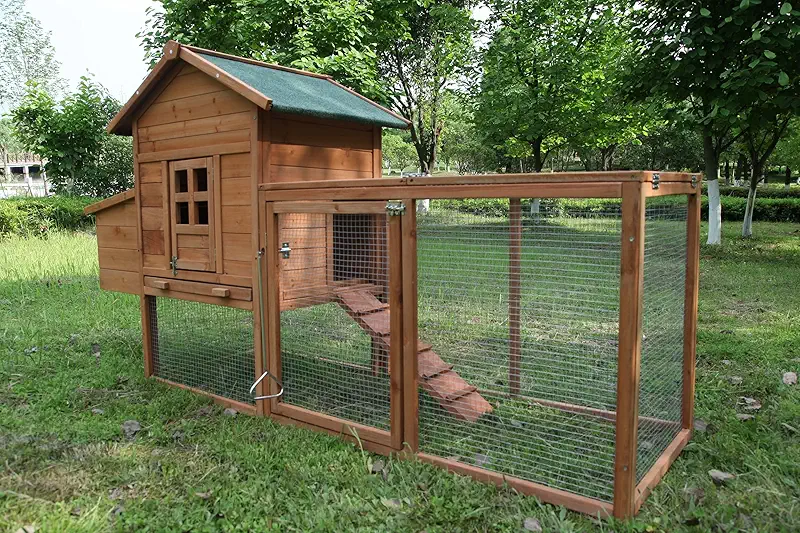
A sturdy coop and covered run that keep hens safe and dry while making chores easy on your back.
I’m not an architect, just a farmer who’s shoveled a lot of manure and chased more than a few hens back into the yard. What I’m sharing here is what has worked on my own place and on neighboring farms: practical layouts, simple rules of thumb, and little tricks that save time every single day.
If you like to build things with your own two hands, good plans are your best friend. And if you’d rather start from something ready-made, there are plenty of solid coops and runs out there that follow these same principles.
Let me see optionsYou’ll find different sizes and styles, from small backyard setups to roomy walk‑in coops for larger flocks.
First rule of a good coop: think like a chicken
When you look at chicken coop and run plans, don’t start with the lumber list. Start with the hens. A laying hen wants three things: safety, comfort, and routine. Give her that, and she’ll give you a steady basket of eggs.
Safety means she can sleep at night without claws or teeth getting in. Comfort means she’s dry, out of drafts, and not roasting in summer heat. Routine means she can hop up to her roost, hop down to her feeder, and stroll into the run without gymnastics or a traffic jam.
How much space do hens really need?
I’ve seen some fancy diagrams that give hens less room than I’d give a house cat, and that’s asking for trouble. Crowded birds get bossy, bored, and bald from pecking. I prefer these simple numbers:
- Inside the coop: around 4 square feet per hen.
- In the run: 8–12 square feet per hen, more if you can spare it.
- Roosts: about 8–10 inches of roost space per hen.
If you plan for 6 hens, that means about 24 square feet in the coop (say 4×6 feet) and at least 48–72 square feet in the run. Bigger flocks or heavy breeds? Add a bit more. I’ve never once said, “Boy, I wish I’d built this coop smaller.”

Inside height tall enough for easy cleaning and checking on the flock without crawling on your knees.
The simple layout that makes every day easier
A good layout saves your back and your temper. Out here, we like a simple flow: door → feeder and water → nest boxes → roosts in the back.
That way you open the door, check feed and water, collect eggs, and you’re done. No climbing over waterers, no reaching under roosts where last night’s “gifts” are waiting for you.
| Area | What matters most | Farmer tip |
|---|---|---|
| Entry | Wide enough for you and a bucket | Make the door swing out, not in, so litter doesn’t block it. |
| Feeder & water | Easy to reach, not under roosts | Hang them at back height so they don’t kick bedding into everything. |
| Nest boxes | Quiet, dimmer corner | Place slightly lower than roosts so hens sleep on roosts, not in nests. |
| Roosts | Highest spot they can perch | Use 2×4 laid flat, gently rounded edges—warm toes in winter. |
Designing a run that keeps everyone happy (and inside)
A run is where your hens stretch their legs, dust bathe, and gossip about you behind your back. It also separates them from the things that like chicken dinners. I’ve had everything from coyotes to neighbor dogs test my fencing, and they’ll find every weakness you leave them.
Fencing and roof: don’t skimp on the wire
For most backyards, 1/2‑inch hardware cloth is the gold standard. Chicken wire keeps chickens in but doesn’t do much to keep determined predators out. If all you’ve got is chicken wire, double up or add hardware cloth along the lower three feet.
I like runs that are at least 6 feet tall so I can walk in without ducking. A roof—solid or wire with a tarp—keeps hawks out and keeps the run from turning into a mud pit every time it rains.

Covered run with strong wire and solid roof panels to handle both predators and bad weather.
Predator-proofing from the ground up
Most of the troublemakers don’t come flying in; they dig. Raccoons, foxes, and even neighborhood dogs will try to go under your run.
- Buried apron: Run a skirt of hardware cloth 12–18 inches out from the run and bury it a few inches deep. When they dig at the fence line, they hit wire and give up.
- Secure latches: Raccoons have nimble fingers. Use carabiners or locking latches on every door.
- No gaps: Any hole bigger than your thumb is an invitation, especially for rats and weasels.
First night after I added a buried apron, I found dig marks all along the run and not a single breakthrough. That was the last time I underestimated a hungry raccoon.
Nest boxes and roosts: where the real work happens
Hens like routine more than I like my morning coffee. If your nest boxes and roosts are well planned, you’ll get clean eggs and calmer birds.
Simple nest box rules
You don’t need a box for every hen. They tend to take turns and argue over the same favorite spot anyway.
- One nest box for every 3–4 hens is plenty.
- Each box about 12" wide, 12" deep, 12" high.
- Front lip 3–4" high to keep bedding and eggs from rolling out.
- A little roof or overhang over the boxes keeps the area dim and inviting.
I line my boxes with a bit of pine shavings and a handful of straw. Hens like a soft nest, and I like eggs that don’t crack when they land.
Roosts that keep toes warm
Forget skinny round dowels. Chickens like to sit with their toes flat and tucked under. A 2×4 board turned flat makes a perfect roost, especially in cold states where frostbite can be an issue.
- Place roosts higher than the nest box openings.
- Keep at least 12" between each roost bar.
- Leave space from the wall so tails aren’t rubbing.
On cold winter nights, I’ve checked the coop with a flashlight and seen every hen fluffed up on that wide board, toes tucked in like tiny feathered marshmallows.
- Nest boxes easy to reach from a human-height access door.
- Roosts placed so droppings don’t land in nests or feeders.
- Gentle ramp or steps if the coop is raised.
- Pop door from coop to run that closes securely every evening.
Ventilation, bedding, and cleaning: the unglamorous heroes
The prettiest chicken coop and run plans don’t mean much if the air inside smells like a summer outhouse. Good ventilation and easy cleaning keep your birds healthy and your nose happy.

Vents up high under the roofline let moist air escape while keeping hens out of drafts.
Ventilation without drafts
Chickens handle cold better than damp. You want moist, ammonia‑laden air drifting out without cold wind blowing across sleeping birds.
- Vents high under the eaves, above roost level, on at least two sides.
- Wire-covered openings with flaps you can close partway in deep winter.
- No big gaps at roost height where wind can hit them directly.
On my coops, I can see my breath outside on a January morning, but inside the air smells dry and clean. That’s when I know the vents are doing their job.
Bedding and manure management
I’ve tried everything over the years: straw, shavings, sand, even dried leaves when I was in a pinch. For most backyard folks, pine shavings or chopped straw work best.
- Floor: 2–4 inches of dry bedding to soak up moisture.
- Under roosts: A “poop board” you scrape clean makes life easier.
- Deep litter method: Adding fresh bedding on top and turning it now and then can work well in colder climates.
My rule? If I can smell ammonia when I open the door, it’s time to clean or add fresh bedding. Your hens’ lungs are smaller than yours; if it burns your nose, it’s twice as hard on them.
Ready-made coops vs. building your own
Folks often ask which is better: buying a coop or building from scratch. I’ve done both, and each path has its charm.
When it makes sense to build
If you enjoy working with tools and have a weekend or two to spare, building can be downright satisfying.
- You can fit odd corners of your yard perfectly.
- You choose heavier lumber or extra insulation if you need it.
- You can add little touches like storage for feed or a bigger human door.
My favorite coop on the farm started as a rough sketch on the back of a feed receipt. It’s not square if you measure it too carefully, but the hens don’t carry tape measures.
When a ready-made coop shines
Not everyone wants to spend their weekend chasing crooked boards. A good pre-built coop and run can get you collecting eggs sooner.
- Perfect if you’re short on time or tools.
- Handy for smaller backyards or rental properties.
- Many models follow solid spacing and ventilation rules right out of the box.
I’ve seen plenty of store-bought coops that worked just fine once we added a bit more wire, better latches, or a little roof over the run.
I’ll browse some nowLittle extras that make coop life smoother
Over the years I’ve learned that small details in chicken coop and run plans can make chores feel easy or make you grumble every morning.
Doors, ramps, and people space
- Human door: Tall enough to walk in and carry a bucket.
- Pop door: Just big enough for hens, easy to close at night.
- Ramp: Gentle angle with cleats so they don’t slip, especially in wet weather.
I learned fast that a coop you can’t stand up in becomes a coop you don’t clean as often as you should. Give yourself room to move; your back will thank you.

Walk-in coops make daily chores, cleaning, and checking hens quick and comfortable.
Weather and shade
Hens don’t sweat, and they can struggle in the heat. Think about shade and airflow when you place your coop and plan your run.
- Face windows and vents to catch the breeze, but not the harshest winter winds.
- Add a solid roof section or tarp in the run for shade and dry ground.
- Provide a dry, sheltered corner where hens can dust bathe even after rain.

A shaded run with dry dust-bath spots keeps hens busy and feathers clean.
Feed, water, and chores
Place your feeder and waterer where you don’t have to wrestle around them. I prefer hanging setups, or sturdy units in the run under cover.
- Keep water in the shade so it stays cool and clean.
- Use raised or hanging feeders to reduce spilled feed.
- Plan a spot to store a small scoop and extra bedding close by.
My goal is a five‑minute morning routine: open pop door, check feed and water, quick glance at the flock, and I’m off to the rest of the chores.
Real-world example of a simple backyard plan
Let me walk you through a small setup that has worked well for a lot of folks near me.
- Flock size: 4–6 hens.
- Coop: 4×6 feet, about 5–6 feet tall, raised 18" off the ground.
- Run: 6×10 feet, 6 feet tall, partially roofed.
- Nest boxes: Two boxes on one side with an exterior egg‑collection door.
- Roost: Single 2×4 roost running the length of the back wall.
- Ventilation: Long vents under both eaves, covered with hardware cloth.
That little setup has seen hot summers, icy winters, a couple of curious kids, and a dog that is convinced he’s in charge of security. Through it all, the hens stayed dry, the eggs stayed clean, and no predator ever made it inside.

Practical backyard layout for a small flock: raised coop, predator-proof run, and easy access for daily chores.
Whether you follow that plan or tweak your own, remember: it’s better to start a bit bigger and sturdier than you think you need. Most people who start with four hens end up wanting “just two more” once they taste those eggs.
If you’d like to see different coop and run setups that follow these same ideas—raised coops, walk‑in runs, covered roofs, and solid hardware cloth—there are plenty of options to look over.
I want to exploreTake your time, picture your own yard, and choose something that will make both you and your hens comfortable for years.
FAQ about chicken coop and run plans
When you’re ready to turn these chicken coop and run plans into something your hens can call home, take a slow walk through the different designs available and imagine your flock scratching around inside.
Show me all coops