Chicken coop between $100 and $250
Honest farmer’s guide
Chicken Coop Between $100 And $250
I’ve raised laying hens for more years than my knees care to count. If you’re hunting for a
chicken coop between $100 and $250, you’re right in that sweet middle ground:
enough to keep your girls safe and dry, without selling the tractor to do it.
In this price range you can get a solid little home for a small backyard flock, as long as you know what
matters and what’s just pretty paint. I’ll walk you through it like we’re talking by the pasture gate,
boots in the mud and coffee in hand.
What to truly expect in this price range
When folks ask me what a “good” coop costs, I tell them this: under a hundred dollars and you’re mostly
in the “better than nothing” world. Over five hundred, and you’re paying for fancy details. A
chicken coop between $100 and $250 is where most sensible backyard keepers land.
In this range you’ll usually find smaller coops meant for 2–6 hens, often with a built‑in little run,
a couple of nest boxes, and simple doors and latches. They’re not barns, they’re not palaces, but they can
be safe, dry, and easy to clean if you pick with your head and not just your eyes.
I’ve had my share of “cute but useless” coops. One looked like a tiny red barn from a postcard. First storm
that blew across Kansas, half the roof decided it wanted to visit Missouri. Since then, I’ve watched the
details that really count: wood, roof, floor, and hardware. Get those right, and the hens don’t care
if the trim is decorative or not.
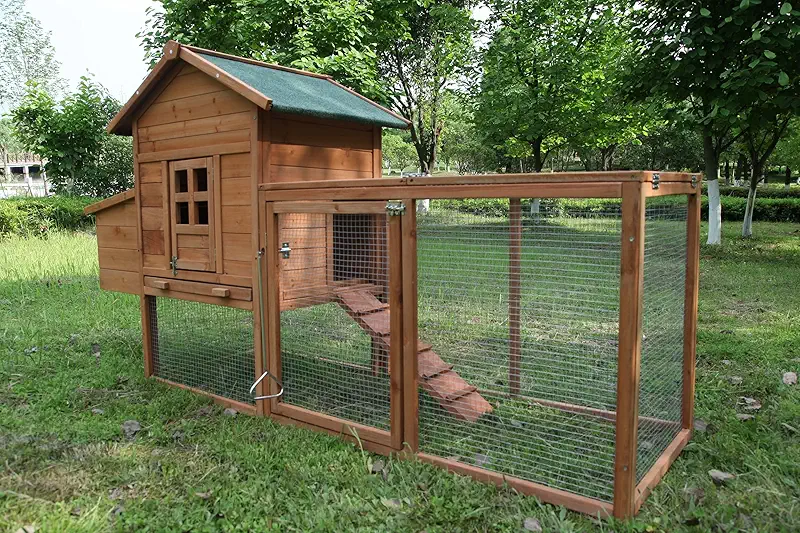
Coops in this range can be simple but solid. I like a low, sturdy profile that doesn’t catch every bit of wind
that comes across the field.
Key things I look for in a chicken coop between $100 and $250
Doesn’t matter if the coop is painted sky blue or tractor green. Before I think about looks, I run through the
same simple checklist every time. You can use this whether you’re standing in a store aisle or scrolling online
with muddy boots still on.
1. Realistic capacity (the honest chicken math)
Most coops in this price range are advertised for far more chickens than I’d ever put in them. If a coop claims
“up to 8 chickens” and it’s under $250, I usually cut that number in half right away.
- Plan on 3–4 square feet of indoor space per hen for layers.
- For the run, I try for at least 8–10 square feet per hen if they’re not free ranging.
- One nesting box is comfortable for 3–4 hens that lay.
I had a neighbor once who stuffed ten hens into a tiny “for 10–12 chickens” coop. Those poor girls looked like
commuters in a New York subway. Egg laying dropped, tempers rose, and the pecking order turned into a boxing match.
Space isn’t a luxury; it’s basic hen happiness.
My rule of thumb: In this price range, most coops are truly comfy for
2–4 standard hens, maybe 5–6 bantams, even if the box says more.
2. Wood, roof, and weather
Wood tells you a lot. Thin, light, almost toy‑like panels make me suspicious. A proper
chicken coop between $100 and $250 won’t be built like a picnic basket.
- Wood thickness: around 0.4–0.6 inches feels decent for this price. Thicker is a bonus.
- Treatment: pre‑treated or painted wood lasts longer, but I still like to seal it myself once it arrives.
- Roof: I favor asphalt shingles or metal‑style roofing over bare wood. Sloped so rain runs off.
Where I farm, we get wind that’ll make a scarecrow sit down and think about life. A straight‑up, tall, skinny coop
acts like a sail. I prefer low, compact shapes in this price range, with a good solid base and not too many fragile
little trim pieces waiting to snap.
3. Doors, latches, and predators
The hens are scared of foxes and raccoons. I’m more scared of cheap latches. Predators are like nosy neighbors:
if there’s a loose board or a weak hinge, they’ll find it faster than you do.
- Look for metal latches, not plastic clips.
- Check that doors close tight with no big gaps a paw could slip through.
- If there’s a run, I’m happier when it’s covered on top and sides with wire mesh, not chicken wire alone.
I had one raccoon that treated a cheap plastic latch like a puzzle toy. Solved it in one night. After that, I upgraded
every coop to sturdy metal latches and added an extra clip where it looked easy to pry. In this budget, a couple of
strong latches make all the difference.
Examples of coops you’ll often see between $100 and $250
You’ll spot a lot of similar shapes and ideas when you look for a chicken coop between $100 and $250.
Here’s how I think about the common styles, and how they fit different backyards and flocks.
Compact starter coop
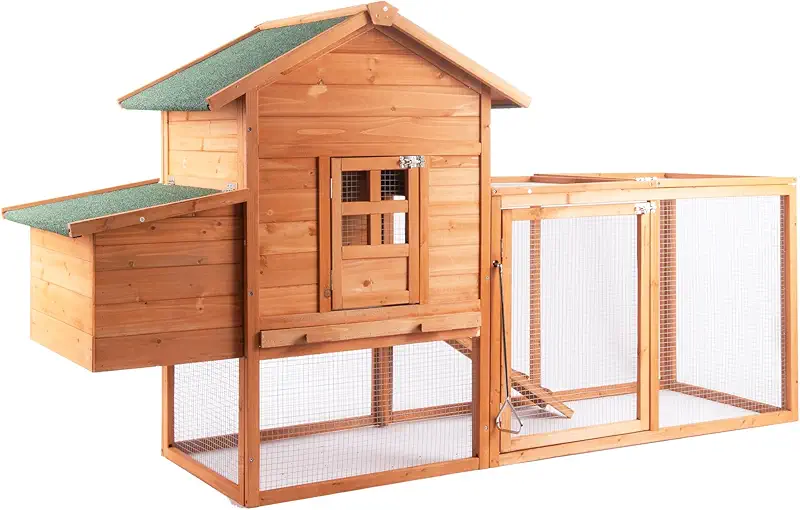
Good for 2–3 hens and tight yards
These are the small wooden coops with a short run under or beside the house, usually with a little ramp. I like this type
for beginners with just a couple of hens and a small lawn.
- Usually one or two nest boxes.
- Easy to place on a patio or small patch of grass.
- Light enough that two people can move it.
Often around the lower end of that $100–$250 budget.
Let me see more
Walk‑in style run

More space, not quite a barn
Some coops put most of the budget into a roomy run with a modest little house attached. Great if your birds
spend lots of time outdoors but still need cover and roosts at night.
- Nice for 3–4 hens that can stretch their legs.
- Often has multiple doors for easy access.
- Good if you can’t free range because of dogs or traffic.
Many models like this sit right in the middle of the $100–$250 range.
This style suits me
Mobile “tractor” style

For fresh grass and clean ground
Tractors are low, long coops that you can drag to fresh grass every day or two. Your hens get new bugs,
and your lawn gets free fertilizer spread around the yard.
- Best for folks willing to move it often.
- Great for 2–4 hens that like to graze.
- Keeps smells down if you’re close to neighbors.
You’ll see simple tractor designs right around the middle to upper part of this budget.
I want to roam
How I keep my layers healthy in a budget‑friendly coop
A coop doesn’t raise chickens by itself any more than a barn grows hay. Your habits matter more than the price tag.
Here’s how I’ve kept hens laying strong even in humble little coops that didn’t cost a fortune.
Ventilation: air without a draft
Hens breathe out a lot of moisture. Put them in a sealed box and you get damp bedding, ammonia smell, and sick birds.
Even with a cheaper chicken coop between $100 and $250, you can usually add or improve ventilation.
- Look for vents up high under the roof line, not at roost height.
- Cover any home‑made vent openings with hardware cloth so nothing climbs in.
- On hot nights, I prop doors open inside a secure run so they get more breeze.
Floor and bedding
If the coop has a solid floor, I spread pine shavings 2–3 inches deep. If it’s a wire floor or slats,
I usually add a plywood board on top and treat it like a solid floor. Hens like firm footing when they hop off the roost.
I do a quick rake every few days, then a deep clean when it starts to smell like the back corner of the tractor shed.
In a smaller coop, regular cleaning matters more; there’s just not as much air and space to hide any laziness.
Shade, sun, and placement
No coop does well in the wrong spot, no matter the budget. I tell folks:
- Morning sun, afternoon shade is ideal if you can manage it.
- Keep it where you can see it from the house. Out of sight often means out of mind.
- A little slope so rain runs away, not toward the coop.
I once tucked a coop behind the barn “just for a season.” Turned out “a season” meant I checked on it less, predators
felt braver, and I learned that lazy sight lines make for poor chicken keeping. Now I keep my girls where I can see them
while sipping coffee on the porch.
Making a mid‑range coop last longer
A chicken coop between $100 and $250 may not be built like the old barns on my place,
but with a little care you can squeeze many more seasons out of it than the box suggests.
Simple upgrades I always do
-
Seal the wood: I take a weekend afternoon, a cheap brush, and an outdoor wood sealer.
One coat on the outside, maybe two on the roof edges and floor.
-
Reinforce weak spots: If a panel flexes when I push on it, I add a small scrap of wood on the inside.
Nothing fancy—just enough backbone.
-
Better latches: If the coop ships with light latches, I upgrade the doors that matter.
It costs a few dollars and saves a lot of worry.
-
Extra roofing where needed: Sometimes I slide a small sheet of corrugated plastic or metal over the
existing roof to shed water better.
One of my earlier coops looked tired after only one winter. I spent a short afternoon adding these simple touches,
and it carried hens for four more years. Not bad for something that cost less than a load of hay.

Many mid‑range coops get a big boost in life span from small upgrades: seal the wood, tighten the screws,
and give that roof a little extra help.
Matching your coop to your hens and your life
A coop isn’t just about chickens; it’s about you too. I’ve seen perfectly good coops fail because they didn’t fit
the keeper’s habits. Before you settle on a chicken coop between $100 and $250, think through how you really live.
If you’re busy and forgetful (like me some days)
Get something easy to reach and easy to clean. Big roof panels that lift, doors at your height,
and nest boxes you can collect from without crawling. The less bending and fussing, the more likely you’ll keep up with it.
If you have kids helping
Choose a coop where doors and latches are simple, but still secure. I like a setup where the kids can reach the nest boxes,
gather eggs, and peek at the hens without tripping into the run. Just remember: if a six‑year‑old can open a latch,
sometimes a raccoon can too—so double up where it counts.

Think about who will open these doors morning and night. A coop that fits your routine will get more love and
give more eggs.
If you dream of a bigger flock later
Many folks start with three hens and end up with eight. Chickens are like potato chips that cluck. If you think you’ll
want more birds later:
- Leave room in the yard for a second coop or larger run.
- Choose a coop design that’s easy to add onto—maybe stretch the run or add another little house.
- Keep the first coop as a “grow‑out” space for young birds later on.
I started with one modest coop. Now I’ve got a main coop, a bachelor pad for roosters, and a little “bed and breakfast”
coop where I isolate new birds. All of that grew from simple, mid‑range coops and a bit of fence wire.
Egg‑layer tips from a weathered old farmer
A cozy chicken coop between $100 and $250 is a good start, but eggs come from routine and care.
Here’s the simple pattern I teach neighbors who are new to hens.
Feed, light, and stress
- Feed: A good layer feed and clean water every day. I hang the feeder just high enough that they
don’t scratch bedding into it.
- Light: Hens lay best with 14–16 hours of light. In winter, a small, safe light on a timer can
help, but I never run it all night.
- Stress: A calm coop is a laying coop. Good ventilation, enough space, and steady routines matter
more than fancy gadgets.
One winter, I pushed my hens too hard with lights trying to keep production high. They laid more for a bit, then
they slowed way down and looked worn out. After that, I learned to accept that eggs, like farmers, have a slower
season too. Let the girls rest some.
Small joke from the henhouse: If your coop is calm, your birds are busy, and your
nest boxes are full, you’re doing just fine—even if the paint’s peeling a bit.
FAQ about choosing a chicken coop between $100 and $250
1. How many hens can I keep in a chicken coop between $100 and $250?
Most coops in this range are honestly comfortable for 2–4 standard‑size hens, even if the label claims more.
Use about 3–4 square feet of indoor space per hen, plus as much run space as you can spare. If it looks crowded
to you, it feels crowded to them.
2. Will a mid‑priced coop keep my hens safe from predators?
It can, but you may need to help it a little. Check all joints, shore up any wobbly panels, and upgrade latches if
they seem flimsy. I also like to run a strip of hardware cloth along the bottom of the run or bury some fencing
to stop diggers like foxes and dogs.
3. How long will a coop in this price range last?
With no attention, some of them start looking tired after a couple of years. With simple care—sealing the wood,
fixing loose screws, and keeping it clean—you can often get four to six good seasons or more. I’ve had
one under‑$250 coop serving as a backup hen house for nearly a decade thanks to a few repairs along the way.
4. Is a smaller coop okay for cold winters?
A small coop can actually help hens stay warm, as long as it’s dry and well‑ventilated without drafts.
I don’t insulate too heavily; I just block direct wind, keep bedding dry, and make sure there’s fresh air up high.
Hens wear feather coats all year; they handle cold better than dampness.
5. What’s the biggest mistake people make with a cheaper coop?
The two big ones: believing the advertised capacity and setting it up and forgetting it.
Start with fewer chickens than the box says, and give the coop a little love each season—tighten, seal, and
check for weak spots. Do that, and a simple mid‑range coop can be a fine little home for your laying ladies.
Ready to choose your coop?
If you’ve read this far, I’m guessing you’re serious about giving your hens a good home without draining your wallet.
That’s exactly where a chicken coop between $100 and $250 shines: sensible, practical, and easy to fit
into a regular backyard life.
Picture this: you step out in the morning, coffee in one hand, feed scoop in the other. The coop door swings open
like it should. The hens shuffle out, grumbling and gossiping like old ladies at church. Nest boxes are clean,
bedding’s dry, and in a little while, there’ll be warm eggs waiting. That’s the goal—not perfection, just a
well‑run little corner of your yard.
Take your time, think about your space, your weather, and your habits. Then pick a coop that fits your real life,
not just your daydream. A simple, sturdy house, a routine you can stick with, and a few clucking ladies will
bring more peace than most gadgets I’ve seen.
And if you ever doubt yourself, remember: every old farmer you meet started as a beginner with a small coop,
a short flock, and a long list of questions. You’re in good company.

There’s a whole range of coops in this budget waiting for the right backyard, from simple starter houses
to roomier runs for hens that love to roam.
When you’re ready to look around, take a stroll through the different shapes and sizes and listen to that quiet
little voice that says, “Yes, my hens would be happy there.”
Show me every coop