Chicken coop designs
Farmer-tested wisdom
Chicken Coop Designs
I have been raising laying hens on my little American farm for more than three decades.
I have seen coops that were palaces and coops that were downright chicken disasters.
Let me walk you through the chicken coop designs that truly work in real life, not just in pretty pictures.
When folks ask me about chicken coop designs, they usually start with, “What size should I build?”
I always smile and say, “Bigger than you think, and tougher than you think.” Hens are like potato chips:
you rarely stop at one. I started with six birds and swore that was enough. Within a year I had fifteen,
a second coop, and a wife asking where the yard went.
Good chicken coop designs solve three problems at once: comfort for the hens, safety from predators,
and easy chores for you. If a coop looks cute but has you crawling on your knees with a bucket every
morning, you will hate it by week two. Ask me how I know. I once built a charming little low-roof coop
that looked great in photos and felt like cleaning under the bed every day of my life.
In this guide I will talk like I do with neighbors leaning on a fence post: plain language, honest stories,
and advice I have tested with real birds in real weather. We will look at layout, ventilation, nesting,
roosts, and a bunch of hard-earned lessons that kept both my hens and my back happy.
What makes a good chicken coop design?
Before we talk shapes and styles, we have to talk needs. Hens do not care about “farmhouse charm.”
They care about dry feet, fresh air, and a safe place to sleep and lay. A strong chicken coop design
keeps those priorities straight, then lets you worry about how pretty the thing looks.
Space: why “just enough” is not enough
For laying hens, I like at least 4 square feet per bird inside the coop if they have an outdoor run,
and more if they are stuck in during bad weather. So ten hens need around 40 square feet inside.
If you live where winters are long and cold, give them extra elbow room. A tight coop in January
turns cranky fast, and cranky hens pick feathers.
- Inside coop: 4–5 square feet per hen.
- Outdoor run: 8–10 square feet per hen at minimum.
- Roost space: about 8–10 inches of perch per hen.
My rule of thumb is simple: build for the flock you will have next year, not the flock you have today.
If you plan on six hens, design for ten. Chickens are a gateway animal.
Farmer tip: I once “saved money” by building a small coop for four birds.
Within months I was adding a wonky little extension that looked like a chicken camper.
If you want a tidy yard and a tidy mind, plan extra space from the start.
Good chicken coop designs also think about human space. Can you stand inside? Can a wheelbarrow
fit by the door? Is there a place to set a bucket without kicking it every time? If you make
chores easy, you will do them well. If you make chores hard, nature will remind you with smell.
Ventilation, light, and weather in chicken coop designs
The biggest mistake I see is folks sealing a coop up tight “to keep them warm.” Chickens wear feather coats.
What they really need is dry air and no drafts right at roost level. A good chicken coop design breathes
at the top and stays snug at the bottom.
Let it breathe, not blow
I like vents up high under the eaves, covered with hardware cloth (not flimsy chicken wire). Warm moist air
from the birds rises and slips out those vents, while cooler air slides in away from their perches.
You do not want a fan in their faces while they sleep, just a gentle exchange of air.
In my main coop, I have vents on two opposite sides, plus a window that I can crack on warm nights.
During one bad summer when the humidity felt like soup, those vents kept the flock healthy while a neighbor
with a tight coop ended up fighting respiratory trouble in half his hens.
Light and the laying cycle
Chickens lay best with plenty of daylight. I like windows on the east or south sides of a coop so the girls
get that morning sun. Let it pour into the nesting area but not directly onto the roosts where they sleep.
That light keeps them active and cheerful, and you will notice the difference in egg numbers.
Farmer tip: If you live where winters are dark, some folks add a small timer light
in the coop. Go gentle with it. I prefer to keep my hens a bit more natural, but if you use a light,
have it come on early in the morning, not late at night, so they still go to bed with the sun.
Types of chicken coop designs that actually work
Over the years I have tried just about every style: little “tractors” you can drag across the yard,
big walk‑in barns, and small raised coops on stilts. Each chicken coop design has pros and cons,
and which one is right for you depends on your yard, your weather, and how your back is feeling.
Backyard favorite
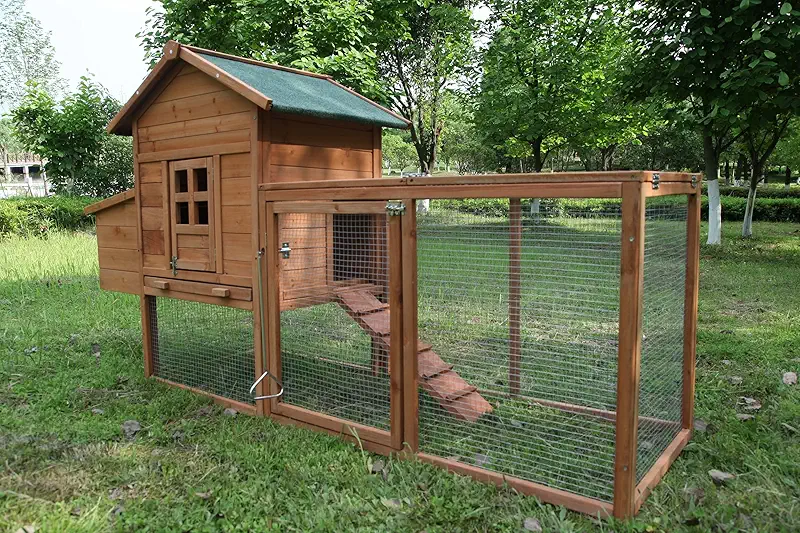
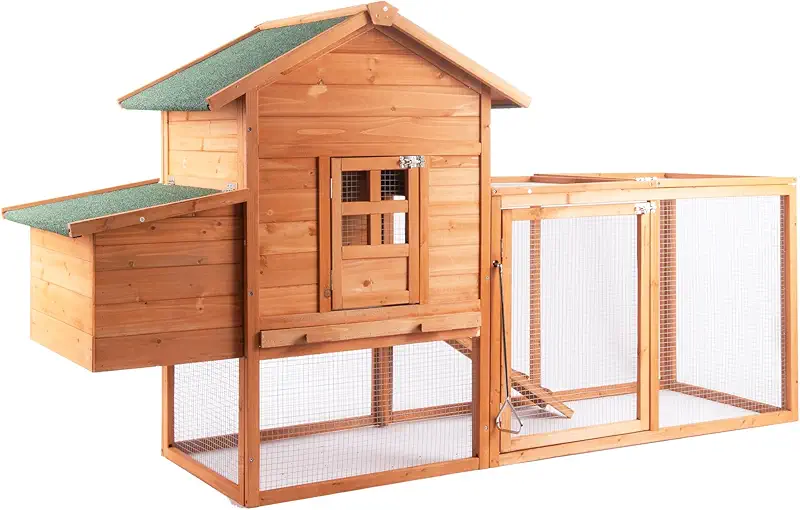
Raised coop with attached run
Great for small yards, easy cleaning, good predator protection.
A raised coop stands off the ground on legs with a run underneath or beside it.
This style keeps the floor dry, gives birds shade under the coop, and puts the roosts at a handy height.
Nest boxes can hang off the side with an outside access door for easy egg gathering.
My wife’s favorite coop is a raised design by the garden. She can reach everything without bending much,
and the hens scratch under it on hot days like kids hiding under the porch.
Let me see more
Mobile option
Chicken tractor designs
Best for fresh grass and small flocks.
A chicken tractor is a lighter coop‑run combo you move around the yard.
The birds get new grass, bugs, and sunshine, and your lawn gets free fertilizer.
The trick is balancing strength with weight so you can move it without feeling like you are dragging a barn.
I built my first tractor too heavy, and it took two grown men and one confused dog to budge it.
Store‑bought units usually manage that balance better than my first DIY try.
I’ll browse ideas
Cold‑climate pick
Walk‑in barn style coops
Roomy, sturdy, ideal for harsh winters and bigger flocks.
A walk‑in coop is just what it sounds like: you step inside like a small shed.
They cost a bit more but your future self will thank you when it is ten degrees,
snowing sideways, and you can stand upright to do chores.
My main layer coop is a walk‑in, and on bad winter mornings I drink my coffee in there with the hens.
They gossip louder than the old timers at the diner.
Show me options
Roosts, nests, and the daily life of your hens
Chickens like order. At night they want a steady roost; during the day they want a quiet nesting corner.
If you get those two parts of your chicken coop design right, half your troubles vanish.
Roosting bars
Roosts should be higher than the nest boxes. Otherwise your hens will sleep in the nests and you will be
washing poop off eggs until you lose your religion. I use 2x4 boards laid flat, wide side up, so their feet
stay warm in winter. Round roosts work too, but keep them thick enough so their toes can wrap without strain.
Allow around 8–10 inches of roost per hen. They will snuggle close in cold weather, but when it is hot
they like some personal space. I stagger my roosts like a ladder so everyone can hop up without a mid‑air collision.
Nesting boxes
For laying hens, one nest box for every three to four birds is plenty. They will all have a favorite box anyway
and stand in line fussing about it. A good nest is about 12x12 inches, darker than the rest of the coop,
with a little lip to keep straw and eggs from rolling out.
Farmer story: I used to line my nest boxes with hay because we had plenty.
Then a broody hen decided the stems were fine to eat and my nests turned into salad bowls.
Now I use softer straw or shavings and the eggs stay cleaner.
Predator‑proofing your chicken coop designs
If you have chickens, something out there wants to eat them. Fox, raccoon, neighborhood dogs,
hawks, owls, even the occasional rat. A pretty coop that is not predator‑proof is just a fancy buffet.
Wire matters more than paint
For runs and windows, I always use hardware cloth, not chicken wire. Chicken wire keeps chickens in,
but it does not keep hungry things out. Raccoons can tear it, and weasels slip right through.
Hardware cloth with half‑inch or quarter‑inch openings costs more but saves heartache.
Digging and climbing predators
Many chicken coop designs forget that predators dig. I like to bury my wire at least 12 inches down around
the run, or lay a skirt of wire out flat around the outside, covered with a couple inches of soil.
When a fox tries to dig at the edge, it hits that wire skirt and usually gives up.
Doors and latches need to be raccoon‑smart. If a toddler can open the latch, so can a raccoon.
I use double latches or carabiners on my coop doors and have never had a night‑time break‑in since.
Real‑world chicken coop layouts that keep chores simple
Let us talk about your daily routine. Good chicken coop designs are built from the egg bucket backward:
picture your morning and evening chores, then arrange doors, paths, and storage around that rhythm.
The door and the path
Place the main coop door where the ground drains well. Mud is the enemy of good habits.
If every trip to the coop means wet boots and sliding around, you will put off chores
and the coop will slip out of shape. A load of gravel on the path is cheaper than new shoes every spring.
Feed and water spots
I keep feeders hanging at the hens’ chest height so they are not scratching bedding into the feed.
Waterers sit up on blocks or low stands. Some chicken coop designs hang everything,
but I like my water steady in winter when I am hauling warm buckets out.
Farmer tip: Plan a little shelf or corner inside the coop for grit, oyster shell,
and extra buckets. Having those bits handy means you actually use them.
When I had them stored back in the barn, I “forgot” more often than I care to admit.
Comparing ready‑made chicken coop designs
Not everyone wants to spend weekends with a saw and a measuring tape, and that is fine.
These days there are all kinds of ready‑made chicken coop designs that you can have shipped to your place.
Some are light little backyard units, others are closer to small barns in a box.
When I look at a pre‑built coop, I do not start with the color; I start with the numbers and details.
How many square feet per hen? How is the ventilation set up? What kind of wire do they use?
Do the nest boxes open from outside? Is the floor solid and easy to clean?
- Check that the claimed capacity is honest. If it says “up to 10 chickens,” I plan on 6–7.
- Look for real hardware cloth on windows and runs.
- Prefer coops with good access doors for cleaning and egg collection.
- Study the roof: real shingles or solid panels stand up better than thin sheet alone.
If you want to see a spread of different chicken coop designs side by side — raised styles,
tractors, walk‑in units, and more — there are plenty gathered in one place.
You can skim through them, compare sizes and layouts, and pick what fits your yard and your hens.
I’ll explore a bit
Seasonal tweaks for your chicken coop designs
A good coop is not a statue; it changes with the seasons. Little adjustments for summer and winter
make a big difference in health and egg numbers. My coops never look exactly the same in July and January.
Summer: heat and flies
In hot weather, chickens suffer long before we do. I open extra vents, set up shade cloth over sunny parts
of the run, and sometimes freeze jugs of water to set near their favorite spots. A well‑vented chicken coop
design with plenty of shade can keep birds comfortable without much fuss.
Winter: cold and moisture
When winter comes, I focus less on “making it warm” and more on “keeping it dry and draft‑free.”
I close off direct drafts at roost level but never block the top vents. Damp cold is worse than dry cold
for chicken lungs and combs. I add extra bedding and let it build up a bit through winter for insulation.
My favorite little details in chicken coop designs
After years of fiddling with layouts, I have a few little touches I put into every coop now.
They are small, but they make daily life smoother. If you are shopping pre‑built chicken coop designs,
you can look for versions that include some of these ideas.
- Human‑height nest access: No more crawling under low roofs to grab eggs.
- Doors that swing out: An inward‑swinging door just pushes bedding into a mound.
- Removable roosts: Makes deep cleaning a once‑a‑year breeze instead of a curse.
- Small “people window”: Lets you peek in on the flock without stepping inside.
- Covered entry step: Keeps you out of muddy puddles at the threshold.
None of these things are fancy, but together they turn a coop from a chore into a place you actually
enjoy visiting. I still get a kick out of that first cackle of the morning when I open the door
and the girls are telling me all about their night.
FAQ about chicken coop designs
How big should my chicken coop be for 6 laying hens?
For six hens I like at least 24 square feet inside the coop, which is a simple 4x6‑foot footprint.
That assumes they have an outside run that they use daily. If your winters are long or you know
they will be stuck inside a lot, bump that up closer to 30 square feet. For the run,
aim for 60 square feet or more so they have room to roam without tearing the ground to bare dirt too fast.
Do I need insulation in my chicken coop?
Most backyard flocks do not need fancy insulation if the coop is dry, draft‑free, and well‑ventilated.
Chickens handle cold better than heat. In very cold regions, simple insulated walls can help,
but be sure you still have ventilation up high. Trapped moisture is what causes frostbite on combs,
not just low temperature. I would spend money on a tight roof and good vents before wall insulation.
What is the best floor for a chicken coop?
I like solid floors best: wood, concrete, or heavy composite. They are easier to clean,
easier to secure against digging predators, and they hold bedding well. Dirt floors can work,
but you need heavy wire underneath and a good deep‑litter system. If you go with a wooden floor,
lift the coop a bit off the ground so it can stay dry and last longer.
How much ventilation does my coop really need?
A simple rule is at least one square foot of vent opening per 10 square feet of floor space,
placed up near the roof. More is often better, especially in warm, humid areas.
You should be able to smell fresh air when you open the coop in the morning, not a wall of ammonia.
If your eyes sting, you need more vents. Just keep harsh drafts away from roost height.
Is it better to build my own coop or get a ready‑made design?
That depends on your tools, time, and patience. Building your own coop lets you fit it exactly
to your yard and your flock, and it can save money if lumber prices are kind. But it also takes weekends,
and not everyone enjoys chasing crooked boards. Ready‑made chicken coop designs are quicker,
and many are well thought‑out these days. I have built some and bought some over the years.
The “best” choice is the one that gives your hens a safe, dry, roomy home without pulling all
the joy out of your days.
If you are ready to look over different chicken coop designs — from compact backyard setups
to bigger walk‑in homes for your hens — you can wander through a whole row of them in one go.
Take your time, picture your own flock in each one, and listen to that little voice that says,
“Yes, this feels right for my birds and my mornings.”
I’ll see them all