
Chicken coop fence
I have been chasing chickens and fixing fences on a small U.S. farm for more than thirty years. Let me walk you through what really matters when you plan a chicken coop fence, so your girls stay safe, keep laying strong, and you can finally sleep at night instead of listening for coyotes.
When folks ask me about a chicken coop fence, they usually start with, “What wire should I buy?” That is like asking a baker, “What spoon should I use?” The spoon matters, sure, but the recipe matters more. Same with your fence.
In this page I will share what has worked on my own place: what height actually keeps birds in and predators out, how to deal with digging varmints, and how to set up a fence so you do not spend every weekend fixing what last night’s raccoon broke.
I am not a salesman. I am just a tired farmer who has lost a few hens over the years and decided I was done donating fresh chicken dinners to the neighborhood wildlife. If that sounds familiar, you are in the right place.
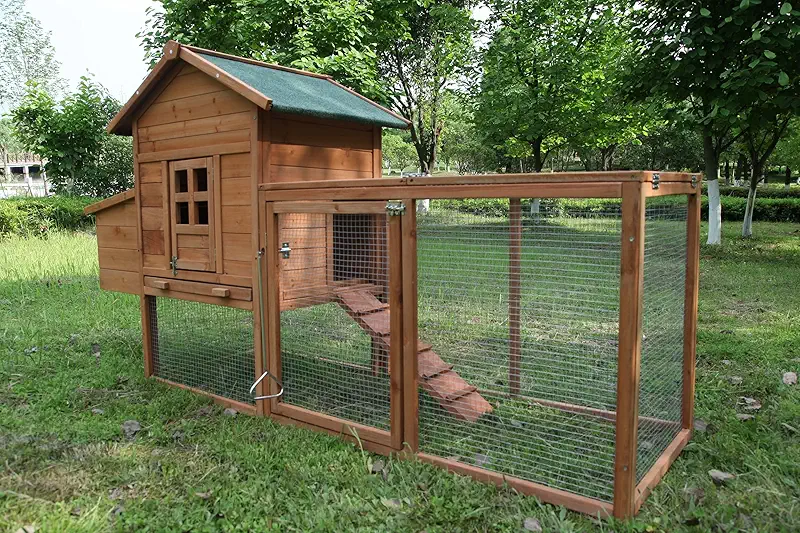
When you are ready to look around, you can browse different fence-ready coops and runs below.
Let me see ideasWhat a good chicken coop fence really has to do
Before we talk posts, wire, and fancy gadgets, it helps to know what a chicken coop fence is truly up against. Out here we are not just decorating the yard. We are building a little fortress for birds that cannot fight, cannot run very fast, and are about as curious as toddlers with feathers.
On my farm in the Midwest, a chicken coop fence has to deal with:
- Climbers like raccoons that treat fences like jungle gyms.
- Diggers like foxes, dogs, and coyotes that go under instead of over.
- Jumpers like strong dogs that clear low fences when they get excited.
- Small sneaky ones like weasels that slip through gaps the size of a thumb.
- Your own chickens, who will test every weak spot you leave them.
A solid chicken coop fence does three jobs at once:
- Keep predators out. This is the number one job. A dead hen does not lay many eggs.
- Keep chickens in. Chickens on the road or in your neighbor’s flower bed are a headache.
- Make chores easy. You want to walk through gates, move feeders, mow around it, and not curse every time.
When you plan with those three jobs in mind, the rest of the choices about your chicken coop fence start to fall into place.
Picking the right height and layout for your chicken coop fence
Your first big choice is how tall to go. I tried to save money with short fencing once. The dog jumped it, the hens hopped it, and I spent more time chasing feathers than drinking coffee. Learned my lesson.
Recommended fence heights
- 4 feet high – Bare minimum for calm, heavy breeds and small flocks. Fine if you are never out past dusk and do not have bold dogs around.
- 5 feet high – Good all-around height for most backyard flocks. Helps with light flying breeds and keeps most neighborhood dogs honest.
- 6 feet high – My choice near the woods or open fields. Better against coyotes and jumper dogs, and it gives your birds more “mental fence” too.
Remember, chickens do not just “respect” fences because they are there. They respect fences that feel high and solid enough they do not bother trying.
Smart layout for daily chores
When I lay out a chicken coop fence, I picture my tired self doing chores on a cold, wet morning. If it sounds miserable, I change the plan. A few layout tips:
- Keep the gate close to the coop door. Less walking back and forth with feed buckets.
- Leave room for a wheelbarrow. Bedding, manure, and gravel all move easier when you can push a barrow through.
- Plan for shade and dry ground. Put at least part of the run where it gets afternoon shade and does not turn into a swamp after rain.
- Avoid sharp corners if you can. Predators love corners, and chickens jam themselves in there when they panic.
I like to give each adult hen at least 10 square feet of fenced run space. More is better. Tight space means bored birds, and bored birds start pecking each other and plotting escapes.
Best materials for a safe chicken coop fence
I have tried about everything over the years: rusty cattle panels, bargain “mystery wire,” even old pallets. Some of it worked for a while, some of it just fed the predators for free. Today, when I think about materials for a chicken coop fence, I focus on three layers: skin, bones, and extras.
The “skin”: wire or mesh around the run
For the outer skin of the chicken coop fence, here is what has served me best:
-
1/2 inch hardware clothPredator guard
This is the gold standard, especially for the bottom 2–3 feet of the fence. It stops raccoon paws and weasels, and it does not sag like cheap netting. -
Welded wire or heavy field fence
Great for the upper section if you combine it with hardware cloth down low. Strong enough for dogs and coyotes, and easier on the wallet for big runs. -
Plastic netting
I only use this as a temporary barrier or as a “visual fence” on top of something stronger. By itself, most predators treat it like a suggestion, not a rule.
On my main run, I wrap the lower 30 inches with 1/2 inch hardware cloth, then continue up with heavier welded wire. That gives me predator protection where it matters most, without buying solid hardware cloth all the way to the top.
The “bones”: posts and structure
Posts are like the bones of your chicken coop fence. Flimsy bones mean the whole thing wobbles the first time a dog leans on it.
- Wood posts (4x4) – I set these at corners and gate openings. Treated wood lasts, and you can screw hinges and latches in solid.
- T-posts – Good for line posts between corners. I drive them at least 18–24 inches deep so they stand firm through winter and mud season.
- Top rail – A simple 2x4 or tension wire along the top helps stop sagging and keeps the fence looking tidy, which also helps you spot trouble faster.
The “extras”: gates, roofs, and wings
Once you get the basic chicken coop fence standing, a few extras make a world of difference:
- Sturdy gate with a people-friendly latch. You will open it every single day. Do not cheap out here or you will regret it each morning.
- Overhead netting or roof. Helps with hawks and keeps snow and leaves out of the run. I sleep better when there is at least light netting over the top.
- Outward “wings.” A short section of fence angled out at the top discourages climbers like raccoons from going over.


Stopping predators at ground level: dig-proof chicken coop fence
Most folks worry about hawks first, because they can see them. But on my farm, the real trouble usually comes from below. Foxes and dogs love to slide right under a fence like they are sneaking into a movie theater.
To make a chicken coop fence dig-proof, I do one of three things, depending on my time and energy level:
Option 1: Hardware cloth “skirt”
This is my go-to. I run a strip of hardware cloth 18–24 inches wide along the bottom of the fence on the outside, then lay it flat on the ground and secure it:
- Attach the inner edge firmly to the bottom of the fence.
- Lay the rest flat outwards on the soil.
- Pin it down with landscape staples and cover it with dirt, mulch, or gravel.
When a predator comes to dig right at the fence line, it hits that horizontal “skirt” and usually gives up. They are not smart enough to back up two feet and try again, thank goodness.
Option 2: Burying the wire
You can also dig a trench and bury the bottom of the chicken coop fence 12 inches or more. This works, but after one summer of trench digging in hard clay, I swore I would use the skirt method whenever I could.
Option 3: Solid base
In high-traffic spots, like near gates, I sometimes pour a low concrete or rock border right under the fence. That keeps the fence anchored and stops chickens from tunneling out as well.
Protecting hens from above: hawk-safe chicken coop fence ideas
Ground predators get the blame, but hawks and owls can be just as rough on a flock, especially younger pullets. I still remember losing a sweet little red hen named Peach one clear fall day. She never heard a thing coming. That one stuck with me.
To make your chicken coop fence safer from above, you do not always need a heavy roof, just something that interrupts a clean attack path:
- Light bird netting stretched over the run. Cheap and easy, but you will need to check it for holes now and then.
- Wire panels or welded-wire roof on smaller runs. This stands up to snow and branches better than light netting.
- Partial solid cover such as metal or polycarbonate over one end of the run. Gives shade, keeps part of the ground dry, and gives hens a safe “panic zone.”
I like to give my girls several places to duck under in the run: low tables, pallets up on bricks, or brush piles. Chickens are not fast, but they are good at tucking themselves under cover if you give them some.
Real-world tips for keeping laying hens happy inside the chicken coop fence
A safe chicken coop fence is just one part of keeping laying hens healthy and productive. If the birds are stressed, they will find a way out or simply stop laying. Over the years, I have picked up a few tricks to keep peace inside the fence.
Crowded hens get cranky, just like people. Plenty of space inside the chicken coop fence means fewer pecking problems and better egg numbers.
If you can, move the run now and then or have two fenced areas. Fresh ground keeps parasites down and gives the birds new bugs to hunt.
A shallow tub or corner of dry soil mixed with ash and sand inside the fence lets hens clean themselves and shed mites without your help.
A windbreak fence or plastic along one side of the run gives hens a place to stretch their legs in cold weather without freezing their combs.
I close the coop every evening, even with a strong chicken coop fence. The fence slows predators; the locked coop stops them.
Once a week I stroll the whole fence with a cup of coffee, looking for loose staples, low spots, or fresh digging. Five minutes now saves tears later.
Common mistakes I see with a chicken coop fence (and how to dodge them)
After helping neighbors set up their own runs, I have seen the same chicken coop fence mistakes over and over. None of them are the end of the world, but they all make life harder than it needs to be.
-
Using too big a mesh
Big gaps invite weasels and raccoon hands. Keep the bottom part of the fence at 1/2 inch mesh or smaller. -
No brace on the gate post
That gate gets slammed, leaned on, and dragged. Without a strong post, it will sag and rub the ground within a season. -
Letting the fence sit right on the ground
Earth shifts, chickens dig, and before you know it you have a nice tunnel started underneath. Tie it down with a skirt or bury it. -
Forgetting the human side
Tiny gates that you cannot fit a wheelbarrow through, or runs so low you bang your head every time, get old fast. Your back will thank you for planning ahead. -
Underestimating predators
If there is one raccoon in your county, it has already circled your coop at night. Build your chicken coop fence like they are all coming to dinner.
The good news is, you do not need a perfect fence, just one that is tougher and smarter than what the local predators are used to. Every extra layer you add—height, mesh size, skirt, roof— raises the odds in your favor.

Choosing ready-made coops and runs with the fence in mind
These days there are plenty of ready-made coops and runs that come with panels and wire included. That can save a lot of time, especially if power tools are not your favorite hobby. But when you look at them, I want you to see past the pretty paint and ask, “How good is the chicken coop fence part of this thing?”
Here is how I judge ready-made options:
- What kind of wire? Thin decorative wire is no match for a determined dog. I look for hardware cloth or heavy welded wire, at least on the lower section.
- How high is the run? Waist-high runs look cute but are hard to clean. Walk-in runs save my back and make catching birds much easier.
- Is there room for upgrades? I like designs where I can easily add a hardware cloth skirt or stretch netting over the top later.
- Where are the gates and doors? I want a human-sized entry and a smaller chicken door that closes tight at night.
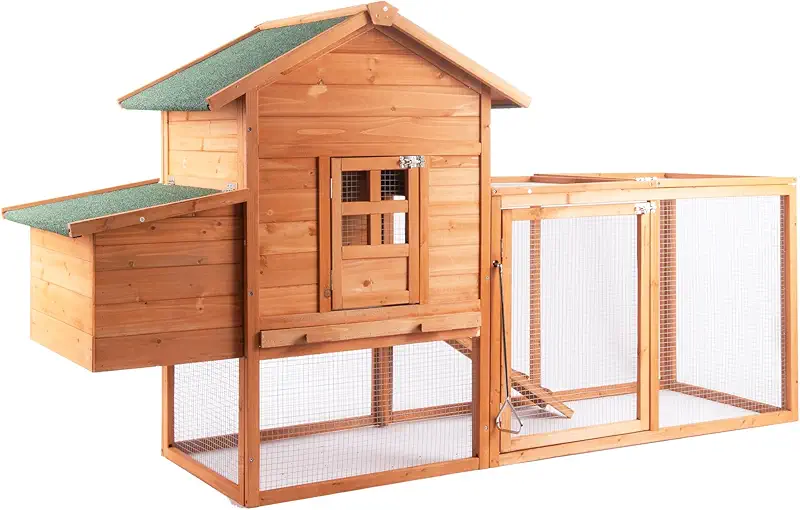
I have seen some nice setups where folks pair a simple wooden coop with a metal-framed, fenced-in run. The strong frame holds up the fencing well, and you can move or expand it if your flock grows.

However you choose to go, think of the chicken coop fence as the long-term part of your setup. Coops come and go; a well-built fence line can serve you for many years and many generations of hens.
Chicken coop fence FAQ
For most backyard flocks, I like at least 5 feet of solid chicken coop fence. Heavier, calmer breeds can do fine behind 4 feet if there is nothing for them to jump up on. If you have flighty breeds, active dogs, or open fields around you, go to 6 feet and save yourself the worry.
I use 1/2 inch hardware cloth along the bottom 2–3 feet of the fence and anywhere the birds sleep or spend the night. The small openings keep weasels and raccoon hands out. You can use stronger, larger-mesh wire higher up, but that tight mesh near the ground is what saves birds.
The easiest way is to add a hardware cloth skirt along the outside bottom of the fence. Lay 18–24 inches of wire flat on the ground, attach it to the fence, and cover it with soil or mulch. When a fox or dog tries to dig at the fence line, it hits that hidden wire and usually moves on.
Strictly speaking, no—but I sure sleep better when I have something over the top. A full solid roof is nice for snow and rain, but even light bird netting helps slow down hawks. For my own flock, I use netting on the big run and a solid roof on the smaller side pen so the hens always have a dry, safe spot.
Yes, many farmers do, especially in coyote country. A hot wire or two outside the main chicken coop fence can teach predators to keep their distance. Just remember, electric is a helper, not your main line of defense. You still want good physical fencing, and you will need to keep vegetation off the hot wires.
Bringing it all together
Building a chicken coop fence can feel like a big project when you are starting from scratch. I remember staring at a pile of posts and wire one hot July afternoon, wondering how any of it was going to turn into something my hens could trust.
But like most hard jobs on the farm, you take it one step at a time: set solid posts, choose good mesh, protect the bottom, and give your birds a safe roof overhead. Before long, that pile of supplies turns into a fence line that stands through storms and shrugs off the nightly visits from curious critters.
Your hens will never thank you out loud. They will just go on laying steady, scratching in the dust, and greeting you at the gate each morning. Out here, that is all the thanks most of us really need.

If you would like to see different setups—from small backyard runs to walk-in enclosures— you can look through a variety of coops and runs that already include fencing. Sometimes seeing a few real-world examples makes planning your own fence a whole lot easier.
Take a quiet minute, picture the fence your hens deserve, and then see what kind of coops and runs come closest to that picture.
Show me every coop