
Chicken coop gate
Out here on my little patch of dirt, I’ve learned one thing the hard way: a flock is only as safe as its chicken coop gate. Hens don’t worry about locks and latches. They just want to scratch, dust-bathe, and lay eggs in peace. It’s our job to make sure the gate keeps the bad stuff out and the good birds in.
Over the years I’ve chased hens at dawn, stared down a sneaky raccoon at midnight, and fixed more bent hinges than I care to count. In this guide I’ll walk you through what really matters in a chicken coop gate, how to set it up, and the kind of little details that keep your flock safe and your eggs coming steady.
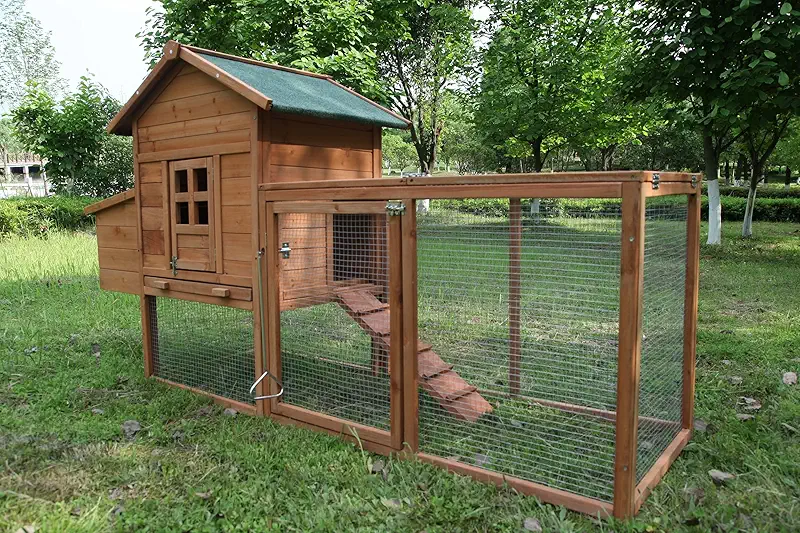
Why your chicken coop gate matters more than you think
When folks first get into chickens, they fuss over breeds, feed, and nesting boxes. The chicken coop gate often feels like an afterthought. I used to think the same, until one windy night when a loose latch turned into a long morning of counting feathers.
That was the night I promised my hens I’d never cheap out on gates again. A gate is more than a door. It’s the front line between your birds and every hungry critter that roams after dark: raccoons, foxes, stray dogs, even the neighbor’s “he’d never hurt a fly” dog.
A good gate does three things well:
- Keeps predators out – no easy gaps, no weak latches, no flimsy wire.
- Keeps hens in – no big spaces a curious pullet can slip through.
- Makes your life easier – opens smoothly, closes fast, and doesn’t fight you in bad weather.
I like to say: if you curse at your chicken coop gate every morning, it’s time to rethink it. Farm work is hard enough. Your gate should feel like a partner, not a problem.
Key features of a reliable chicken coop gate
After a couple decades of keeping layers, I’ve boiled a good gate down to a handful of must-haves. Whether you’re building from scratch or picking a ready-made coop, look close at these details.
1. Strong frame and hardware
The frame of your chicken coop gate takes all the use and abuse: wind, mud, freezing rain, and you bumping it with feed buckets. I’ve had lightweight gates twist out of square in one season. Once the frame warps, the latch never lines up and you start “just pushing it mostly shut.” That’s when predators get lucky.
Look for:
- Thick wood or sturdy metal, not soft, skinny boards.
- Hinges screwed into solid framing, not just thin plywood.
- Hardware that won’t rust into a statue after one winter.
If you can wiggle the gate with one hand and see the whole thing flex, it’s not stout enough for long-term farm life.
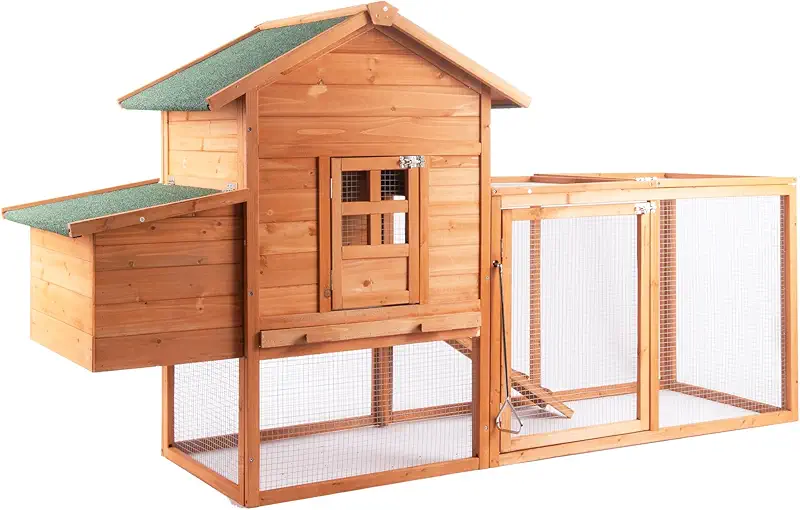
2. Predator-proof latch (learned the hard way)
Raccoons are smarter than some people I’ve met at the feed store. If little hands can reach your latch, they’ll spend all night testing it. I once used a simple sliding latch on my chicken coop gate. Thought I was clever. Next morning I was picking up the pieces of my mistake.
Since then, I use:
- Spring-loaded latches that snap shut on their own.
- Double-action latches where you have to lift and slide.
- Carabiners or clips on the latch for extra security.
If a five-year-old could figure out your gate, assume a raccoon can too.
3. Right height and width for you and the flock
Early on, I built a cute little gate I had to duck under every morning. After a few months of head bumps and spilled feed, cute lost its charm. Your chicken coop gate should fit you as well as your birds.
Ask yourself:
- Can I walk through without ducking or sideways shuffling?
- Is it wide enough for a wheelbarrow or large feed bag?
- Is the threshold low enough so I don’t trip every day?
When chores are easy, you do them right. When chores are a pain, shortcuts creep in, and security is the first thing that gets sloppy.


4. Ventilation and light around the gate
Chickens breathe out a lot of moisture. On cold nights that moisture can turn into frostbite if the coop doesn’t breathe. Your chicken coop gate area is a handy spot to work in some smart airflow and light.
I like a solid gate for security, with predator-proof wire above or to the side for ventilation. Just make sure any openings are covered with strong hardware cloth, not lightweight chicken wire. Chicken wire keeps chickens in; it does a poor job keeping hungry things out.
A bit of natural light near the gate helps:
- Hens find their way to roost before dark.
- You can peek in without turning on bright lights at night.
- The coop feels calmer when you enter suddenly.
5. Weather resistance
Out here, gates see everything: summer sun that splits boards, sideways rain, ice that glues things shut. A cheap chicken coop gate may look fine in the catalog, but one bad winter will tell you what it’s really made of.
I look for:
- Wood that’s sealed or treated for outdoor use.
- Metal that’s galvanized or powder-coated.
- Hardware that still moves when it’s 10°F and you’re in barn boots.
If you live where winters bite, test your latch with gloves on. If you can’t work it with cold fingers, you won’t like it in January.
Manual vs automatic chicken coop gate
When I started keeping hens, every gate was manual. Sun goes down, I go out. Sun comes up, I go back. It was peaceful, and also a little unforgiving if I got busy or stayed late in town. Then I tried my first automatic chicken coop gate. Let’s just say I slept better, and so did the birds.
Manual chicken coop gate
A manual chicken coop gate is simple, tough, and hard to break. If you’re the type who’s always home at dusk and dawn, it can work just fine.
Upsides:
- Fewer moving parts to fail.
- Cheaper to set up.
- You lay eyes on your birds twice a day.
Downsides:
- If you’re late, predators get an opportunity.
- Dark, rainy evenings become “do I really have to?” evenings.
- Vacations require a very reliable chicken sitter.
Automatic chicken coop gate
An automatic chicken coop gate uses a motor and timer or light sensor to open and close at set times. First time I saw mine close at dusk all by itself, I thought, “Well, this is what being spoiled feels like.”
Upsides:
- Closes on time even if you’re stuck in traffic.
- Opens at dawn without you stumbling out in slippers.
- Helps keep a steady routine for the flock.
Downsides:
- More parts that can wear out or fail.
- Needs power (batteries or outlet).
- Costs more up front.
My compromise is simple: I still check the gate every evening when I can, but the automatic opener is my backup on the days life doesn’t go as planned.
How to install and adjust a chicken coop gate
I’ve seen fancy gates installed so crooked they might as well be lawn art. A good chicken coop gate doesn’t just need strong materials; it needs a straight, square, and thoughtful install. Take your time here and you’ll save yourself a lot of cussing later.
Step 1 – Start with a solid frame
The opening your gate hangs in is just as important as the gate itself. Make sure the posts or coop walls are sturdy, straight, and well-anchored. If the side posts lean, your gate will drag sooner or later.
Step 2 – Hang the hinges right
Put both hinges on the heavy framing, not thin siding. I like to pre-drill the screw holes so I don’t split the wood. Check that the hinges are aligned so the gate can swing without binding.
Before you tighten everything, swing the gate a few times. It should move freely without scraping the ground.
Step 3 – Set the gap
You want a small, even gap between the chicken coop gate and the frame. Too tight and swelling wood will jam it; too loose and critters can work their way in, or hens can squeeze out.
I usually aim for enough space to slide a couple of coins between the gate and the frame, but no more.

Step 4 – Mount and test the latch
Put the latch at a comfortable height for you, not just where it “happens to land.” Make sure it closes fully and can’t be bumped open by a curious hen jumping or a dog jumping up from the outside.
I like to try to “break in” my own gate. I push, pull, wiggle, and try to pop the latch the way a raccoon might. If it stays shut for me, it’s more likely to stay shut for them.
Step 5 – Watch how your birds use it
For a few days after a change, I watch how the flock moves through the chicken coop gate. Are they hesitant? Getting pinched? Lining up like it’s rush hour on the freeway? Their behavior tells you what needs tweaking.
I once realized my gate opened inward and blocked their path to the feeder. The hens would bunch up and shove, and the low birds in the pecking order got pushed around hard. Flipped the gate to swing outward and everybody calmed down.

Daily routines around the chicken coop gate
A dependable gate is half the battle. The other half is habit. Chickens love routine, and so do predators. The difference is, you want to keep your birds predictable and the danger unpredictable.
Morning routine
In the mornings I like to:
- Check the latch and hinges before I open the gate.
- Look for fresh scratch marks, digging, or tracks near the gate.
- Open the chicken coop gate smoothly so hens don’t spook.
If you see soil dug up under the gate, something is testing your defenses. That’s your cue to add buried wire, stones, or a board apron.
Evening routine
At night I do one last walk-through:
- Count heads on the roost or at least scan for any hen still outside.
- Check for anything blocking the chicken coop gate from closing fully.
- Engage any backup clip or carabiner on the latch.
I also listen. Quiet, settled clucking is a good sign. Wild flapping or panicked noise means something is off, and the gate is the first place I look.
Common chicken coop gate mistakes (I’ve made most of them)
No shame here. If there’s a wrong way to set up a chicken coop gate, I’ve probably done it once. Maybe twice. The trick is to learn fast and forgive yourself slow.
1. Trusting chicken wire for predator protection
Chicken wire is meant to keep chickens in, not determined predators out. I’ve seen dogs burst straight through it and raccoons tear it like old cloth. Around gates and openings, I only use hardware cloth or strong welded wire.
2. Leaving big gaps under the gate
If you can slide your hand under the chicken coop gate, a dig-happy critter can probably widen it overnight. Cover that gap with a board, pavers, or buried wire that sticks out like a short skirt in front of the gate.
3. Latches at kid height and raccoon height
I love my grandkids, but I don’t love surprise “We let the chickens out for you!” moments. Set your latch high enough that little hands and long raccoon fingers both have trouble.
4. Ignoring sagging or sticky movement
When a gate starts dragging or sticking, it’s talking to you. That’s the time to tighten hinges, shim posts, or adjust the latch, not three months later after a storm takes it the rest of the way down.
5. One tiny gate for a growing flock
Ten birds might flow through a narrow chicken coop gate just fine. Thirty birds will pile up, shove, and pick at each other. If your flock has grown, your entrances and exits should grow too.
Choosing the right chicken coop gate for your setup
Every homestead is different. What works for my little mixed flock and wandering barn cat might not fit your backyard in town or your big pasture setup. But a few questions will nudge you toward the right chicken coop gate for your place.
1. How bad are your predators?
If you’ve only got the occasional hawk, a basic but sturdy gate might be enough. If you’re battling raccoons, foxes, coyotes, and stray dogs like I do, lean into heavier hardware, tighter gaps, and an extra locking step.
2. How often are you home at dusk?
If your evenings are steady and quiet, a manual gate with a good routine can be just fine. If your life is all over the place, an automatic chicken coop gate can save birds and peace of mind.
3. How many birds now… and later?
Don’t size your gate for today’s cute little starter flock if you know you’ve got a habit of “just adding a few more.” Think about how you’ll manage traffic as your flock grows.

When I’m comparing different chicken coop gate options, I look past the pretty pictures and go straight to the hinges, latch, and how well everything is framed. That’s where the truth lives.

My simple “gut check” for any chicken coop gate
Before I trust a gate with my birds, I run it through a little gut check. Doesn’t need fancy tools, just a few honest questions and a walk around with your eyes open.
- Would I trust this gate if I had to be gone overnight?
- Can I use it half-awake, one-handed, in the rain?
- Is there any spot a raccoon could work on for a while?
- Can a small pullet or chick squeeze through anywhere near it?
- Will it still swing right after a snow or a hard freeze?
If I can honestly say yes to most of those, that chicken coop gate earns its keep. If not, I start fixing, reinforcing, or replacing before I learn another lesson the hard way.
At the end of the day, your hens don’t know what kind of gate they have. They just know if they feel safe. A calm, steady flock lays better, lives longer, and makes the whole farm feel right. A good gate is a small piece of hardware with a big say in that story.
FAQ about chicken coop gates
No, you don’t have to have one. Plenty of old-timers still walk out every morning and night and do just fine. But if your schedule is busy or you sometimes get home after dark, an automatic chicken coop gate is good insurance. It doesn’t replace common sense, but it does cover for those evenings when life runs late and the fox doesn’t.
For the main people gate, I like something close to a regular door size so I can walk through with a bucket in each hand. For the birds’ pop door, 10–12 inches wide and 10–14 inches tall works for most standard breeds. Bigger is fine, but don’t go so big that you invite drafts and extra cold air straight into the coop.
Sturdy wood or metal, backed with real hardware cloth if you’re adding mesh. I’ve had good luck with thick wooden frames and galvanized hardware. Thin, decorative panels might look nice for a season, but they don’t stand up to farm life. Whatever you choose, make sure the hinges and latch are at least as strong as the frame itself.
You don’t always need a whole new chicken coop gate. Sometimes a few upgrades go a long way: add a carabiner or clip to the latch, screw a board along the bottom edge to close gaps, replace chicken wire near the gate with hardware cloth, and bury some wire or pavers where predators might dig. Walk around at dusk with a flashlight and look for any place light (and teeth) could sneak through.
Not if you plan the rest of the coop right. A solid chicken coop gate is fine as long as you have some windows or vents covered with hardware cloth for light and air. My main gate is solid, but I have vents up high and a little side window. The hens get plenty of daylight and fresh air without giving predators an easy target at the doorway.
If you’re ready to look over different styles and setups, you don’t need to rush. Take your time, picture your own flock walking through that doorway, and pick a chicken coop gate that feels steady, simple, and safe.
Show me all coops