
Chicken coop heat lamp
I have raised laying hens through more winters than I care to count. Up here, when the wind cuts through your coat and the water bucket crusts over by breakfast, folks start asking about one thing: the chicken coop heat lamp.
Let me walk you through how I actually use heat in my coops, when it helps, when it hurts, and how to keep both your birds and your barn from going up in smoke.
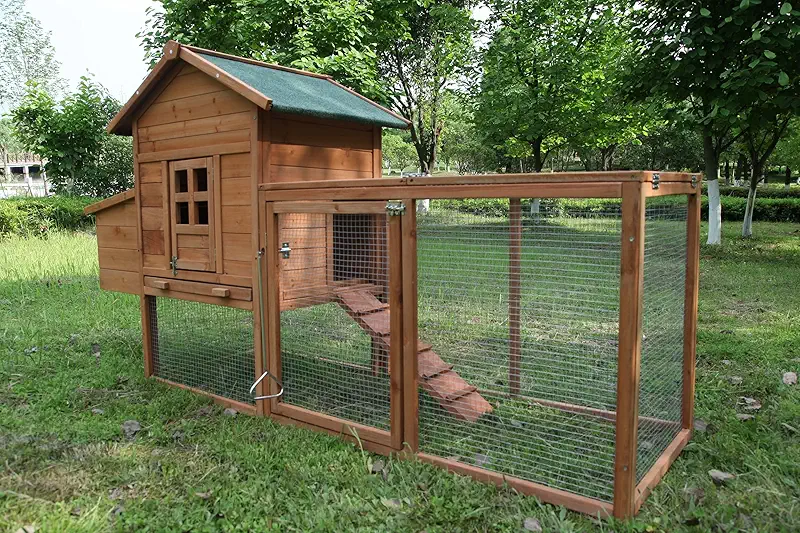
Do laying hens really need a chicken coop heat lamp?
Let me start with something most folks don’t expect to hear from an old farmer: a healthy hen, in a dry draft-free coop, can handle more cold than you probably can. Chickens wear a down jacket they never take off. I’ve watched my Rhode Island Reds scratch around at 10°F like it was nothing, while I was out there hopping from foot to foot wishing I had another pair of socks.
A chicken coop heat lamp is not about giving your hens a tropical vacation. It is about handling the real extremes: sudden cold snaps, brutal wind chills, older or sick birds, and young pullets that haven’t learned winter yet. Used right, it’s a helpful tool. Used wrong, it’s an expensive way to burn a coop down.
Over the years, I’ve run coops with no heat at all, coops with traditional red heat lamps, and coops with safer low-wattage panels. I’ve made a few mistakes, learned a few hard lessons, and I’d like to help you skip the painful parts.
My rule of thumb for winter heat
Here’s the simple rule that guides me: first fix the coop, then think about heat.
- Dry bedding: If the floor is damp and smells like ammonia, heat just turns it into a steamy mess. I use deep, dry shavings and stir them a bit every few days.
- No direct drafts at roost level: Air should move up high, not across the birds’ backs. Their feathers trap warm air, but a cold draft strips that away.
- Good ventilation overhead: Moist air rises. You want vents near the roof, not big gaps by the roosts.
Once those are in place, then I ask myself three questions before I hang a lamp:
- Is it going to stay below 10°F for several days?
- Do I have older birds, small-bodied breeds, or any that are underweight?
- Is there a sudden temperature drop of 30°F or more in a day or two?
If the answer to one of those is “yes,” then a chicken coop heat lamp or safer heater starts to make sense. Not to turn the coop into a sauna, but to take the sharp edge off the cold.
Types of chicken coop heat lamp and heaters
When folks say “heat lamp,” they usually mean a red 250-watt bulb in a metal clamp fixture, the kind every farm store stacks up in winter. I’ve used plenty of those. They work, but they can be risky if you handle them like a flashlight instead of a fire source.
1. Classic red chicken coop heat lamp
The classic chicken coop heat lamp is cheap, simple, and powerful. Hang it up, plug it in, and you’ll feel the warmth right away. I’ve used these during ice storms when the birds were huddled together and the wind was making the coop creak.
Pros:
- Heats fast and covers a decent area
- Easy to point where birds roost
- Bulbs and fixtures are widely available
Cons:
- High fire risk if it falls or touches wood or bedding
- Bulbs get extremely hot and can shatter from moisture
- Uses a lot of electricity over the season
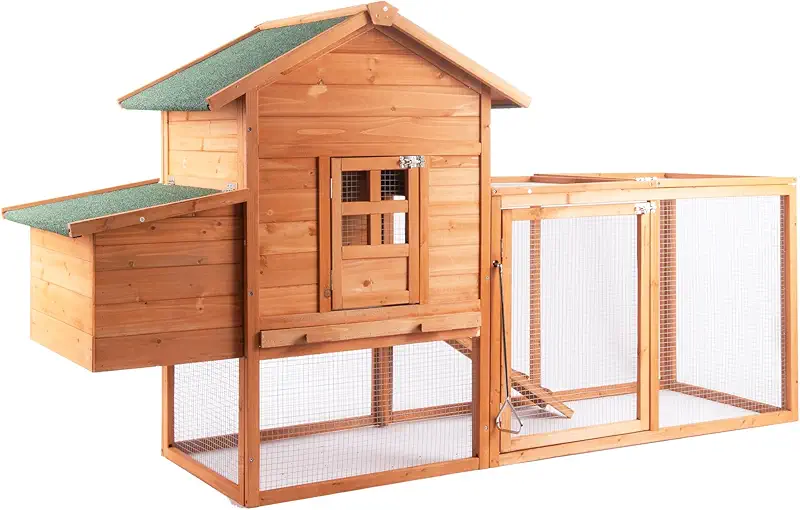
2. Flat panel heaters and radiant plates
These look more like a flat panel or a warm wall than a light bulb. They don’t blast out heat like the classic lamp, but they are much safer. I started using them in a smaller coop by the house, and my nerves thanked me.
Pros:
- Lower surface temperature, much lower fire risk
- No bright red light to bother the birds at night
- Often more energy-efficient over time
Cons:
- Costs more up front
- Heat is more gentle, covers a smaller area
- You have to position it so hens actually use it

3. Ceramic heat emitters
These screw into a regular heat lamp fixture but don’t give off light, only infrared heat. They can be a middle ground: warmer than panels, less bright than red bulbs. I sometimes use them over a corner roost when I want heat without turning the coop red at night.
No matter which style you lean toward, the mindset needs to be the same: you are hanging a small controlled fire in a wooden box full of dry shavings and feathers. Treat it with the respect it deserves.
How I install a chicken coop heat lamp safely
I’ve seen more than one barn burned from a careless lamp. Around here, we talk about it every winter like folks talk about icy roads. A chicken coop heat lamp can be safe, but only if you’re a bit picky about how you set it up.
Here’s my personal checklist, learned over many cold seasons and a few “well, that was close” moments:
- Never use just the clamp. I use a proper hanging chain or strong wire anchored to a beam. The clamp is decoration as far as I’m concerned.
- Use two supports. I hang the lamp from a chain and also tie the cord to something solid. If one fails, the other catches it.
- Keep it high enough. I want at least 18 inches between the bulb and anything flammable, more if I can manage it.
- Guard the bulb. A metal cage around the bulb helps keep feathers and curious beaks away.
- Use a heavy-duty fixture and cord. No cheap plastic clamp lights meant for a desk. Look for fixtures rated for high-wattage heat bulbs.
- Keep the cord out of pecking range. I run cords along the ceiling or solid walls, secured every foot or so.
- Plug into a GFCI outlet if possible. Especially if your coop power runs outside and might get wet.
After I hang a new lamp, I like to sit out there for 10–15 minutes at night, just watching. I want to see how the birds settle, where the light falls, and whether anything looks too close. I also go back out about an hour later and put my hand near any wood or bedding below the lamp. Warm is okay. Hot is not.

How much warmth do hens really need?
My hens seem happiest when the coop is cool but not bitter. If I walk in and it feels like a living room, I know I’ve overdone it. You are aiming for “takes the sting off,” not “chickens in Florida.”
Here’s what I watch, beyond the thermometer:
- Where they roost: If they’re all crammed under the heat source, they’re cold. If they are spreading out and even moving away from it, they’re comfortable.
- Posture: A cold hen will puff up, tuck her feet, and look like a feathery ball. If they look relaxed and balanced, you’re probably fine.
- Comb and wattles: I check for pale or white tips that might turn into frostbite, especially on big-combed roosters.
One trick I use is to run the chicken coop heat lamp on bitter nights with a thermostat or timer. Let it kick on only when it drops below a certain point, or cycle off for parts of the night. That way the birds still grow a proper winter coat instead of becoming spoiled “heat addicts.”
I like to keep the warmest spot around the roost somewhere in the 25–35°F range during the worst of it. Not tropical, just not brutal.

Heat, egg laying, and happy hens
A lot of folks chase heat in winter because they notice the egg basket getting lighter. I get it. Nothing like cracking a fresh egg on a snow morning. But here’s the honest truth from my years with layers: daylight matters more than heat when it comes to eggs.
Chickens lay best with about 14–16 hours of light. In winter, the short days tell their bodies, “Time for a rest.” Adding a gentle light in the early morning does more for laying than cranking up the temperature.
That said, a reasonable coop temperature does help:
- Birds that aren’t fighting bitter cold can put more energy into eggs.
- Feed conversion stays better—they aren’t burning every calorie just staying alive.
- They drink more water when it isn’t frozen, and water is a big part of egg production.
A chicken coop heat lamp can support winter laying by reducing stress, as long as you don’t turn the coop into a beach vacation. Just remember: light, feed, and low stress are the three main legs under that egg basket.
Personal lessons from cold winters with chickens
One January, years back, we had a nasty cold snap. Nighttime lows hit -10°F with wind that could peel paint. I had an older flock that year, with a few big-combed roosters I was fond of. I decided to hang a chicken coop heat lamp, but I was stubborn and in a hurry. I clamped it to a board, said, “That’ll hold,” and walked away.
At 2 a.m., something woke me up. Call it luck or the good Lord nudging me. I pulled on my boots and headed out. Sure enough, the clamp had loosened, and the lamp had dropped low, inches over the bedding. Nothing had caught yet, but the wood underneath was hot to the touch and starting to brown.
I unplugged it, took a deep breath, and had myself a little talk about “shortcuts” out there in the dark. Next day, I rehung it with proper chains and a back-up tie. Since then, I’ve never trusted a clamp alone.
A different winter, I tried something else. I skipped the lamp and focused on:
- Thicker bedding (deep litter)
- Wind breaks on the north side of the coop
- A bit of extra cracked corn in the evening
- Well-placed vents high up for moisture control
The birds did just fine. Production dipped a bit, but I didn’t lose a hen. That year reminded me that heat is a tool, not a requirement. Your birds will tell you what they need if you watch them more than the thermometer.

Simple checklist before you add heat
If you’re standing in the feed store staring at that shiny new chicken coop heat lamp, run through this quick list in your head first:
- Is the coop dry and does it smell fresh?
- Are the vents high and the roosting area free from drafts?
- Do my birds have a nice thick bed of shavings or straw?
- Am I prepared to hang the lamp with a chain and backup support?
- Can I check it at night for the first few days?
- Do I really need heat, or do I just feel cold myself?
If you can honestly answer “yes” to the safety questions and “yes” to truly needing it, then a little extra warmth can make winter easier on your hens. And probably on you too—nothing like gathering eggs without worrying about frostbite on your favorite rooster.
Matching your coop to the right heater
Not every coop needs the same setup. I’ve run everything from a small backyard coop by the garden to a long shed with a few dozen layers. Here’s how I think it through:
Small backyard coop
For a tiny coop with a handful of hens, I lean toward a low-wattage panel or a smaller heat source instead of a powerful lamp. The space is tight, so you don’t need a furnace in there, just a bit of help on the coldest nights.
Medium coop with a dozen hens
In this size, a chicken coop heat lamp can work well if it’s hung high and secure, mainly focused around the roost. I like to leave one end of the roost slightly cooler, so birds can choose their comfort level.
Larger sheds and barns
For bigger spaces, I’m extra cautious. More birds means more dust, more feathers, more risk. Sometimes it’s better to have multiple gentle heat sources rather than one blazing hot lamp.

Chicken coop heat lamp – FAQ
Healthy adult hens can handle temperatures well below freezing if they are dry, well-fed, and out of the wind. I start thinking about extra heat when we’re staying below 10°F for days at a time, or when a sudden drop of 30°F or more is coming. Remember, wind and dampness are often more dangerous than pure cold.
It can be, if it’s installed properly: metal fixture rated for heat bulbs, hung from a chain with a backup support, guarded bulb, secured cord, and plenty of space from wood or bedding. I personally check any new setup several nights in a row. I treat it like a wood stove—useful, but never something to be casual about.
They can, if you run a chicken coop heat lamp so strong that the coop feels like a living room while outside is freezing. I prefer mild supplemental heat, often on a thermostat or timer, so the birds still grow a full winter coat and can handle cooler air if the power ever goes out.
If I had to choose only one, I’d keep the water thawed. Dehydrated birds don’t eat well, and that hurts health and eggs. I use heated waterers or bases, and then decide about a chicken coop heat lamp based on how harsh the winter is and what condition my flock is in.
Flat panel heaters, radiant plates, and lower-wattage heaters designed for livestock are usually safer. They run cooler and don’t put out as much light. I still treat them with respect, but I sleep a little better at night knowing there isn’t a 250-watt bulb hanging over dry shavings.
If you’ve read this far, I figure you care about your birds as much as I do mine. Take a quiet minute, picture your coop on the coldest night of the year, and think about what would make it safer and calmer for your flock—better bedding, tighter drafts, or a carefully placed chicken coop heat lamp or heater.
When you’re ready to look over different setups and see what might fit your coop and your winters, you can browse a range of chicken coops and heating options hereFarmer-approved picks.
Let me compare
And if you’re still planning your setup from scratch, it can be helpful to look at different coop styles and imagine where the roosts, vents, and any heaters will go before you pound the first nail.
See all coops