Chicken Coop Ideas Diy: simple, sturdy and hen‑approved designs from an old U.S. farmer who has fixed more coops than trucks.
I have spent more mornings with chickens than with people, and I say that with pride. When you live off the land, your laying hens become part of the family. Over the years I have tried all sorts of chicken coop ideas DIY — from ugly plywood boxes that somehow worked, to clever little palaces the hens still complain about. Let me share what has truly worked on our farm, so you can skip the mistakes and get straight to the eggs.
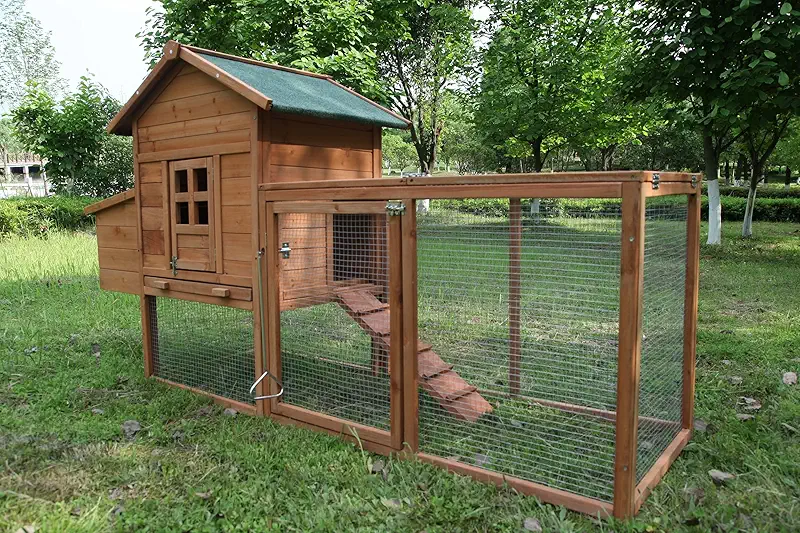
A sturdy, simple coop style my hens actually respect more than my porch.
When folks ask me about building their first coop, I always say the same thing: “Think like a chicken, build like a farmer.” Chickens don’t care how pretty it looks. They care about being dry, safe, and able to sleep without a draft up their tail feathers. You, on the other hand, care that it’s easy to clean and doesn’t fall over in the first good wind.
If you remember nothing else: keep it dry, keep it safe, keep it easy to clean. Pretty can come later.
Below you’ll find practical chicken coop ideas DIY that have survived real weather, real predators, and my real clumsy boots. I’ll walk you through layout, roosts, nesting boxes, ventilation, and a few funny lessons my hens taught me the hard way.
Once you see a few solid examples, it gets much easier to picture your own coop layout. I like to compare different styles before I cut the first board.
Before you grab a hammer, grab a cup of coffee and stand in your yard for a bit. I walk the property and listen to the wind, watch where the water runs after rain, and notice where the winter sun hits. A good spot for a coop matters more than fancy materials. Bad spot, and even the best design will fight you every season.
Side access doors and a dry run make your future chores a whole lot easier.
1. Pick a Dry, Slightly Raised Area
Chickens hate wet feet. Mud leads to smells, sickness, and bad tempers — and that’s just you, never mind the flock. Look for a spot that is:
A little higher than the rest of the yard, so water runs away.
Not at the bottom of a slope, unless you build a solid drainage system.
Far enough from big trees that falling branches don’t punch through the roof.
On my farm, the first coop I built sat in a “nice shady spot.” Turned out it was also the “nice swampy spot” every spring. The hens gave me dirty looks for a month. I ended up raising the whole thing on concrete blocks and adding a gravel base under the run. Learn from my soggy mistake.
2. Think Winter and Summer, Not Just Today
Good chicken coop ideas DIY think in seasons. In winter, you want sunlight and protection from cold winds. In summer, you want shade and airflow. I like to:
Face the coop door east or south to catch morning sun but not the worst afternoon heat.
Put most windows on the sides that get natural breezes in summer.
Plant a small shrub or two on the sunny side for natural shade over time.
My favorite coop sits where the low winter sun hits the front, warming it like a little cabin, while a large tree throws afternoon shade all summer. The hens pick that coop first every evening, like they reserved the best cabin at camp.
3. Plan for Your Future Self
I used to build things as cheap and small as possible. Then I realized future-me had to bend, crawl, and curse to clean it. Now I ask three questions before I build:
Can I stand up inside? At least in one section.
Can I wheel a barrow right up to the door?
Can I reach every corner without crawling?
Walk‑in height and wide doors. Your back will thank you every clean‑out day.
Design your coop like you’re the poor soul cleaning it during a rainstorm before work. Because one day, you will be that person.
Practical Chicken Coop Ideas DIY That Actually Work
Let’s get into some real layouts and features I use again and again. None of this is fancy. It’s “built on a Saturday and still standing ten years later” kind of stuff.
Simple Walk‑In Coop With Attached Run
This is my go‑to for 6–12 hens. Think small shed with a secure run. Here’s the basic idea:
4x8 or 6x8 shed style coop.
Run roughly twice the coop size, attached on the sunny side.
People door on one side, big enough for a wheelbarrow.
Clean‑out door or big window you can open and scrape bedding straight into a barrow.
Classic shed-style coop: simple lines, strong frame, easy for a first DIY build.
With this style, you can frame it from basic lumber, sheath it with plywood, and dress it up with whatever siding you can find. I’ve used barn tin, reclaimed boards, and once — to my wife’s horror — leftover roofing from the tractor shed.
Mobile “Tractor” Coop for Small Yards
If your space is tight or you like your grass more than I like mine, a mobile coop (often called a chicken tractor) is a smart idea. You move it a little each day, and the birds fertilize and trim your lawn for free. My favorite tractor features:
Lightweight frame you can drag with one person, or with wheels.
Low shelter section for roosts and nests, open run section with hardware cloth.
Solid roof over at least one‑third of the run for shade and rain protection.
Handles or ropes to move it without wrestling.
A mobile-style coop works well if you want fresh grass under your hens most days.
One word of warning: build the tractor lighter than you think. The first one I made could withstand a tornado, but it also nearly dislocated my shoulder every time I tried to drag it. The hens enjoyed watching the show, at least.
Raised Coop Over the Run
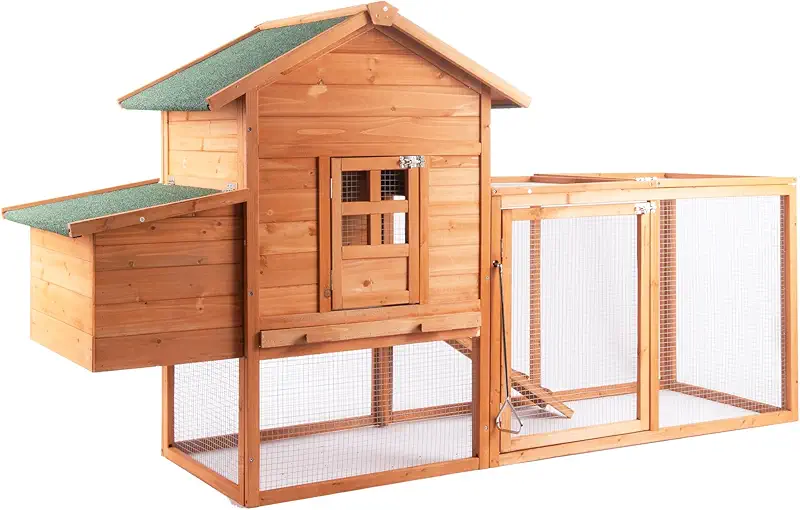
For muddy climates and smaller yards, raising the coop on stilts over part of the run is one of the smartest chicken coop ideas DIY I know. The hens get dry space under the coop in bad weather, and your footprint stays compact. Design tips:
Set sturdy posts into the ground or on concrete pads.
Leave 2–3 feet of headroom under the coop for the birds to shelter.
Put the people door on the high side so you’re not ducking.
Use hardware cloth under the floor if predators are a concern.
A coop raised over the run gives dry shade and saves yard space.
This style is especially handy on wet ground. The hens have a dry spot every day of the year, and you’re less likely to lose boots in the mud.
Inside the Coop: Roosts, Nests, and Ventilation
You can impress your neighbors with cute windows and flower boxes, but your hens judge the coop by the inside. They care about where they sleep, where they lay, and how the air feels. Let’s make those parts right.
Roosts: Let the Ladies Sleep High
Chickens are wired to sleep up off the ground. It keeps them safe in the wild, and it keeps them calm in your backyard. A few simple rules:
Use 2x4 boards laid flat, edges rounded off. Flat side up keeps toes warm.
Set roosts higher than the nesting boxes, or they’ll sleep in the nests and you’ll get poopy eggs.
Allow 8–10 inches of roost space per bird.
Keep roosts all at the same height so the birds don’t fight for the “top bunk.”
Nesting Boxes: Dark, Quiet, and Boring
Nest boxes don’t need to be fancy. In fact, the more boring, the better. Every time I tried to get cute, the hens laid eggs under the ramp instead. What works best here:
One nest per 3–4 hens. They’ll all pick the same favorite one anyway.
Entrance about 8–10 inches wide, front lip to keep bedding in.
Placement in the dimmer part of the coop, away from the main door.
Easy‑to‑remove bedding like straw, shavings, or chopped hay.
Simple, shaded nest boxes with a little lip to hold bedding: the hens’ favorite kind.
I like to build nest boxes that open from the outside. That way my grandkids can collect eggs without tracking half the farm into the house. Plus, it keeps muddy boots out of the main coop more often.
Ventilation: Fresh Air Without Drafts
Good ventilation is where many DIY coops fail. Chickens breathe out a lot of moisture and ammonia. If it builds up, you’ll see frostbite in winter and respiratory issues year‑round. But drafts will chill them. The trick is to place vents:
High under the eaves, not at roost height.
On opposite walls if possible, so warm air can rise and escape.
Covered with hardware cloth to keep out predators.
In cold states, I run long, narrow vents along the top of the walls and leave them open all winter. The air stays fresh, but the birds don’t feel a strong breeze. If your coop smells like ammonia when you open the door, you need more airflow or more frequent clean‑outs (usually both).
Predator‑Proofing and Durability
Out here, everything likes chicken. Raccoons, foxes, hawks, owls, dogs, and yes, even that neighbor who promises he’ll shut his gate “next time.” A lot of the best chicken coop ideas DIY fall flat if you forget to protect the birds.
Strong wire, buried edges, and solid latches keep curious critters on the outside.
Wire: Hardware Cloth Beats Chicken Wire
Chicken wire is for keeping chickens in, not for keeping predators out. Raccoons can pull it apart like wet cardboard. Use hardware cloth (1/2 inch) for:
Windows and vents.
Lower sections of the run.
Any place something could reach in and grab a bird.
Digging Predators and the Apron Trick
Foxes and dogs love to dig. Instead of burying fence straight down, I run a horizontal “apron” of hardware cloth 12–18 inches out from the coop and run, right under the surface. When predators start to dig at the fence line, they hit that mesh and give up.
Doors, Latches, and Night Routine
Raccoons can open simple latches better than some people I know. On our farm, every outside door has:
Two‑step latches (like a hasp plus a carabiner, or similar).
Hinges installed so doors close tight without gaps.
Wood thick enough that claws can’t rip it apart.
I also keep a simple routine: count the birds at dusk, shut the pop door, double‑check the run gate. Takes two minutes and has saved many hens over the years.
Daily Life: Keeping the Coop Easy to Live With
A coop isn’t just a house for chickens; it’s a chore you’ll live with every day. Good chicken coop ideas DIY respect your knees, your back, and your time.
Make Cleaning Fast and Simple
My best coops share three cleaning features:
Big access: Doors wide enough to swing a shovel without jamming your knuckles.
Flat, tough floor: Plywood sealed with paint, or rubber mats you can scrape.
Removable roost boards: So you can knock off droppings without twisting yourself like a pretzel.
I also like a removable “poop board” under the roosts, layered with a little bedding. I can scrape that into the compost in a minute, and suddenly the whole coop smells like sawdust instead of barnyard.
Water and Feed Without the Mess
I learned the hard way that water inside the coop equals damp bedding and smells. Whenever I can, I:
Keep the main waterer in the covered run, not over the bedding.
Hang feeders slightly off the ground, so hens can’t scratch half of it out.
Set a small patio of pavers under waterers to avoid mud pits.
You will still spill feed now and then. Consider it your donation to the wild birds and the resident mouse who thinks he’s part of the flock.
FAQ: Common Questions About Chicken Coop Ideas DIY
How big should my DIY chicken coop be?
I aim for about 4 square feet per bird inside the coop and at least 10 square feet per bird in the outside run. So, for 6 hens, an 4x6 or 4x8 coop with a 6x10 run is comfortable. If you can give more space, do it. Crowding leads to pecking and stress, and stressed hens lay fewer eggs.
What is the cheapest way to build a chicken coop?
The cheapest way is to use what you already have: reclaimed lumber, leftover roofing, old windows, even pallets if they’re in good shape. But don’t skimp on the important parts: roof, flooring, and hardware cloth. I’ve built coops from almost free materials, but I never save money on predator‑proofing. Cheap is fine; flimsy is not.
Do I need insulation in a DIY coop?
In most U.S. climates, solid walls, no drafts, dry bedding, and good ventilation are more important than insulation. Many folks over‑insulate and then struggle with moisture. I only insulate in very cold areas, and even then I protect it from curious beaks with solid interior sheathing. Healthy adult hens handle cold better than damp, stale air.
Should the coop floor be dirt, wood, or concrete?
Dirt is easy but can invite rodents and moisture. I prefer raised wooden floors for backyard setups: treated skids or blocks under joists, then plywood on top, sealed with exterior paint. On some bigger farm coops we poured concrete, which is great but pricey. Whatever you pick, keep it dry and easy to scrape clean.
How much ventilation does a chicken coop need?
More than most people think. As a rough rule, I like at least 1 square foot of vent opening per 10 square feet of floor space, placed high above roost level. In practice, that means long vents along the top of walls, plus windows you can open when it’s warm. If the coop smells sharp or feels stuffy to you, it’s too tight for your hens.
Once you see different styles, sizes, and layouts, your own chicken coop ideas DIY start to fall into place. It’s a bit like shopping for boots — try a few in your mind before you commit.