Chicken coop in store
Chicken Coop in Store
Chicken Coop in Store
I’ve been raising laying hens here in the States for more years than I’ve had birthdays I care to count.
I still remember my first “chicken coop in store” trip. I walked in thinking I needed a cute little house.
I walked out realizing my hens needed something a whole lot smarter than cute.
If you’re standing in a store aisle (or scrolling a page) trying to pick a coop, let me sit on the hay bale
beside you and talk you through it, neighbor to neighbor. We’ll keep it simple, honest, and practical,
so your birds stay safe and your egg basket stays heavy.
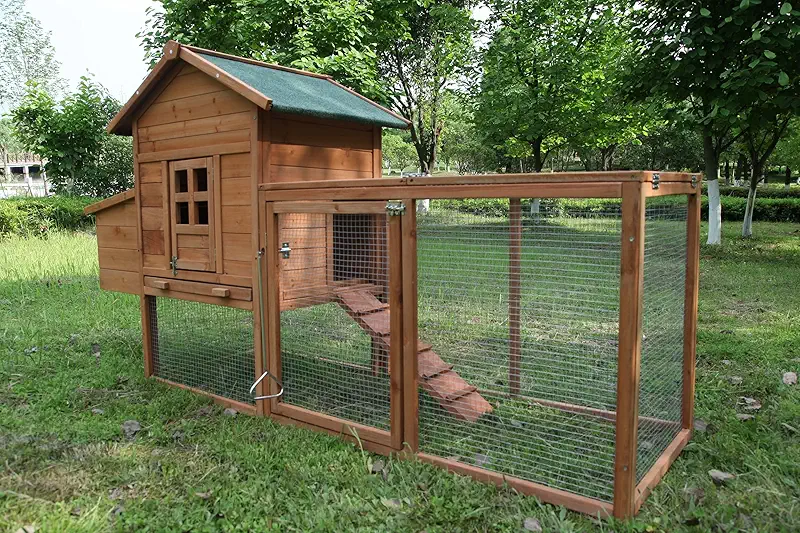
A solid coop beats a pretty coop every single winter.
What “chicken coop in store” really means for your hens
When folks say they’re looking for a chicken coop in store, they usually mean two things:
- They want to see the size and layout with their own eyes.
- They want something ready, or almost ready, so they can get birds settled soon.
Nothing wrong with that. But stores love pretty paint and little windows. Chickens, on the other hand, care
about three things: space, safety, and dryness. Get those right, and they’ll lay you breakfast
with a smile. Get them wrong, and you’ll spend more time fixing problems than enjoying your flock.
I’ve walked down plenty of aisles, looked at coops, and thought, “That’s perfect… for three stuffed animals.”
So before we talk specific designs, let’s talk about how to read a coop like a farmer, not like a tourist.
How to judge a chicken coop in store in five minutes
1. Count real living space, not brochure space
Ignore the big bold “for 6–8 chickens” on the box. That number was probably written by someone whose closest
contact with a hen was a nuggets box. For laying hens:
- Indoor coop space: 3–4 square feet per bird is my comfort zone.
- Outdoor run space: 8–10 square feet per bird if they’re not free-ranging.
When you see a chicken coop in store, step it off in your head, or picture a sheet of plywood
(4x8 feet). How many “hen-sized bodies” actually fit on the floor without piling up?
The more honest you are with that picture, the calmer your flock will be.
2. Check wood, wire, and hardware
I tap everything with my knuckles and give doors a little shake. You want:
- Thick wire mesh, not flimsy chicken wire (raccoons love that stuff).
- Screwed joints, not just staples and wishful thinking.
- Real latches you can’t bump open with a hip.
A chicken coop in store might look cute, but if the frame wiggles when you touch it,
imagine what a bored raccoon can do at 2 a.m.
3. Roof and weather sense
Look at that roof like you’re a raindrop. Does water run off easily, or sit and soak?
A good coop roof:
- Has a decent slope so water and snow slide off.
- Extends past the walls a bit to keep water from dripping inside.
- Is solid enough you don’t see daylight poking through.
I’ve seen some fancy shingles glued onto what might as well be damp cardboard.
That’s not a roof; that’s a soggy promise.
Practical Coop Types
Comparing common coops you’ll see in store
Most “chicken coop in store” setups fall into a few simple families. Let me walk you through how
I think about them, as someone who’s hauled feed in every kind of weather.
Starter Backyard Coop
Small wooden coops with attached run
These are the ones that look like tiny barns or cottages. They’re handy for 3–4 hens,
especially in a small yard. Just don’t trust the “up to 8 chickens” line on the tag.
I like these for folks just getting started or for a separate “grow-out” coop for young birds.
Let me see more
Walk-In Coops
Bigger barns and shed-style coops
When you can stand up inside, chores get a whole lot nicer. These coops cost more, but they
treat your back and your birds better. Great for 6+ hens and for folks serious about eggs.
I tell people: if you think you’ll want more chickens later (and you probably will),
start looking in this direction.
This might fit me
Mobile & Tractor Coops
Coops you can move around the yard
These are lighter frames, often with wheels or handles. You move them so the hens get fresh grass
and the lawn doesn’t turn into a moonscape.
I’m a fan of these for folks with good grass and no desire to mow every square foot of it.
I’ll check options
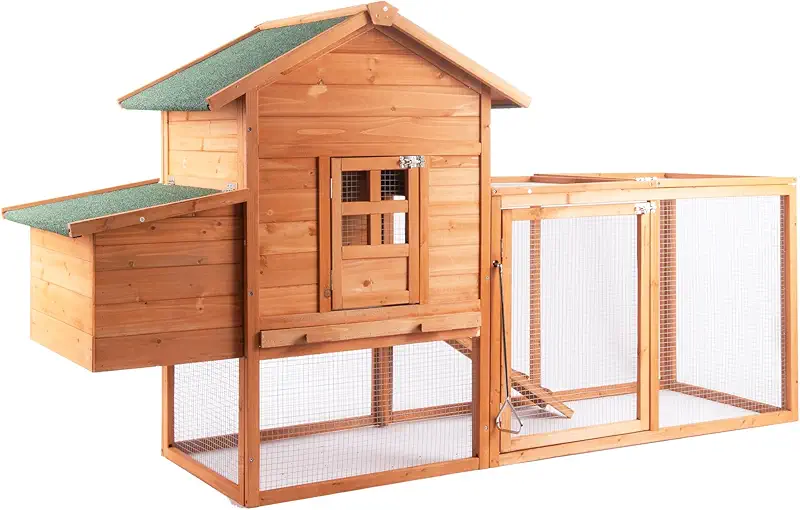
Different layouts, same goal: dry, safe, calm hens.
A farmer’s checklist for any chicken coop in store
I keep the same mental checklist every time I look at a new coop, whether it’s in a big-box store, a farm
supply place, or online. Print this out in your mind before you head down the aisle.
Space and layout
- Enough floor space that birds don’t bump shoulders with every step.
- Roosts higher than the nesting boxes, so they sleep on the bar, not in their own toilet.
- Nesting boxes about 18 inches off the floor, easy for you to reach, cozy for them.
- Feeders and waterers far enough from roosts that droppings don’t rain down in the night.

Think about daily chores before you think about paint color.
Ventilation and drafts
Chickens hate damp air more than they hate cold. A good chicken coop in store will show:
- Vents or windows up high so moist air can escape.
- Openings that are covered with sturdy wire, not left bare.
- Doors and seams that close snug, so there’s no wind blowing directly on the roost.
On my farm, I’d rather see a coop with generous roofline vents and solid walls than big glass windows.
Chickens don’t need a picture view; they need fresh, dry air.
Predator protection
Out here we say, “If it eats meat, it likes chicken.” That includes raccoons, foxes, dogs, hawks, and
the neighbor’s “he never does that” pet. So check:
- Door latches that require your fingers, not just a bump.
- Wire mesh with small holes so paws can’t reach in and grab toes.
- Frames that feel solid when you shake them.

If you can wiggle it, a determined critter can tear it.
My early mistakes (so you don’t repeat them)
Back when I bought my first “fancy” chicken coop in store, I got suckered by a pretty green roof and a cute
little window in the door. I hauled it home, spent an afternoon putting it together, and stood back proud as
a rooster at sunrise.
Two weeks later, after the first real rain, the roof swelled, the door stuck, and the inside smelled like a
locker room on wheels. The hens looked at me like, “This your idea of housing, boss?”
What I learned from that coop
-
Pretty doesn’t shovel manure. I needed solid lumber and good airflow, not just paint.
-
Access is everything. Cleaning through a tiny door is a recipe for a sore back and a grumpy farmer.
-
More birds will come. I started with four hens and ended with more than I’ll admit in writing.
Planning for “future chickens” is just realistic.
If I could stand beside you while you pick a chicken coop in store, I’d point at each one and say,
“Okay, imagine scraping this out in February. Still like it?” That little test will keep you honest.

Your future self will thank you for choosing something easy to clean.
Everyday Life With Hens
Designing your daily routine around the coop
A chicken coop in store is more than wood and screws. It’s where you’ll start and end a lot of your days.
Think about your routine first, then match the coop to the way you live.
Morning and evening chores
Picture this:
- You walk out with coffee in one hand and feed bucket in the other.
- You flip open the coop door without wrestling frozen latches.
- Hens come out, feed is handy, water is where you can reach it without ducking and cussing.
If a chicken coop in store forces you to crawl on your knees, you’ll start hating that coop long before the
hens do. Make sure doors are big enough and placed where you can work upright as much as possible.
Nesting boxes you’ll actually like using
I like outside-access nesting boxes with a lid that lifts from above. That way, you can collect eggs quickly
without stepping inside every single time. Look for:
- Lids that close tight and stay dry when it rains.
- Enough boxes: about 1 box for every 3–4 hens.
- Low enough height that older kids can help with collecting if you’ve got them.

Good nesting boxes turn egg collecting into a pleasure, not a chore.
Cleaning and bedding
Another thing to check while you’re looking at a chicken coop in store is how easy it will be to clean.
Some coops have removable trays; some have big doors; some… well, some seem to hope you never clean at all.
- Flat, smooth floors are easier to scrape than grooved boards.
- Big openings mean you can swing a shovel or a bedding fork inside.
- Space under roosts for a “droppings board” or extra bedding makes life nicer.
A coop that’s easy to clean stays dry and fresh. Dry and fresh hens stay healthy and lay better.
Simple as that.
Choosing In Store, Comparing Online
Using online options when you can’t see a coop in person
Sometimes the store doesn’t have what you need right in front of you. Maybe the display is smaller
than your flock, or they’re out of stock. That’s where comparing more than one chicken coop in store
and online comes in handy.
When I’m looking at coops on a screen instead of in an aisle, I pay extra attention to:
- Full dimensions in feet, not just “bird capacity.”
- Pictures of the inside from more than one angle.
- How the doors, windows, and nesting boxes actually open.

Photos and measurements help you judge a coop even when it’s not sitting in front of you.
One nice thing about browsing more than one place is that you can match what you saw in a chicken coop
in store with similar setups elsewhere. You already know what “feels right” in real life; now you just
find that same shape and size with the features you want.
I like to think of it like picking boots: try a pair on in town to learn your size and shape,
then you can be choosy about color and style later.
FAQ for New Chicken Keepers
Frequently asked questions about picking a chicken coop in store
1. How many chickens can I really keep in one of those small backyard coops?
Most small coops you see in store say “up to 6–8 chickens.” I’d call that wishful thinking.
For a typical small wooden coop with an attached run, I’m comfortable with 3–4 full-size hens,
if they also get time to roam. More than that and you’ll see pecking, mess, and stressed birds.
2. Is it okay to keep chickens in a coop all winter?
Yes, as long as the coop is dry, draft-free at bird level, and has enough room for everybody to move
without bumping shoulders all day. My hens stay in their coop and covered run on the worst winter days,
and they do just fine. What they need is good ventilation up high, clean bedding, and no icy drafts on the roosts.
3. Do I need electricity in my coop?
Not always. Many backyard flocks do fine without power. I ran extension cords for a while for heated water and
a light on a timer, but you can manage with thick bedding, unfrozen water carried out twice a day, and sunlight.
Electricity adds comfort and convenience, but it also adds risk if it’s not done safely.
4. Are plastic coops better than wood?
Each has its place. Plastic sheds and coops can be easier to hose out and don’t rot, but they can get hot in
the sun if not shaded. Wooden coops feel more natural to me and are easy to modify with extra vents or roosts.
When you’re looking at a chicken coop in store, I care less about the material and more about size, strength,
and airflow.
5. What’s the one thing I shouldn’t compromise on?
Space. You can add more vents, strengthen a door, or slap on a better roof later. But you can’t magically
stretch a tiny coop into a roomy one. Give your hens enough room right from the start, and you’ll avoid most
of the behavior and health problems that frustrate new chicken keepers.
Farmer’s Closing Thoughts
Bringing it all together before you pick your coop
When you’re standing there looking at a chicken coop in store, remember you’re not just buying a box for birds.
You’re choosing the little barn that’ll greet you every morning and every evening, in sunshine and in sideways rain.
Ask yourself:
- Will my hens have room to stretch, scratch, and sleep without crowding?
- Will I be able to open every door and latch with gloves on in January?
- Will this stay dry inside when the weather gets wild?
- Can I see myself still liking this setup two years and a few more chickens from now?

A good coop turns chicken keeping into a joy, not a chore.
If you keep those questions in your pocket, you’ll do just fine. Hens are forgiving creatures.
Give them room, safety, and a dry place to sleep, and they’ll pay you back in fresh eggs and quiet company.
And if your neighbors start asking where you learned so much about coops, well, you can just smile and say
you had a stubborn old farmer whispering in your ear.
If you’d like to look over more styles and sizes than any single aisle can hold, you can wander through a wide
range of chicken coops in one place and see what feels right for you and your flock.
I’ll explore all coops