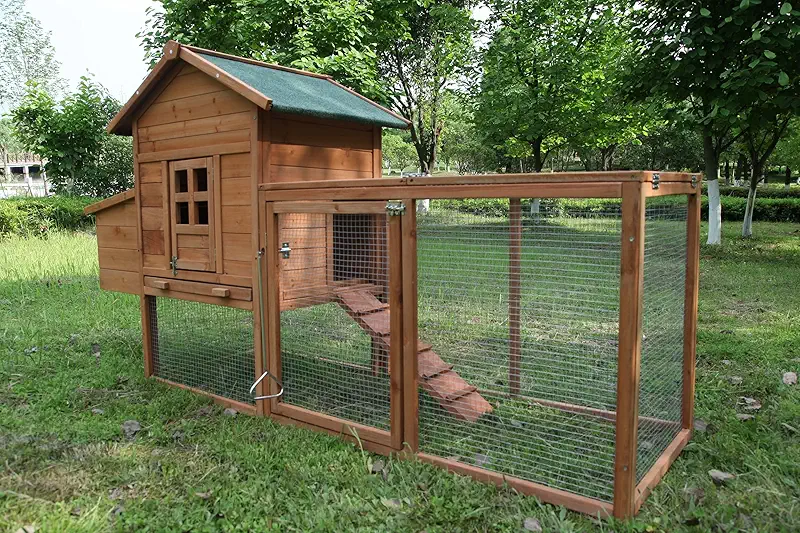
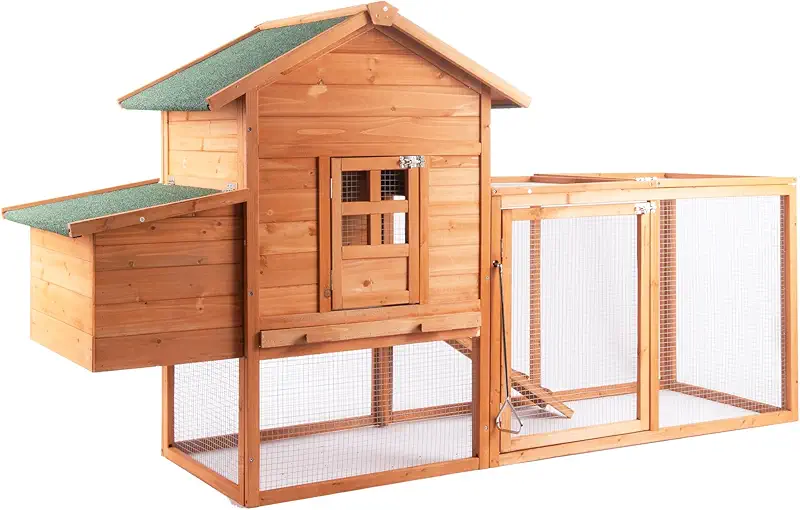
I’ve raised laying hens for more years than I care to count, and I’ll tell you this: the day I moved my flock into a chicken coop on wheels, my mornings got quieter, my pasture got greener, and my eggs got cleaner. In this guide I’ll walk you through what I’ve learned, what I messed up, and what I’d do again in a heartbeat.
If you’re thinking, “Maybe a mobile coop would make life easier for me and the hens,” you’re already halfway there. Look through different styles, sizes, and layouts, then picture how each one would roll across your yard or pasture.
When I first started with chickens, I had a heavy old wooden coop that didn’t budge an inch. The ground around it turned to mud every spring, then to hard-packed dirt in summer. The hens scratched it bare and spent their days walking in the same dusty square. I kept thinking, there has to be a better way than this worn-out, muddy corner.
A neighbor farmer showed me his chicken coop on wheels. He moved it a little every couple of days. The hens followed fresh grass, bugs, and clean ground like kids chasing an ice cream truck. Their feathers were brighter, their combs redder, and the shells on those eggs felt like little porcelain cups. That got my attention.
I finally switched to a mobile coop myself. I won’t pretend it solved every problem on the farm, but it made three things a whole lot better: hen health, egg quality, and pasture condition. The soil where I roll that coop now looks like it’s been given a quiet, steady blessing of manure and scratching, just enough to make the grass stand up and salute.
Key benefits of a mobile coop for laying hens
Healthier hens on cleaner ground
Hens are like us: they don’t do well standing in the same mess day after day. With a chicken coop on wheels, I can move the flock off muddy, poopy ground before problems start. Less manure build-up means fewer flies, fewer parasites, and less smell. The neighbors like that, and so do I.
Fresh ground under the birds every few days
Less caked manure and wet bedding
Cleaner feet, cleaner feathers, cleaner eggs
Better air flow around the coop in summer
When I ran a fixed coop, I battled coccidiosis one ugly spring. Wet ground, crowding by the doorway, and too much muck. After I moved to a mobile coop and rotated the hens, I noticed those problems just didn’t show up the same way. Not magic, just better ground management.
Pasture that improves instead of dies
A stationary coop can turn good grass into a sad dirt lot. A chicken coop on wheels does the opposite when you move it right. The hens graze, scratch, and fertilize a patch, and then you roll them on before they overdo it. A few weeks later, that patch usually comes back thick and bright green.
I joke that my hens are my smallest, pickiest fertilizer spreaders. They’ll miss a weed but nail a patch of tender clover every time. When the coop rolls, the fertility follows a neat little trail behind it. If you’ve got a yard that struggles, a well-managed mobile coop can slowly write a new story in that soil.
Egg quality and flavor
Folks often ask why my eggs have such dark yolks. Part of that is feed, sure, but a lot of it comes from access to real grass and bugs. A chicken coop on wheels lets me park the flock where the forage is best. That means the birds spend more time doing what they were built to do: graze, scratch, hunt, and peck.
When I had a fixed run, the birds picked it clean and then mostly stood around waiting on the feeder. With a mobile coop I see them fan out, working the fresh ground like a little army, snatching grasshoppers and digging up worms. You can taste that in the eggs, no fancy chef words needed.
How to choose the right chicken coop on wheels
Not every rolling coop is built the same, and not every yard or farm needs the same setup. Before you start looking around, it helps to be honest about your space, your weather, and your back. A coop that looks cute in a picture won’t help much if you dread moving it.
Factor
What to think about
Farmer’s note
Flock size
How many hens now and in a year?
Plan for at least a few extra birds. Chicken math is real.
Weight & wheels
Can one person move it on your ground?
If it’s heavy empty, it’ll feel like a tractor when it’s loaded.
Predator protection
Wire, latches, skids, locks
Raccoons work nights and weekends. Plan accordingly.
Climate
Hot summers, cold winters, wind
Ventilation is gold; drafts are trouble. There’s a difference.
Run design
Built-in run or separate netting?
Built-in is simple. Separate netting gives more grazing room.
Pros and cons of a chicken coop on wheels
I love mobile coops, but I also like being honest. Here’s how it looks from my side of the fence.
What I like
Cleaner ground and cleaner eggs
Better use of every patch of grass
Less smell and fewer flies around the house
Flexibility to move away from low, wet spots
What can be tricky
You have to commit to moving it regularly
Steep hills or very soft ground make it hard to roll
Cheap wheels or weak frames don’t last long
If you’re fine with a little routine, the trade-offs are worth it. I treat moving the coop like checking the mailbox: quick, simple, and part of the day.
Setting up your chicken coop on wheels step by step
Once you bring a mobile coop home, don’t just roll it into the yard and toss in birds. A little planning now saves you headaches and lost hens later. Here’s the order I like to follow.
Walk your property and choose level routes with firm ground.
Decide how often you plan to move the coop, then double that in your head.
Set up your feeding and watering spots so they won’t tip while rolling.
Test the doors, latches, and nest box access with the coop full of bedding.
Try moving the coop by yourself when it’s empty, then again with a little weight.
I like to mark a few “parking spots” in my head: a shady summer line, a drier winter line, and a backup spot away from the wind. That way I’m not deciding in a storm where to drag the coop. I already know.
Daily routine with a chicken coop on wheels
People sometimes think a mobile coop means more work. In my experience, it just shifts the work around and spreads it out better. Instead of fighting big cleanup jobs, I do small, steady things each day.
My mornings start with coffee in one hand and a bucket of feed in the other. I check water first. Mobile coops are more exposed to sun and wind, so water can warm up or spill quicker. Then I look at bedding inside the coop. If it’s getting too damp, I sprinkle in a bit more dry material and plan a move for the next day.
Moving the coop itself usually takes me five to ten minutes. I unhook any fencing, lift or pull from the handle or tow bar, and roll it to fresh ground. If you’re on a slope, you’ll learn fast where “too steep” begins. I like to park with the door facing slightly downhill so rain runs away, not into the entrance.
In the evening I count birds. It’s an old habit, but a good one. With a chicken coop on wheels, the birds sometimes range a little wider, following where the coop has been. A quick headcount tells me if everybody made it back to the roost, or if one adventurous hen decided to sleep under the apple tree again.
Predator safety and mobile coops
A rolling coop won’t help you much if something can slip under it or rip into it. I live where coyotes sing at night and raccoons act like they pay the mortgage. So I take predator protection serious, especially with a coop that moves.
On my chicken coop on wheels, the edges sit tight to the ground, and the run area is wrapped in sturdy hardware cloth, not flimsy chicken wire. Chicken wire is good for keeping birds in; it’s not so good at keeping hungry things out. I also like solid latches that need two motions to open. If I can flip it with one finger in the dark, a raccoon can, too.
For night protection under the run, some folks use a wire skirt or mobile apron that lays flat on the grass around the coop. Predators tend to start digging right at the edge, hit that wire, and give up. It’s not perfect, but it tilts the odds your way.
Comfort for your hens inside a mobile coop
A chicken coop on wheels still needs to feel like home to your hens. They don’t care that it rolls; they care that it’s safe, dry, and comfortable. That means good roost space, solid nesting boxes, and honest ventilation.
I aim for roosts higher than the nest boxes, so hens go to sleep on the bars, not in the nests. Otherwise you end up with warm, squashed eggs and a lot of cleaning. I like about 8–10 inches of roost space per hen, more if the weather runs hot so they can spread out.
Ventilation is one of those things people get wrong. You want air moving up high, carrying moisture out, without a cold breeze blowing across your birds at night. A well-designed chicken coop on wheels gives you vents up near the roof and solid walls or panels around the roost area.
As for nest boxes, give your ladies a bit of privacy. I add a curtain or a small lip on the front sometimes. They don’t need a palace, just a quiet little corner where they can lay without some bossy hen giving them side-eye.
FAQ about using a chicken coop on wheels
How often should I move a chicken coop on wheels?
I usually move mine every one to three days, depending on how many hens are in it and how fast they’re working the ground. If the grass is short and the droppings are building up, it’s time to roll. If you can smell the coop before you see it, you’ve waited too long. In light use, you can stretch it a bit, but frequent smaller moves keep things fresher for both birds and pasture.
Can one person move a chicken coop on wheels?
It depends on the weight, wheel size, and your terrain. On flat, dry ground with decent wheels, one person can usually move a well-designed coop without much strain. On slopes, mud, or rutted ground, the same coop can feel like a stubborn old tractor. When you’re shopping, imagine moving it on the worst day, not the best one. If that picture makes your back ache, look for lighter designs or better wheels.
Are mobile coops safe in winter?
They can be, if you think ahead. A chicken coop on wheels needs the same winter basics as any coop: dry bedding, protection from drafts, and good ventilation up high. In snowy areas, I pick a winter “line” and move the coop less often, keeping it where I can still get to it with a path. I also watch wheel placement so the coop doesn’t sink or tilt in freeze–thaw cycles. The birds handle cold better than damp, so focus on keeping them dry and out of the wind.
Will a chicken coop on wheels work in a small backyard?
Yes, as long as you’re realistic. In a small yard, you won’t be rolling it across acres of pasture, but you can still rotate it to avoid worn-out patches. A smaller tractor-style coop that’s easy to move might suit you better than a big walk-in setup. Just plan a simple path you can follow—maybe a few parking spots along the fence—and give the grass time to recover before circling back.
How many chickens can I keep in a mobile coop?
That depends on the coop’s floor space, run size, and how often you move it. As a rough rule, I like at least 3–4 square feet per bird inside, plus outdoor space they can actually use. With a chicken coop on wheels, the more you move, the more forgiving things get. Still, don’t pack them in tight just because the coop rolls. Crowded birds fight more, lay less, and make more of a mess wherever you park them.
If you’re still reading, chances are a little mobile hen house is already scratching at the back of your mind. Take your time, picture how a chicken coop on wheels would fit your own routine, and listen to that quiet part of you that wants cleaner ground, calmer chores, and better eggs.