
Chicken coop with run
Chicken Coop With Run – keep your hens safe, busy, and laying steady eggs.
I’ve raised laying hens on this old piece of dirt for over 30 years. I’ve tried tiny tractors, flimsy hutches, and big barns. The happiest, healthiest birds I’ve ever had all lived in a solid chicken coop with run.
When folks ask me why my yolks are so dark and my shells so strong, I don’t start with fancy feed. I start with the coop and the run. A good setup keeps hens dry, safe, and moving. A bad one turns into mud, smell, and headaches. I’ve chased enough hens in the rain to know the difference.
In this guide I’ll walk you through what really matters in a chicken coop with run, speaking as a working farmer, not a catalog. I’ll share the little mistakes I’ve made, the predators I’ve fought, and the designs that finally let me sleep at night instead of listening for coyotes.
Let me compare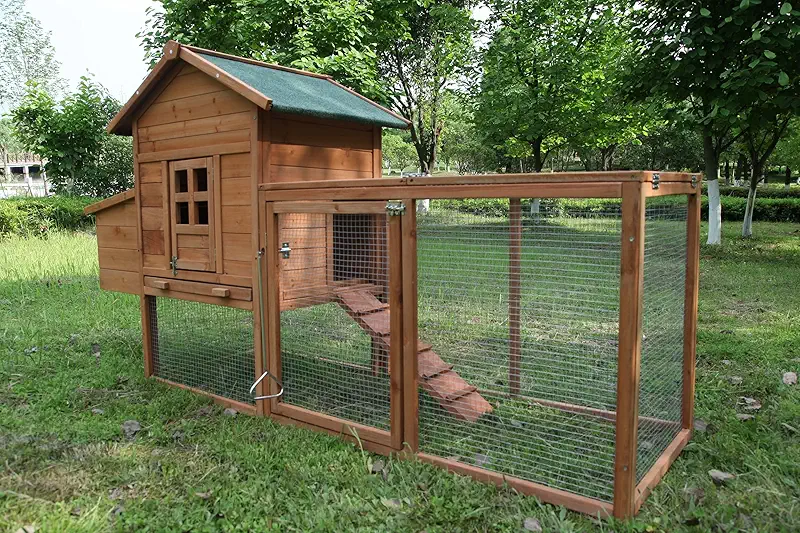
Why a chicken coop with run beats a plain coop
The first birds I ever owned slept in an old wooden shed. No run, just open pasture during the day. Looked romantic, until the raccoons caught on and the fox dug his tunnels. I learned fast that freedom without protection is just bait on a schedule.
A proper chicken coop with run gives you the best of both worlds: shelter and space. The coop is for sleeping, laying, and bad weather. The run is for scratching, dust bathing, gossiping, and burning off that hen energy. When weather turns ugly or predators get bold, your birds still get fresh air instead of being locked in a dark box.
On my farm, we see it in the egg basket. Hens that can stretch their legs and poke around in a safe run lay more steady, with fewer odd eggs. They’re calmer too. A bored hen will pick on her flock mates; a busy hen minds her own business, kind of like old farmers.
Another thing folks forget: a run gives you options. If you need to keep the girls off your new garden seedlings, you just keep them in the run a few days. No chasing birds around cabbage rows while the neighbors laugh.
Key things I look for in a chicken coop with run
1. Strong frame and solid roof
If a coop wiggles when you push it, a storm will finish the job. I still remember one spring windstorm that rolled my first cheap coop ten feet across the yard. Hens were fine, but they looked at me like I’d lost my mind.
- Wood or metal frame that doesn’t flex much
- Roof with real pitch so rain and snow slide off
- No big gaps where wind can howl straight through
If you get snow like we do, avoid flat roofs. Wet snow is heavy. A simple sloped roof saves a lot of shoveling and cussing.
2. Predator-proof wire
I tell new keepers this all the time: you’re not just buying a chicken coop with run; you’re buying a bank vault for birds. Everything likes chicken. Fox, raccoon, dog, hawk, even the neighbor’s kid sometimes.
- Prefer 1/2" hardware cloth over thin chicken wire
- Sturdy latches that raccoons can’t fiddle open
- Wire buried or flared out at the base to stop digging
One summer I got lazy and left a cheap latch on the run door. Raccoon figured it out in two nights. I fixed that mistake with carabiners and haven’t lost a hen to a latch since.
3. Room to live, not just survive
A tight coop smells bad, gets damp, and makes chickens cranky. I aim for at least 4 square feet per bird inside the coop and around 8–10 square feet each in the run, more if you’ve got the space.
Remember, you’ll probably end up with more hens than you planned. We all do. I started “just six.” I’ll let you guess how that ended.
4. Easy for humans to clean
If cleaning the coop feels like crawling under a porch, you’ll put it off. I look for:
- Big access doors you can reach through without bending like a pretzel
- Removable trays or floors under the roosts
- Nesting boxes you can reach from outside
A few minutes cleaning each week beats one nasty afternoon every two months.
How big should your chicken coop with run be?
Let me be straight with you: almost everyone underestimates size. The photos make those coops look huge. Then you see it in your yard and realize your “palace” is more like a studio apartment.
Here’s the rule of thumb that’s worked on my place:
- Inside the coop: about 4 square feet per hen
- In the run: at least 8–10 square feet per hen
- Roost space: 8–10 inches of perch per hen
- Nesting boxes: about 1 box for every 3–4 hens
If you’re in town and space is tight, don’t cram too many birds in “just because the ad says it fits 10.” I’d rather see 4 happy hens than 8 miserable ones. Happy hens lay, angry hens plot.
Start smaller than your dream flock. Learn the ropes with fewer hens and upgrade your chicken coop with run later if the chicken math bug bites.
Extra space is great, but too big of a coop with too few birds can be hard to keep warm. Balance room with how many bodies will be heating it.
Prioritize shade and airflow in the run. Wire sides with a solid roof section keep birds cooler than a tiny shaded coop alone.
Real-world layout: how I set up my coop and run
On my main laying flock, the chicken coop with run sits on a slight slope where water doesn’t pool. The coop faces east, so the girls get soft morning sun. West wind here is mean, so the solid wall faces that way.
I fenced a run that’s long and skinny instead of a perfect square. Chickens like to walk and patrol; a long run gives them more “road” to march. On the far end I planted a clump of hardy shrubs and tossed some old branches. That’s their shade and “jungle gym.” They take dust baths under there and pretend they’re wild creatures.
Inside the coop, roosts are higher than the nest boxes. If the roosts are too low, hens sleep in the boxes and you get poop on your breakfast. I learned that lesson faster than I wanted to.
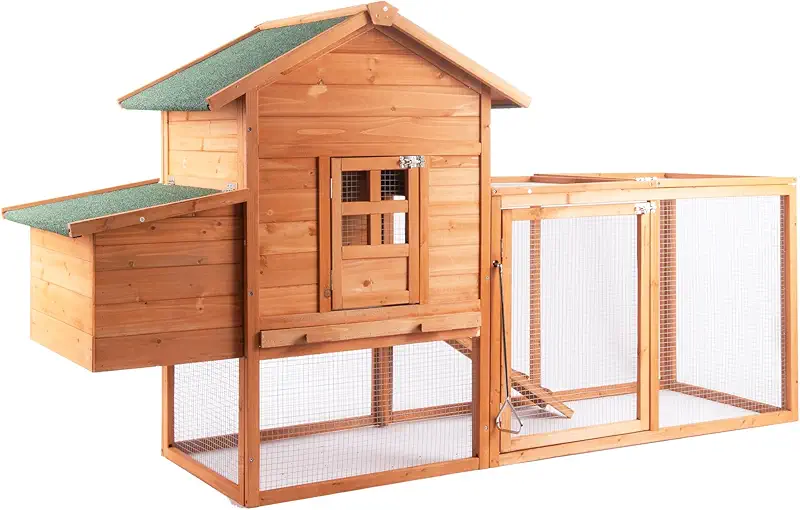


I keep feed and water in the run, not inside the coop, except during hard winter storms. That keeps moisture and mess outside, and the birds come out to move around as soon as they wake up.
Once a year I walk the entire run like a fox would, checking corners, latches, and any soft spots in the ground. Caught a weak panel last fall right where a coyote had been pacing. That five-minute walk saved me a lot of feathers.
Daily care for hens in a chicken coop with run
A good setup makes daily chores simple. Here’s what my usual day looks like, and it doesn’t matter if your coop is big, small, fancy, or plain: the rhythm is the same.
Morning routine
I check water first. Hens drink more than you think, and a run with no water turns into a squawking protest line. Then I top off feed, collect any early eggs, and take a quick sniff inside the coop. Strong ammonia smell means it’s time to freshen bedding or improve airflow.
Evening routine
Right before dark I do a headcount. It’s easier to count seven sleepy hens on a roost than seven busy hens in the run. If one is missing, I find her before night falls. I lock the coop door and make sure the run gate latch is properly set. One night of forgetting can undo years of good work.
Weekly and seasonal chores
- Rake or turn the run soil to control smell and mud
- Add dry material like leaves or wood shavings if the ground gets soggy
- Scrape roosts and check for mites or lice
- Look over the roof and wire for any new damage
Good habits matter more than fancy gear. I’ve seen hens thrive in simple coops because the people were steady and observant.
Show me sturdy onesSeasonal tips for your chicken coop with run
Seasons can be rough on birds if your coop and run aren’t set up right. Over the years I’ve learned to think one season ahead, not just react when trouble starts.
Winter: cold, wind, and boredom
Birds handle cold better than damp wind. I focus on stopping drafts at roost height but still letting moist air escape near the roof. In the run, I like to block the windiest side with tarps or solid panels, leaving the other sides open so air doesn’t get stale.
I also toss scratch grains into deep bedding in the run. The hens dig to find every kernel, which keeps their feet busy and their minds off the chill. Think of it as chicken treasure hunting.
Summer: heat and dust
On the hottest days, the run is my best friend. Shade is more important than anything. I set up shade cloth or use solid roof panels over part of the run so the birds always have a cool spot. I keep extra waterers out there, sometimes with a chunk of ice tossed in for the afternoon.
Dust baths are natural cooling and pest control for hens. Give them a corner of the run with dry soil and they’ll handle half the parasite work for you.
Rain and mud
Nothing wrecks a chicken run faster than constant mud. I’ve stood in ankle-deep soup swearing at the sky enough times to respect drainage. A slightly raised run area and a good layer of rough materials—wood chips, straw, dead leaves—go a long way.


Common mistakes folks make with a chicken coop with run
Over the years I’ve made just about every mistake you can with chickens. If my stories save you a headache or two, they’re worth sharing.
Too many birds in too little space
That “up to 10 hens” line in product descriptions is usually optimistic. Crowded birds peck, pull feathers, and spread disease faster. Give them elbow room. You wouldn’t want to live shoulder-to-shoulder in a broom closet either.
Trusting chicken wire alone
Chicken wire keeps chickens in; it does not keep predators out. I learned this when a determined dog chewed straight through a panel like it was spaghetti. After that, I upgraded to stronger wire around the bottom of every run.
No shade or cover in the run
A bare, open run looks neat in photos, but it feels like an airport runway to a nervous hen. They like places to duck under and hide from hawks and hot sun. A few old pallets, some shrubbery, or a small roofed corner makes them braver and happier.
Hard to reach eggs and doors
One coop I bought early on had nest boxes low and way in the back. I’d come in from chores, knees sore from crawling in the coop like a raccoon. Now I only use designs where I can reach eggs from outside or from a wide human-sized door.
Avoid these issuesFAQ about choosing a chicken coop with run
For a true small setup, I like 3–5 hens. Even if a listing says 8 or 10, I stay conservative. Figure about 4 square feet inside the coop per bird and around 8–10 square feet in the run. If your math says 8 hens fit but your gut says it looks tight, listen to your gut.
No, not if the chicken coop with run is sized right and set up with shade, dust baths, and things to peck at. Free ranging is nice when you can supervise and predators are low, but a secure run is safer for everyday life. I treat free range time as a bonus, not the plan.
Start with good location—slight slope instead of a low spot. Then add layers: wood chips, straw, leaves, and other rough materials. Every so often, rake and refresh. A partial roof over part of the run helps a lot too. I’d rather haul a load of wood chips once than fight mud all winter.
Most of my coops have wood floors with a thick layer of shavings or chopped straw. In wetter areas, raised floors help keep things dry. Whatever you choose, make sure you can scrape and clean it without too much trouble. A coop that’s easy to clean will actually get cleaned.
From a farmer who has patched too many bargain coops: yes. A sturdier build lasts more seasons, handles real weather, and keeps predators out better. Cheap, flimsy setups look like a savings until the first big storm or raccoon visit. Then you buy twice. I’d rather see you get something solid once and spend the rest of your time enjoying your birds.
If you’re ready to look over different styles and sizes, take your time and picture your birds living in them day to day. Imagine cleaning, feeding, and collecting eggs in that space. If it feels easy in your head, that’s a good sign.
Let me see them allWrapping it up: what your hens really need
At the end of the day, a good chicken coop with run doesn’t have to be fancy. Your hens don’t care about paint colors or cute signs. They care about dry bedding, steady fresh air, safe walls, and a bit of room to scratch and gossip.
If you give them that, they’ll thank you the only way they know how: with eggs in the nest boxes and quiet clucking when you walk by. There’s a special kind of peace that comes from hearing content hens settling onto their roosts at dusk. I still pause most evenings just to listen.
So choose a setup that fits your space, your weather, and your back. Picture yourself tending that coop on rainy days and icy mornings, not just sunny afternoons. If it looks manageable on the hard days, it’ll feel easy on the good ones.
I’ve never regretted spending a little extra effort thinking through my coop and run. It’s the backbone of the whole flock. Get that right, and the rest—feed, breeds, egg colors—is just the fun part.
When you’re ready to explore different options and imagine which one will sit best in your yard, take a quiet minute and look them over like you’re walking the farm at dusk.
I’ll walk through options