
Chicken coop with wheels
Chicken Coop With Wheels
I’ve been raising laying hens on our small American farm for more decades than I care to count. Once I switched to a chicken coop with wheels, my chores got lighter, my hens got happier, and the yard got a whole lot cleaner. Let me walk you through what I’ve learned, like we’re talking over a mug of coffee at the kitchen table.
When folks ask me why I like a chicken coop with wheels, I usually say, “Because my back still works, and I’d like to keep it that way.” Dragging a heavy coop across the yard is a young person’s game. A good mobile coop rolls smooth, keeps the birds on fresh grass, and saves you from shoveling mountains of packed manure. The hens stay cleaner, the eggs stay cleaner, and you spend more time watching them than cussing at them.
I started out years ago with a fixed coop that never moved. The ground under it turned into a muddy, stinky mess every spring. The hens scratched it bare, dust baths turned into crater-sized holes, and flies thought I’d built a resort just for them. When I finally tried a wheeled coop, it felt like I’d discovered sliced bread all over again. Same chickens, same yard, but a whole lot less smell and a lot more grass.
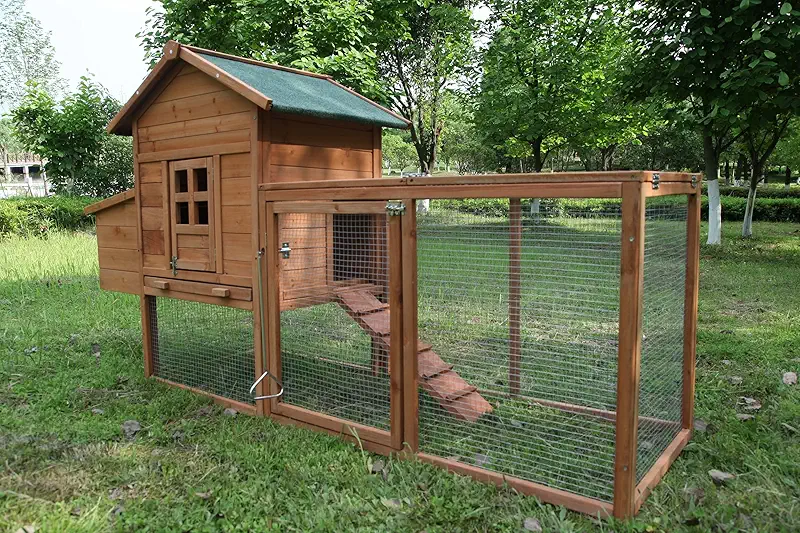
A sturdy chicken coop with wheels lets you move your hens to fresh grass without turning it into a wrestling match.
Why a chicken coop with wheels makes life easier
A chicken coop with wheels is really just a small house on a simple trailer frame, but it changes how you raise hens. Instead of the birds beating one patch of ground to death, you roll them to a fresh spot every day or two. They get new grass to nibble, new bugs to chase, and a cleaner place to scratch. You get less smell, fewer flies, and greener grass.
On my farm, I like to think of the hens as tiny fertilizer machines with feathers and opinions. Move them across the pasture and they’ll spread their manure evenly, like a slow, clucking lawn crew. I’ve got strips of the yard that look like someone used a secret green-up potion — all because the coop spent a week sitting there.
If you can’t move the coop with one arm and a steady walk, it’s too heavy. You’ll dread it, and chores you dread don’t get done on time. Choose a size and wheel setup that fits your strength, your ground, and your weather.
Healthier hens, better eggs
Laying hens do best when they have clean ground under them and something to do besides argue with each other. A chicken coop with wheels gives them new scenery. New grass means more natural feed — little clover leaves, grass tips, beetles, worms after a rain. The yolks turn a deep, rich orange, and the shells feel stronger. My grandkids call them “sunshine eggs,” and honestly, they taste like it.
Keeping the coop moving also helps with parasites and disease. When birds sit on the same dirty patch, droppings build up and worms and bacteria get comfortable. Move the coop, and you break that cycle. It doesn’t replace good bedding and cleaning, but it sure makes everything easier to manage.
Key things to look for in a chicken coop with wheels
When you start hunting for a chicken coop with wheels, it’s easy to get distracted by pretty paint and cute windows. Don’t worry, the chickens don’t care about the color; they care about comfort, safety, and space. Here’s what I always look at before I put a coop in the yard.
- Strong wheels and frame: Cheap little plastic wheels sink in soft ground and jam on bumps.
- Easy-to-use handle: You’re going to pull this thing in the rain, in mud, and sometimes in the dark.
- Good ventilation: Warm air and moisture must get out without letting drafts hit the roosts.
- Safe, simple latches: Raccoons have nimble little hands and more patience than most kids.
- Enough room: Plan at least 3–4 square feet per hen inside, more if they’re in there a lot.
I like coops that roll smoothly enough that I can move them with a mug of coffee in the other hand. If I need a tractor or a wrestling partner, that coop is too much trouble. Remember, this is something you’ll use almost every day if you do it right.
My first season with a wheeled coop
The first season I switched to a chicken coop with wheels, I made just about every mistake you can think of. I parked it on a slope so steep the water ran through the run like a tiny river. I forgot to close the door one night and found a raccoon trying to negotiate rent. I even tried to pull it through a muddy patch in my Sunday boots. Let’s just say the mud won.
But I also saw some real changes. The bare patch that used to sit under the old fixed coop started to heal, once it got a break and a sprinkle of grass seed. The hens were calmer. Their combs looked brighter, feathers shinier. The eggs lined up in the nesting boxes like they were proud of themselves. Every two or three days, I’d roll the coop forward a length or so, and the yard slowly turned from patchy and tired to thick and green.
How often should you move a chicken coop with wheels?
How often you move your chicken coop with wheels depends on how many birds you have and how big the run or attached area is. My rule of thumb is simple: if the grass looks tired, it’s time to move.
- Small flock (4–6 hens) on a medium yard: every 2–3 days.
- Bigger flock (8–12 hens): usually every day, especially on soft ground.
- Dry, tough lawn: you can wait a bit longer, but watch for bare spots.
Don’t overthink it. Step inside the run and look at the ground. If the droppings are building up and you can smell things before you see the coop, you’re overdue. The goal is to move them while it still looks decent, so the grass has a chance to bounce back.
I like to move the coop in the evening, close to sunset. Hens are calmer and already thinking about roosting. I close the pop door, move the coop, then open up again so they can settle. In the morning, they step out into a fresh salad bar.
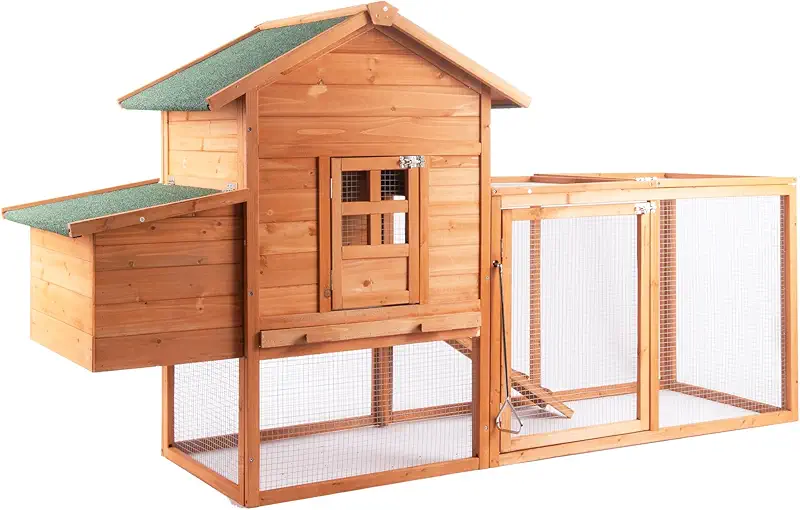
Different styles of wheeled coops fit different yards and flocks. Think about space, predators, and how often you’ll move it.
Design details that matter more than pretty paint
Over the years, I’ve learned to look past the “cute” factor and focus on what actually makes a chicken coop with wheels work day in and day out. Paint looks nice, but it won’t keep your hens dry in a thunderstorm or safe from a midnight visitor.
Wheel size and placement
Bigger wheels usually mean easier moving, especially if your yard is bumpy or soft. If your ground is uneven or you’ve got some hills, look for:
- Sturdy rubber or pneumatic tires instead of tiny plastic casters.
- Wheels placed toward the heavy end, so the weight balances when you lift the handle.
- Good ground clearance so the frame doesn’t drag on roots and rocks.
I’ve had coops where the wheels were so small that every little stick felt like a speed bump. I spent more time yanking and lifting than actually walking. With better wheels, the coop glides like a wheelbarrow on a good day.
Ventilation and weather protection
Hens breathe out a lot of moisture overnight, and all that damp air needs a place to go. A chicken coop with wheels still needs proper ventilation just like any other coop. I look for vents or windows up high that let warm air escape while keeping drafts off the birds at roost level.
In winter, I close some vents and leave others cracked, so moisture doesn’t freeze on combs and wattles. In summer, I open everything I can while still keeping predators out. A simple rule: if you walk inside and it smells sharp or feels damp, you need more airflow.

Good ventilation keeps hens healthy while solid roofing and siding protect them from wind, rain, and snow.
Predator protection on a mobile coop
Predators don’t care that your coop is on wheels. In fact, they see it as a food truck that parks in a new spot every night. Around here we’ve got raccoons, foxes, neighborhood dogs, hawks, and the occasional coyote. A chicken coop with wheels needs tight hardware cloth, solid latches, and a secure floor or apron.
- Use hardware cloth, not chicken wire. Chicken wire keeps chickens in; it doesn’t keep predators out.
- Check the bottom edges. Gaps under the frame are an invitation to diggers.
- Use real latches. Carabiners or locking latches beat simple hooks every time.
- Walk the coop at dusk. That’s when you spot little gaps you missed in daylight.
One night I found a raccoon trying to reach a loose corner of wire I hadn’t fastened tight. The hens were yelling about it loud enough to wake the neighbors. That taught me to run my hands along all the edges of a new coop, inside and out, before I ever put birds in it.

Think through daily chores: feed, water, collect eggs, and move the coop. Simple layouts save time every single day.
Daily life with a chicken coop with wheels
Living with a chicken coop with wheels changes your daily rhythm a bit. Most mornings for me start with coffee in one hand and feed bucket in the other. I swing by the coop, say good morning to the ladies (they answer back, loudly), check water, and look at the ground. If yesterday’s patch looks worn out, I already know what I’m doing after evening chores.
I collect eggs once or twice a day, depending on who’s laying and who’s taking the week off for molting. Mobile coops with external nest box doors are worth their weight in gold. Being able to gather eggs without crawling inside saves time and keeps the birds calm.
Feeding and watering on a moving coop
Feeding and watering in a chicken coop with wheels takes a little forethought. Every time you move the coop, your feeders and waterers either move with it or bounce around inside.
- Hang feeders and waterers from solid hooks so they don’t tip when you move the coop.
- Keep water lines or hoses where you can reach them along your usual moving path.
- Check the water level right after every move; sloshing can spill more than you think.
- Use covered feeders so feed doesn’t get wet if a shower sneaks up on you.
I keep a short checklist by the back door: Close door, move coop, open door, check water, quick glance at latches. Takes me maybe five minutes, and I sleep better knowing I didn’t forget something important.
Every time you move your chicken coop with wheels, take ten extra seconds to look at the tires, handles, and any boards that take weight. Catching a loose bolt or cracked board early beats finding the coop tilted at dawn.
Choosing the right size chicken coop with wheels for your flock
A common mistake is picking a coop that’s either too tiny or such a beast you hate moving it. You want a chicken coop with wheels that feels like it was made for your flock and your yard, not for a catalog photo.
Start with how many hens you have now, and be honest about how many you’ll have after a couple of “cute chick” seasons. Most of us say we’ll just keep six. Then spring hits, and suddenly there are ten little fluff balls in the brooder.
- 4–6 hens: a small mobile coop works well and is easy to move.
- 6–10 hens: look for something mid-sized, with a decent run area.
- 10–15 hens: you’ll want stronger wheels, a solid frame, and maybe help moving on soft ground.
I like to size for the flock I expect in two years, not just today. That gives you breathing room without making the coop so heavy that you dread moving it.

Smaller coops are easier to move, larger ones give more space. Aim for a balance that fits your flock and your back.
Fitting a chicken coop with wheels into a backyard
Not every yard is a big open pasture, and that’s alright. A chicken coop with wheels can work in a regular backyard too, if you think ahead a little. Walk the space you have and imagine where the coop will roll, where the door will open, and where the sun and wind come from.
Try to:
- Keep the coop out of low, swampy spots that hold water after rain.
- Use a simple “path” where you roll the coop in a loop and let the grass rest behind you.
- Leave space to walk around it with a wheelbarrow or hose.
- Think about neighbors; a little distance and some shrubs keep everyone happier.
One of my neighbors runs a small flock in a suburban yard. She moves her coop in a slow circle around the fence line all season. By fall, the grass along that path looks better than the center of the yard.

Simple, sturdy construction is more important than fancy trim. Your birds want safety, space, and fresh ground.
Keeping laying hens content in a mobile coop
No matter how nice your chicken coop with wheels is, laying hens want the basics: safety, steady feed, clean water, dry bedding, and a little peace. Give them that, and they’ll give you eggs and a lot of quiet company.
I like to hang a simple cabbage or leafy greens in the run now and then, just high enough they have to stretch a bit. Keeps them busy and less likely to pick at each other. A small perch or stump in the run gives them a place to hop up and feel important. Chickens love feeling like they’re in charge of something.
Inside the coop, keep the roosts higher than the nest boxes and give everyone enough space to roost without being crammed. When hens sleep packed too tight, tempers rise and feathers fall.
My simple routine for healthy laying hens
Over time I’ve settled into a rhythm that works well with a chicken coop with wheels:
- Morning: Open pop door, check water, quick visual check of the birds.
- Midday: Quick egg collection and glance at the ground condition.
- Evening: Collect remaining eggs, close door after sunset, move coop if needed.
- Weekly: Fresh bedding in nests, quick scrub of feeders and waterers.
- Seasonal: Deep clean, inspect wheels and frame, tighten anything loose.
None of this is complicated. The trick is doing the small things regularly instead of big painful catch-up days. That’s where a mobile coop shines — less muck to fight with and more simple, steady care.

A clean, well-managed mobile coop rewards you with calm hens and baskets of strong-shelled eggs.
Exploring different styles of chicken coop with wheels
Out there you’ll find all sorts of takes on the chicken coop with wheels idea — from small backyard tractors to bigger rolling houses with room for a good-sized flock. Some focus on light weight and easy moving, others on more space or fancier trim.
When you look through different options, keep your real life in mind: your weather, your yard, your predators, your back, and your birds. The best coop isn’t the one with the fanciest photo; it’s the one you’ll still be glad to move and clean five years from now.
Take your time, think like a hen and like the person doing the chores, and you’ll end up with a setup that makes raising laying hens more pleasure than work.
FAQ about using a chicken coop with wheels
1. Will a chicken coop with wheels really hold up in bad weather?
A well-built chicken coop with wheels handles weather just fine, as long as you park it smart. I like to point the solid wall toward the prevailing wind and avoid low spots where water pools. In strong storms, you can chock the wheels with blocks or bricks so it doesn’t shift. The frame and roofing matter more than the fact it has wheels — good materials and tight joints keep hens dry and secure.
2. Is a chicken coop with wheels safe from predators at night?
Yes, if it’s built and used right. The wheels don’t make it less safe; loose wire and flimsy latches do. I make sure every mobile coop has hardware cloth on openings, solid doors, and latches that take deliberate effort to open. Close the pop door at dusk, check corners and edges now and then, and a chicken coop with wheels can be just as secure as a fixed one.
3. How hard is it to move a chicken coop with wheels by myself?
On level ground with decent wheels, it’s not bad at all. I’m no bodybuilder, and I move mine alone most days. The trick is matching coop size to your strength and your yard. Bigger wheels, good handles, and a lighter frame help a lot. If you’re on hills or soft soil, plan for smaller flocks or consider a slightly more compact coop so you don’t turn every move into a workout video.
4. Will a chicken coop with wheels tear up my lawn?
If you leave it in one spot too long, yes. If you move it regularly, it usually does the opposite. My yard looks better now than it did before I started rotating the coop. The key is to move before the ground turns bare. Think of the hens as little lawn helpers: they trim the grass, drop fertilizer, then you roll them forward and let the grass rest and recover.
5. Is a chicken coop with wheels good for beginners with laying hens?
I’d say it’s one of the best setups for beginners, as long as you keep the routine simple. A chicken coop with wheels encourages you to pay attention to your birds and your ground, and it keeps cleaning under control. New keepers often get overwhelmed by dirty coops; being able to roll to a fresh patch is a big help. Start with a manageable flock and a coop you can move without grumbling, and you’ll learn the rest as you go.
Final thoughts from an old farm hand
After all these years with laying hens, I can tell you this much: simple, steady routines and good, practical setups beat fancy gimmicks every time. A solid chicken coop with wheels is one of those practical tools that just makes sense once you live with it awhile.
You’ll still have muddy days and stubborn hens who lay in the one corner you didn’t expect. You’ll still step in something unpleasant now and then. But you’ll also have a yard that smells better, birds that stay healthier, and eggs that make you proud every time you crack one into the pan.
If you’re thinking about taking the leap, trust your common sense. Picture yourself out there in the rain, the snow, and the heat, doing chores with that coop. If it still sounds manageable in your mind, you’re on the right track. The hens will do their part; your job is to give them a safe, clean home you can manage with a smile.

A good chicken coop with wheels turns daily chores into a quiet, peaceful routine you might just start to look forward to.
Take a slow look through the different chicken coop with wheels designs and imagine which one fits your hens and your yard best.