
Chicken run gate
Chicken Run Gate – Why a Small Detail Makes a Big Difference for Safe, Happy, Egg‑Laying Hens
Out here on my little patch of dirt, I learned the hard way that a chicken run gate is not “just a door.” The first gate I cobbled together looked fine from the porch, but the hens found every gap, the wind warped the boards, and one clever pullet learned to lift the latch with her beak. That was the day I spent half an afternoon chasing chickens in my Sunday clothes. The neighbors still talk about it.
Over the years, I’ve built and used more chicken runs and gates than I care to admit. Metal, wood, tall, short, swinging, sliding – if it can squeak or slam, I’ve probably tried it. A good gate keeps your birds safe, your chores simple, and your temper calm. A bad one lets in raccoons, drafts, mud, and trouble.
If you’re setting up a new chicken run gate, or fixing the one that keeps sagging and sticking, let me walk you through what has worked on my farm. No fancy talk, just straight truth from a farmer who still checks the latches before bed like he checks that the coffee pot is ready for morning.
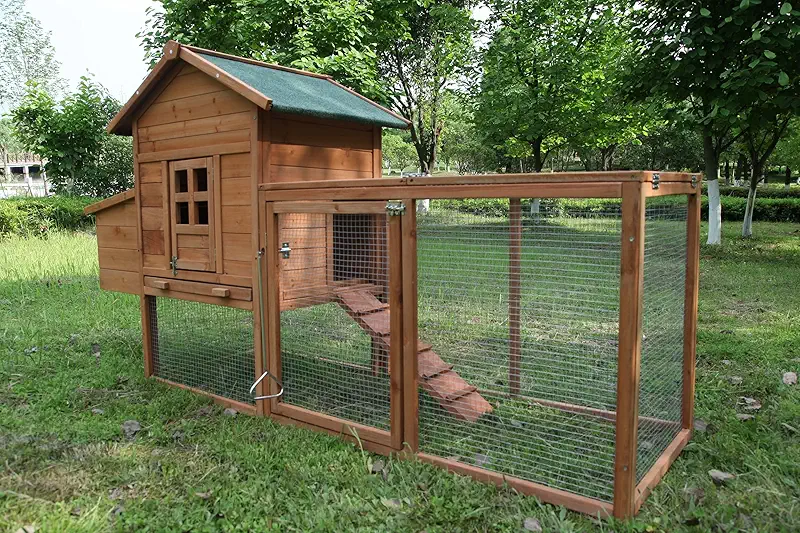
Solid chicken run gate and coop combo – keeps hens in and critters out.
What a chicken run gate really needs to do
When folks ask me about the perfect chicken run gate, I tell them it really has four jobs:
- Keep your hens inside the run where they belong.
- Keep predators, stray dogs, and nosy wildlife outside.
- Make your daily chores easier, not harder.
- Stand up to weather, mud, and your own forgetfulness.
Chickens are small, but they are stubborn and curious. If a gate has a gap, they’ll find it. If a latch is loose, a raccoon will test it. If the gate drags in the mud, you’ll start skipping checks, and that’s when losses happen.
A strong chicken run gate is like a good old farm truck. It may not be pretty, but it should work every single day with no drama. When you’re picking or building one, think about who uses it, how often, and what could go wrong – because sooner or later, life will try it out.
Types of chicken run gates and what I’ve learned
Wooden framed gate
My first chicken run gate was a wood frame with hardware cloth. It was cheap, easy to build, and looked downright rustic. For a small backyard flock, this style still works just fine – if you build it square and protect it from rot.
- Use 2x3 or 2x4 lumber, not flimsy fence boards.
- Cover it with hardware cloth, not regular chicken wire.
- Seal or paint the wood so rain doesn’t twist and swell it.
Metal panel gate
As my flock and predator problems grew, I moved to metal gates – welded wire or powder‑coated steel panels. They cost more upfront, but they don’t warp like wood, and they’re easier to hose off when the mud season shows up. If you’re in a wet or snowy climate, a good metal chicken run gate is worth every penny.
Most pre‑made runs with metal gates are built to match the run height, which keeps birds from flying over the top as easily. I’ve had fewer escape artists since I switched.
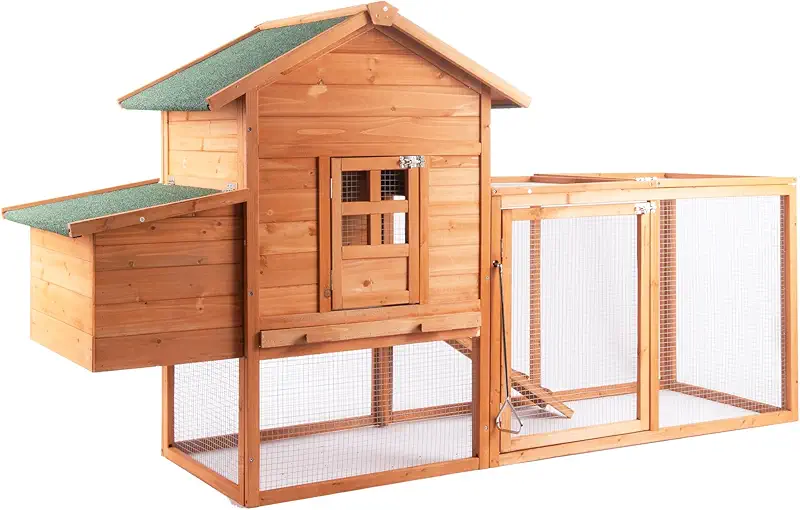

Different chicken run gate designs – pick what fits your space, weather, and flock size.
Pros and cons of common chicken run gate setups
Wooden gates
- Cheap and easy to customize.
- Look nice in a garden setting.
- Can sag, swell, or twist over time.
- Need paint or sealer in wet climates.
Metal gates / panels
- Sturdier against dogs and raccoons.
- Less maintenance in rough weather.
- Heavier to swing if very tall.
- Can get hot in strong sun – shade helps.
Key features of a solid chicken run gate
After a few decades of morning and evening lock‑ups, I’ve boiled it down to a short list. If your chicken run gate checks these boxes, you’re in good shape.
1. Predator‑proof latch
If a toddler could figure out your latch, so can a raccoon. Those furry bandits have nimble little hands and more patience than you might think. I use latches that take two actions to open – like lift and slide, or pull and twist. On my most vulnerable runs, I add a simple carabiner clip.
The latch should be:
- Strong enough that a dog can’t push it open by ramming the gate.
- Simple enough to open with cold, gloved hands in winter.
- Placed where little kids can’t easily reach it, if you’ve got helpers around.
2. No gaps bigger than a finger
Chickens can squeeze through smaller holes than you’d expect, especially young pullets. I try to keep any opening near the gate under one inch. That includes the space under the gate, the corners, and the latch area. I once lost a whole afternoon plugging gaps with scrap wood after watching a bantam hen slip right under and march into the vegetable garden like she owned the place.
3. Right height and width for you
Think about your body, not just your birds. I’m tall and not as bendy as I used to be, so I want a chicken run gate I can walk through without ducking and cursing. If you’re moving feeders, bedding, or wheelbarrows, give yourself generous width.
- Height: around 5–6 feet is comfortable for most adults.
- Width: 24–36 inches works well; wider if you haul a wheelbarrow in.
A gate that’s too small will tempt you to “just squeeze through,” and that’s when your favorite hen decides to shoot past your ankles.
4. Good swing direction
I like my chicken run gate to swing inward when space allows. That way, if birds crowd the entrance at feeding time, the gate pushes them back instead of knocking them off the ramp. If your run is narrow, you might need it to swing outward – just be sure it doesn’t hit a path or car or end up buried in snowdrifts.
5. Ground clearance but no draft tunnel
The bottom of a chicken run gate should be high enough off the ground that it doesn’t drag in mud, but low enough that nothing can crawl under. I aim for about an inch or so clearance, sometimes less if I back it with a board or rock border. In winter, I pack straw along the bottom to cut drafts.
Setting up your chicken run gate step by step
You don’t need to be a master carpenter to get this right. Take your time, measure twice, and remember that “close enough” is fine if it’s safe and solid. Here’s the simple way I walk folks through it.
- Plan the gate location. Place your chicken run gate where you naturally walk. Don’t make yourself squeeze behind sheds or through wet grass. Think about winter too – will you still reach it when snow or mud shows up?
- Set solid posts. Whether you use wood or metal, the gate posts must be sturdy and plumb. Wobbly posts become sagging gates. I like to set posts deeper than the rest of the fence and pack the holes tight with gravel and soil, or concrete if your ground is soft.
- Hang the gate square. Use decent hinges and check for level before you fully tighten anything. Open and shut the chicken run gate a dozen times. If it rubs, fix it now. It won’t magically get better when the weather changes.
- Add your latch and safety clip. Mount the latch at a height that feels natural for you. Remember that in the dark or in a hurry, your hands will go where they always do.
- Secure all edges and corners. Run your hand around the gate frame, checking for gaps. Staple or tie any loose fence wire. Add extra screws where boards want to pull away. The time you invest here saves you headaches later.
- Test it like a predator. Give the gate a good shake, push from different angles, and try pulling the latch with just your fingertips. If you can make it fail, a raccoon probably can too.
Once you’re happy with it, use it every day for a week before you call it “done.” If something bugs you, fix it while the tools are still handy.
How a good chicken run gate helps your laying hens
A secure, easy‑to‑use chicken run gate does more than keep birds in a pen. It shapes your whole routine and their whole mood. Calm hens lay better and live longer. Nervous hens look for ways to escape and spend more time watching for danger than scratching for feed.
When I improved my main chicken run gate – better latch, smoother swing, tighter bottom – I noticed a few quiet changes:
- Fewer “close calls” at dusk when I was late locking up.
- Less commotion at the gate in the morning; birds knew the routine.
- No more surprise visitors in the run – dogs, cats, or neighbor kids.
Your hens don’t need a palace, but they do need to feel that their world is steady. A reliable chicken run gate is part of that. It’s like having a front door on your house that shuts properly. You stop thinking about it, and that’s how it should be.

Roomy run with a dependable gate – easy for you, peaceful for the flock.

Sturdy framing and secure latch on this chicken run gate help keep predators out.
Little extras that make life easier
Once you’ve got the basics of your chicken run gate sorted out, there are a few small touches that can make chores smoother. Nothing fancy – just the kind of things you appreciate after your hundredth muddy evening lock‑up.
Simple handle or pull
A plain wooden or metal handle on the outside (and sometimes inside) saves you from grabbing cold wire or sharp edges. When your hands are wet, tired, or full of feed buckets, that handle feels like a small blessing.
Hook to hold the gate open
I like a little hook and eye on the fence to keep the chicken run gate wide open when I’m hauling in bedding or cleaning out the coop. Otherwise, the wind likes to shut it on my backside, and the hens always find that funny.
Roof or cover near the entrance
A short roof over the gate area keeps the ground drier and your boots less caked with mud. It also keeps the latch from freezing quite as hard in winter and makes it nicer to stand there while the flock argues about who goes out first.
Lighting around the gate
I’m not high‑tech, but I do appreciate a small solar light near the chicken run gate. In winter, when dark comes early, it helps me count birds and check that the latch is secure without fumbling with a flashlight.

Covered entry and easy‑swing chicken run gate for cleaner, calmer chores.

Tall chicken run gate – plenty of headroom for hauling feed and bedding.
Common chicken run gate mistakes I see (and have made)
Nobody gets it perfect the first time, so don’t feel bad if you recognize yourself here. The trick is to learn from other people’s headaches when you can.
- Gate set in a low, muddy spot. Every rainstorm turns it into a swamp and the gate drags. Move the gate, raise the ground, or lay down gravel – your back will thank you.
- Pretty latch, weak hold. Some decorative latches look nice but don’t stand up to a determined dog. Function first, looks second.
- Forgetting the inside user. If you ever need to open the gate from inside the run, make sure there’s a latch or at least a string or wire you can pull. Getting locked in with the hens is a story you never quite live down.
- Using chicken wire on the gate frame. Chicken wire keeps chickens in, but it doesn’t do much against predators. Hardware cloth or heavier welded wire is better, especially around the gate.
- Not checking the gate often. Screws back out, wood swells, dirt builds up. A quick look and shake once in a while can save birds.
Choosing a ready‑made chicken coop with a good gate
Not everyone wants to build from scratch, and that’s just fine. Plenty of ready‑made coops and runs come with a decent chicken run gate already included. When I help friends look at them, I pay more attention to the gate and run than the cute little windows or paint colors.
When you look at pre‑built options, ask yourself:
- Is the gate tall and wide enough for me to move comfortably?
- Does the latch feel solid, or does it wiggle and rattle?
- Is the mesh heavy enough to stop predators, especially near the gate?
- Is there room inside the run to walk and clean without wrestling the door?
Many good coops come with metal‑framed runs and gates that take most of the guesswork out. You can still improve them with simple touches – an extra latch, a hook to hold it open, or a bit of shade cloth if the sun bakes the entrance.

Pre‑built coop and run with a secure chicken run gate – a quick way to get started.
FAQ about chicken run gates
If you’re ready to give your hens a safer, calmer home, take a slow look through the different coops and runs out there. Pay close attention to the chicken run gate, and imagine yourself using it every morning in boots and every evening in the dark. If it feels easy in your mind, it’ll feel easy in real life too.
Let me see options