
Clearance chicken coop
Clearance Chicken Coop: Stretch Your Dollar And Keep Hens Happy
I’ve raised laying hens for decades here in the States, and I’ll tell you a little secret: a good clearance chicken coop can work just as well as a fancy one, if you know what to look for and how to fix it up. Let me walk you through it, the same way I’d talk to a neighbor leaning on the fence at sunset.
Around my place, money goes first to feed, fencing, and vet bills. That means when I see a clearance chicken coop, I pay attention. Some of my best little hen houses started life as “last year’s model” or “damaged box” deals. My birds don’t mind a scratch in the paint, as long as they’ve got dry bedding and a safe roost at night.
In this guide I’ll share how I judge a clearance chicken coop, what I fix, what I never compromise on, and how I set things up so my girls lay steady, clean eggs. I’ll sprinkle in some of my own farm stories too, including a time my hens had a fancier home than I did. (They still might, if you ask my wife.)
What A Clearance Chicken Coop Really Is
When folks hear “clearance,” they sometimes think “junk.” On the farm, that word just means “look closer.” A clearance chicken coop is often:
- Last season’s style that the store wants to move out.
- A box that got banged up in shipping but the coop inside is fine.
- A return where someone changed their mind or bought the wrong size.
- Extra stock that needs to make room for a new batch.
Hens don’t care what catalog the coop came out of. They care about dry feet, steady roosts, and plenty of fresh air without strong drafts. If a clearance deal can give you that, it’s worth a serious look.
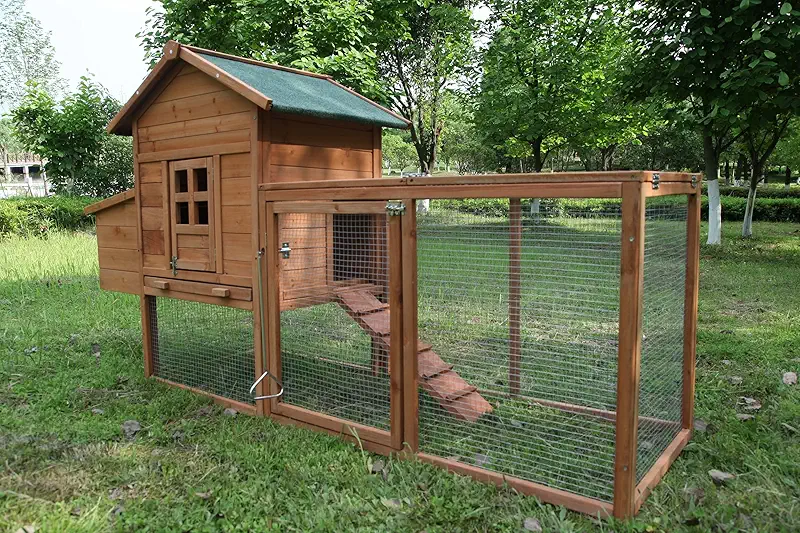
One of those neat little coops that works great for a small backyard flock when set up right.
How To Judge A Clearance Chicken Coop Like A Farmer
When I size up a clearance chicken coop, I ask myself three simple questions: Will it keep them safe? Will it stay dry? Will it be easy for me to work in? If I can say yes to those three, we’re off to a good start.
1. Safety First: Predators Don’t Do Discounts
Coyotes, raccoons, foxes, neighborhood dogs – they don’t care that you got the coop on sale. So look close at:
- Solid latches on every door and nesting box.
- No big gaps where a raccoon paw can reach in.
- Floor raised off the ground or protected from digging predators.
- Wire that’s more like hardware cloth, not thin chicken wire alone.
I once “saved money” on a weak little coop years back. Raccoon peeled it open like a sardine can. I fixed that problem, but it cost me a hen. Since then, I never trust a latch that opens with a pinky finger.
2. Dry And Draft-Free: The Egg Factory Depends On It
A clearance chicken coop can be a bit scuffed, but if the roof leaks or the floor soaks up water like a sponge, you’ll pay for it in sick birds and messy eggs. I always check:
- Roof panels sitting flat, with no daylight peeking through.
- Water running off and away from the coop, not under it.
- Walls tight enough to stop strong drafts at roost height.
- Ventilation up high so warm, moist air can escape.
Chickens handle cold better than damp. I’ve seen hens scratching happily in snow, then catch a chill from wet bedding inside. Keep them dry and they’ll keep you in eggs.
3. Easy To Work In: Your Back Matters Too
I love my birds, but I don’t want to crawl on my knees to gather eggs every morning. When I look at a coop, even a clearance one, I picture a cold January day, wind biting my ears, and ask: “Do I want to be wrestling with this thing then?”
- Doors wide enough for your shoulders and a feed bucket.
- Nesting boxes that you can reach without bending in half.
- Removable trays or wide doors for cleaning out the floor.
- Enough headroom for the birds to hop up and down comfortably.

Clearance coops often come in handy sizes for small suburban backyards and starter flocks.
Turning A Clearance Chicken Coop Into A Cozy Hen Home
Most clearance coops need a little love. I treat them like a good used pickup truck: might be a dent here or there, but with a wrench and some boards it’ll haul hay just fine.
Reinforce The Frame
If I can wiggle the coop by hand and it shivers like a sapling in March wind, I add bracing. A couple of treated 2x2s or 2x4s screwed into the corners works wonders.
- Add corner braces inside to stiffen the structure.
- Use exterior screws, not nails, so it stays tight.
- If the floor feels soft, lay a piece of plywood on top.
I had one clearance coop that came out of the box a bit wobbly. An hour with my drill and some scrap lumber, and it felt solid enough to stand on – though I let the hens keep that honor.
Upgrade The Wire
Many of the factory coops, clearance or not, come with light chicken wire. That keeps birds in, but it doesn’t always keep critters out. I often:
- Layer half-inch hardware cloth over the weak spots.
- Staple it tight with heavy-duty staples.
- Bury a skirt of wire 8–10 inches into the ground to stop diggers.
It’s not fancy, but predators hate hard work. Make it tough on them, and they usually move on.

A simple run attached to a clearance coop can keep your hens safe while they scratch and explore.
Dial In The Roosts And Nesting Boxes
Chickens are creatures of habit. Give them good roosts and the right nesting box setup, and they’ll reward you with eggs in the same spot every morning.
- Roosts higher than nesting boxes so they don’t sleep where they lay.
- Roosts made from 2x2 or 2x4 edges, not skinny dowels.
- Nesting boxes dim and cozy, with clean bedding.
- One box for every 3–4 hens is usually enough.
I’ve got twelve hens and four boxes. They all line up for the same two, of course. Chickens like to argue over real estate just like folks.
Ventilation: Quiet Air, Not Wind
A clearance chicken coop sometimes skimps on proper vent openings. I’d rather add them myself than fight damp air and frostbite later.
Aim for:
- Openings up near the roof, covered with hardware cloth.
- Cross-ventilation so warm, moist air can escape.
- No strong drafts hitting the birds while they roost.
Think of it like this: you want the coop to “breathe,” not “blow.” If your hat would fly off in there, it’s too drafty.
Pros And Cons Of Going The Clearance Route
Like anything on the farm, a clearance chicken coop comes with tradeoffs. Here’s how I see it, after more years with hens than I care to count.
Pros
- Lower price leaves more money for feed and bedding.
- Perfect for new keepers trying out a small flock.
- Often quick to assemble compared to big custom builds.
- Easy to upgrade with some basic tools.
- Good stepping stone before building a large walk-in coop.
Cons
- Sometimes lighter materials that need reinforcement.
- May be smaller than the box makes it sound.
- Occasional missing screws or minor damage in the box.
- Not ideal for very large flocks by itself.
- Paint and roof may age faster if you don’t protect them.
A few summers back, I picked up a clearance chicken coop that had a busted corner and a ding in the roof tin. The price was about what I’d pay for a good dinner in town, so I hauled it home. Two hours later, with some braces, fresh screws, and a coat of barn paint, I had a tidy little bachelor pad for my younger hens.
That “bargain coop” has now seen four seasons of snow, wind, and more than a few hens who think they’re smarter than I am. It’s still standing, still dry, and still earning its keep in eggs. Can’t complain about that.

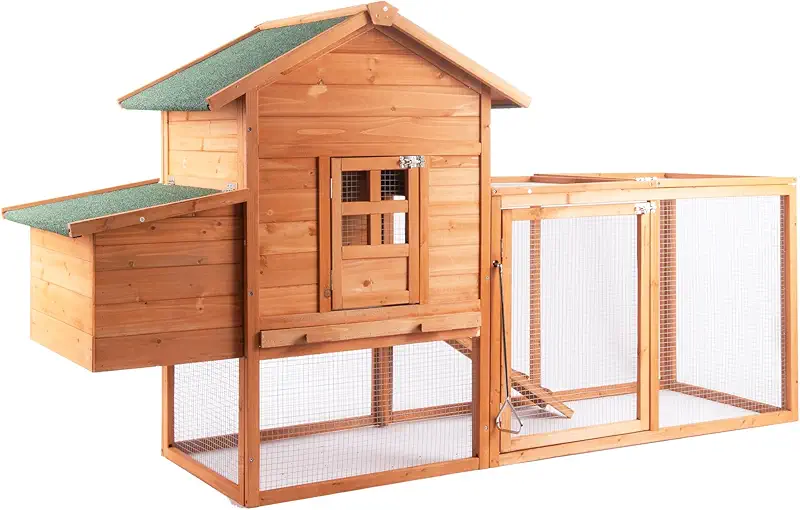
Another style of coop that, with a few tweaks, can handle a small, steady laying flock.
Keeping Laying Hens Happy In A Clearance Coop
A clearance chicken coop is just the shell. What keeps hens laying is how you manage what happens inside and around it. Let me run through the basics I follow on my own farm.
Space And Flock Size
Overcrowding is asking for pecking, stress, and poor laying. Even in a bargain coop, give them:
- About 4 square feet of indoor coop space per hen.
- 8–10 square feet of outdoor run space per hen, or more if you can.
- Roost space so each bird has 8–10 inches of perch.
If the coop is small, keep the flock small. I’d rather have six happy hens than ten miserable ones. The happy ones lay better anyway.
Light, Feed, And Water
Laying hens are simple about their needs, but they’re strict. Short them on any of this, and they’ll let you know by slowing down on eggs.
- Light: Aim for about 14 hours of light in laying season. In winter, some folks add a small, safe light on a timer. I use a dim one, starting early in the morning rather than late at night.
- Feed: A good layer ration, plus free-choice oyster shell, keeps shells thick and birds strong.
- Water: Clean water every single day. In freezing weather, I swap buckets morning and evening so they never go long without.
I don’t feed my girls anything I wouldn’t be comfortable smelling in a hot July coop. If it stinks to you, it’s not helping them.

A raised clearance coop keeps birds off damp ground and makes cleaning easier on your back.
Bedding And Cleanliness
A cheap coop can still be a clean coop. I like pine shavings, but straw works too as long as you keep it dry.
- Scrape roost boards or droppings trays every few days.
- Stir up bedding weekly to keep it fluffy.
- Full clean-out every month or two, depending on how many birds you keep.
My test is simple: if I kneel inside and don’t mind the smell, we’re doing fine. If my eyes water, it’s clean-out day.
Little Extras That Make A Big Difference
Over the years, I’ve added lots of “small things” to coops that turn out not to be so small.
- A bit of shade over the run in summer to keep them cool.
- Windbreak on the north side for cold climates.
- A simple dust bath area with dry soil and a little wood ash.
- Hanging a cabbage or treat to keep them busy on stormy days.
Happy hens peck less, lay better, and greet you at the gate instead of hiding in corners.
Fixes I’ve Made To Clearance Coops Over The Years
Since we’re talking like farmers here, let me be plain: I’ve patched, braced, and tinkered with more coops than I can count. Clearance chicken coops are no exception. Here are common fixes I’ve done that might help you.
Strengthening Doors And Latches
Doors are the weak spot on most budget and clearance coops. I often:
- Add a second latch to big doors, top and bottom.
- Swap flimsy twist latches for locking carabiners.
- Reinforce hinge areas with small scrap boards inside.
A raccoon can open a simple hook if it’s patient. I work on the idea that if it takes me two hands to open, it’ll slow them down enough to give up.
Weatherproofing Roof And Sides
On some clearance coops, I noticed the roof felt a little “thin.” Cheap to fix:
- Roll on a good exterior sealer or paint.
- Add a strip of metal flashing at the ridge.
- Caulk small gaps where water might sneak in.
A quiet hour with a caulk gun on a dry day can add years to a coop’s life.

With a little bracing and weatherproofing, this style of coop can serve well season after season.
Expanding The Run
One more thing: factory runs are often too small for how we Americans like to spoil our birds. I’ve added simple extensions with:
- T-posts and welded wire, or
- Wooden frames covered in hardware cloth.
The coop becomes the sleeping and laying area, and the run becomes their daytime playground. That combo works real well with a smaller clearance chicken coop.
Clearance Chicken Coop – Common Questions

If you’ve read this far, you’re already the kind of keeper hens like to have around: careful, patient, and willing to learn. A good clearance chicken coop, tuned up with a bit of elbow grease, can give your flock a safe, dry home without emptying your wallet.
Take your time, picture your birds inside each style you see, and remember: they don’t need perfect, they just need sound and simple. A little common sense and a few screws can turn a “bargain box” into a coop that serves you for years.