
Commercial chicken coop
I’ve raised laying hens for most of my life out here in the States, from a handful of backyard birds to long rows of hardworking layers. If you’re thinking about a commercial chicken coop, let me walk beside you like a neighbor over the fence, not like a salesman at the feed store.
A good commercial chicken coop is a lot like a good barn dog. Quiet most of the time, working all the time, and if it’s doing its job right you hardly notice it’s there. The hens are calm, the eggs are clean, and you’re not chasing problems every morning before coffee.
Over the years I’ve tried just about every setup you can think of: homemade wooden shacks, converted sheds, and purpose-built commercial units. I’ve learned in mud, snow, and July heat what actually keeps hens laying steady without driving you crazy with chores and repairs.
On this page, we’ll talk about how to choose a commercial chicken coop that fits your land, your climate, and your plans. I’ll sprinkle in a few of my own hard-learned lessons so you don’t have to repeat my mistakes. Trust me, it’s cheaper to learn from my busted fence than from your own.
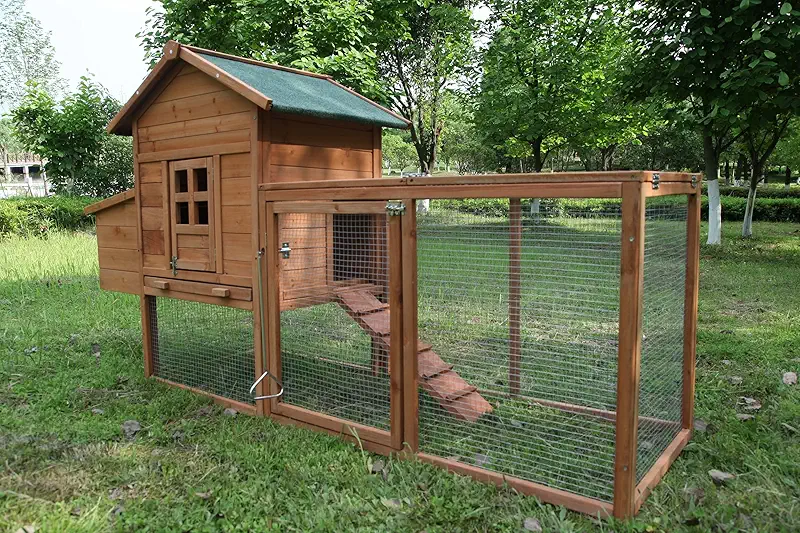
What a commercial chicken coop really needs to do
Folks get hung up on paint colors and cute windows. I look for three things first: dry birds, good air, and easy chores. If a coop gives you those, you’re halfway home.
A commercial coop is not about being pretty. It’s about being dependable. Day after day, season after season, it needs to:
- Keep hens dry and out of drafts, but not stuffy.
- Give them enough space so they don’t pick and bully each other.
- Let you collect eggs and clean bedding without crawling on your knees.
- Stand up to wind, rain, sun, and the occasional “oops” with the tractor.
- Keep predators on the outside looking in, not on the inside licking their chops.
When you look at any commercial chicken coop, picture yourself in January, before sunrise, with cold fingers and a flashlight in your mouth. If the design still looks friendly in that picture, you’re on the right track.
My first “big” coop and what it taught me
I still remember the first time I “went big” with layers. I jumped from a dozen backyard hens to a couple hundred. In my head, I saw rows of perfect brown eggs and a check from the buyers that would make my old pickup feel young again.
What I actually got, at first, was a muddy yard, frost on the inside walls, and hens arguing over nest boxes like kids over the good seat in the truck. The coop I built looked big enough on paper, but it cut corners on ventilation and layout. I learned quick that when your birds go from hobby to business, the coop has to grow up too.
Plan the coop for where you want to be in 2–3 years, not where you are today. It’s easier to let a coop be half full for a while than to rebuild everything because your flock grew faster than your lumber pile.
So when you’re looking at a commercial chicken coop, think about the number you’re truly aiming for. If you dream of 200 layers, don’t size everything for 60 and hope it’ll stretch. Hens don’t stretch very well. They just get stressed.
How many hens can a commercial chicken coop hold?
Every catalog out there will swear their coop holds more hens than it really should. I’ve never met a chicken that read a brochure, but I’ve seen a lot of coops “rated” for five birds that made three hens grumpy.
Here’s the rule of thumb I use for commercial flocks of layers:
- Floor space inside: about 3–4 square feet per hen for standard breeds.
- Roost space: 8–10 inches of roost bar per hen.
- Nest boxes: 1 box for every 4–5 hens, with good bedding.
Now, in a well-designed commercial chicken coop with covered outdoor runs or rotational pasture, you can lean a little tighter. But if you pack hens like a rush-hour subway, you’ll pay the price in feathers and egg production.
When you’re eyeing any coop, grab a tape measure or at least look closely at the dimensions. Do your own math. If the numbers look tight, believe your math, not the pretty photo with five smiling chickens and no manure in sight.
Ventilation, warmth, and keeping birds healthy
I farm in a place where we get both July heat that makes the dogs dig for shade and January cold that makes gate latches freeze. Over the years I learned that chickens handle cold better than they handle damp, stale air.
A good commercial chicken coop lets fresh air move through up high, above the birds’ heads, and keeps the floor area free from drafts. That means:
- Ridge vents or high wall vents that can be adjusted with the seasons.
- Windows or side vents you can close against driving rain, not just open or shut.
- A roof that doesn’t leak and doesn’t sweat condensation all over your roosts.
On winter mornings, if I can see my breath and the air in the coop still smells fairly fresh, I know I’ve got ventilation about right. If the air smells like a dirty litter box, I open things up even if my nose hairs freeze.
Materials that stand up to real farm life
I’ve built with rough-cut boards, metal roofing, scrap pallets, and just about anything that would hold a nail. But for a commercial setup, you want something that can take years of manure, moisture, and the occasional bump from a wheelbarrow without falling to pieces.
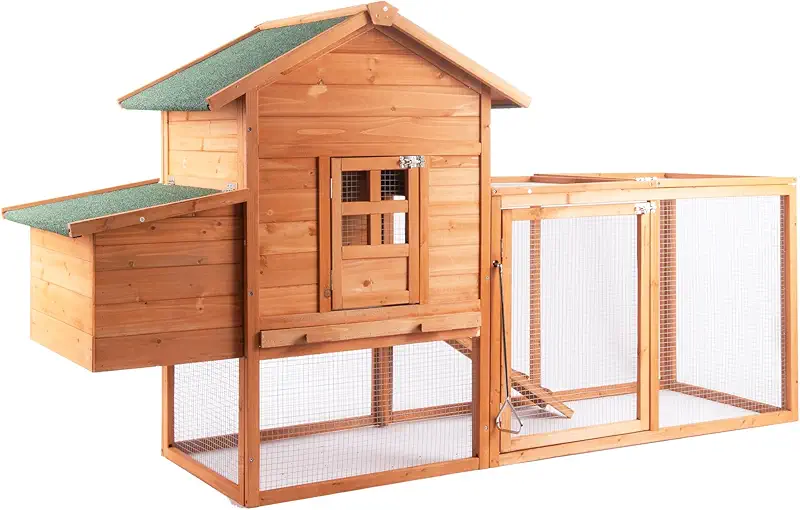
When I look at a commercial coop, here’s what I pay attention to:
- Floor: Solid, easy to clean, and raised off the ground if possible.
- Walls: Enough insulation for your climate, but not a mouse hotel.
- Roof: Good overhangs so rain doesn’t run straight into the run.
- Hardware: Hinges and latches that won’t rust up in a year.
If you can hose it out, sweep it quick, and it doesn’t wobble when the wind hits, that’s a solid start.
Predator protection: who’s really trying to get in
Out here, my hens have more enemies than I care to count: foxes, raccoons, hawks, neighbor’s dogs, and one very sneaky weasel I still owe a grudge. A commercial chicken coop must respect that predators are patient and smarter than they look.
When you study a coop, look for these details:
- Wire mesh: 1/2 inch hardware cloth beats chicken wire any day for keeping out small predators.
- Buried skirt: Wire or boards along the base to stop digging.
- Locks: Latches that raccoons can’t open — they have more fingers than they ought to.
- Doors: Solid doors that close tight with no easy gaps.
One winter, a mink slipped in through a gap no wider than two fingers. It took me three nights to catch him and a week for the flock to settle down. Since then, I check every corner of a coop like I’m the mink.

Making chores easier in a commercial chicken coop
I tell folks this all the time: if chores are hard, they won’t get done right. Not on busy days, not when you’re tired, and not when the weather is mean. A good commercial coop makes chores smooth and quick.
Things that make my back and my birds happy:
- Egg collection from the outside, so you’re not squeezing past birds.
- Doors tall enough to walk through without ducking.
- Removable roosts or manure trays you can dump and scrape.
- Clear paths for wheelbarrows or carts right up to the door.

I once had a setup where I had to crouch under a low beam to reach the far nest boxes. It only took one whack of my head, in the dark, carrying a bucket, to convince me that ergonomics matter more than Pinterest.
Commercial chicken coop for pasture and free-range systems
These days a lot of folks, me included, like to let birds work on pasture. They scratch bugs, spread manure, and frankly, they just look happy. If you’re planning that kind of system, your commercial coop might be more like a mobile unit or a base camp.

For pasture-based setups, I pay attention to:
- Weight and wheels: Can you actually move it without inventing new swear words?
- Doors and ramps: Birds need safe, simple access in and out each day.
- Integration with fencing: Works well with electric netting or permanent fences.
- Weather protection: Shade for summer, windbreaks for shoulder seasons.
One summer I dragged a heavy old coop across a soft pasture and left ruts you could lose a boot in. Since then, I look at wheels and weight before I look at anything “cute.”
Planning for egg collection and storage
When eggs are a steady part of your income, small inefficiencies add up. A commercial chicken coop should make egg collection easy and keep eggs clean. No one likes washing mud and manure off dozens of eggs each day.
I look for nest boxes that are:
- Shaded and slightly dim, so hens feel secure.
- Higher than the floor but lower than the roosts, so hens sleep on the roosts, not in the nests.
- Easy to bed with shavings or straw and quick to reach.

I like to collect eggs twice a day when the flock is large — late morning and again late afternoon. With a good commercial coop, that’s a quick in-and-out job, not a wrestling match with muddy boots and cranky hens.
Daily routine inside a commercial chicken coop
Folks often ask what the day-to-day life looks like once the coop is in place and the hens are settled. Truth is, if the coop is well designed, your routine becomes pleasantly boring — and boring is good in farming.
On a normal day, my rhythm looks something like this:
- Open the pop doors around sunrise, quick glance at feeders, waterers, and bird behavior.
- Egg collection late morning when most hens have laid.
- Top up feed and water in the afternoon, check bedding, quick rake where needed.
- Final walk-through near dusk, count birds as they head to roost.
When your commercial chicken coop supports that simple routine — without you climbing, crawling, or fighting the layout — taking care of a couple hundred hens doesn’t feel overwhelming. It feels like part of the day, same as making coffee or feeding the dog.
Common mistakes folks make with commercial coops
I’ve either made these mistakes or watched good neighbors make them. If I can help you dodge a few, I’ll count this page as time well spent.
- Underestimating mud: Build paths, add gravel if needed, and keep entrances from turning into hog wallows.
- No plan for manure: A commercial-scale flock creates a steady river of fertilizer. Plan for compost or spreading.
- Ignoring future growth: Starting with 50 hens and ending with 150 in a coop built for 60 — seen it too often.
- Skimping on fencing: A strong coop plus weak fence is just an all-you-can-eat buffet for predators.
- Forgetting electricity and water: Hauling buckets is fine for a few hens, not for a serious flock.

If you stand where the coop will sit and picture a week of rain, a foot of snow, and a hot July afternoon — and your plan still looks sensible — you’re well ahead of most folks, including younger me.
When to upgrade your commercial chicken coop
You don’t have to get everything perfect on day one. Most farms, mine included, grow in fits and starts. But there are signs that your current coop is holding your flock — and you — back.
If you notice any of these, it might be time to look at a new commercial coop setup:
- Egg production drops even though feed and health look good.
- Feather pecking, bullying, or bare backs from overcrowding.
- Persistent dampness, smell, or frost inside even with your best efforts.
- You dread chores because everything is awkward or painful to reach.

When I finally upgraded my older coop to a roomier, better-ventilated setup, the hens thanked me the only way they could: more eggs, less fuss. My knees thanked me too.
FAQ about commercial chicken coops
Start with a number you can care for on your worst day, not your best. For many folks, 50–100 layers is a good first “commercial” step. It’s enough to learn real management without drowning in chores. Just be sure the coop you choose has room to grow a bit beyond that.
Strictly speaking, no — but it makes life easier. I like power for lights on short winter days, a heated waterer in cold climates, and maybe a small fan on really hot afternoons. Hens lay better when they have consistent light and don’t have to drink ice cubes.
I like solid floors you can bed deep with shavings or straw: wood on skids, concrete, or heavy-duty panels. Dirt floors can work, but they’re harder to clean and easier for predators to dig into. Whatever you choose, keep it dry and use enough bedding so you’re not walking in mud and manure.
Good housing does half the work. Dry bedding, fresh air, clean water, and enough space prevent most trouble. I also keep a regular worming and parasite check schedule, watch droppings and behavior, and quarantine any new birds. Catching small issues early beats playing catch-up with sick hens.
If you’re handy, you can build something great. But a purpose-built commercial chicken coop can save a lot of trial-and-error. The key is choosing one with solid framing, real-world dimensions, and practical access. Figure the value of your time, lumber prices, and learning curve, then decide what makes sense for your farm and your back.
If you’re ready to see what kind of commercial setups are out there, take a slow look and picture your own hens inside each one.
Let me browse coops