
Door for chicken coop
Let an old farm boy walk you through choosing a good, safe door for your chicken coop, the kind that keeps your hens laying and lets you sleep through the night.
Out here on the farm, the day really starts with the sound of a coop door sliding open and sleepy hens waddling out for breakfast. Over the years, I learned that the right door for chicken coop setups matters almost as much as the coop itself.
I have lost birds to raccoons, fought frozen doors in January, and chased a clever fox who figured out how to lift a loose latch. Every mistake showed up in feathers on the ground and a knot in my stomach.
So now I take doors seriously. A good door keeps predators out, fresh air in, and your routine simple. A bad door gives the varmints a free buffet.
Let me check options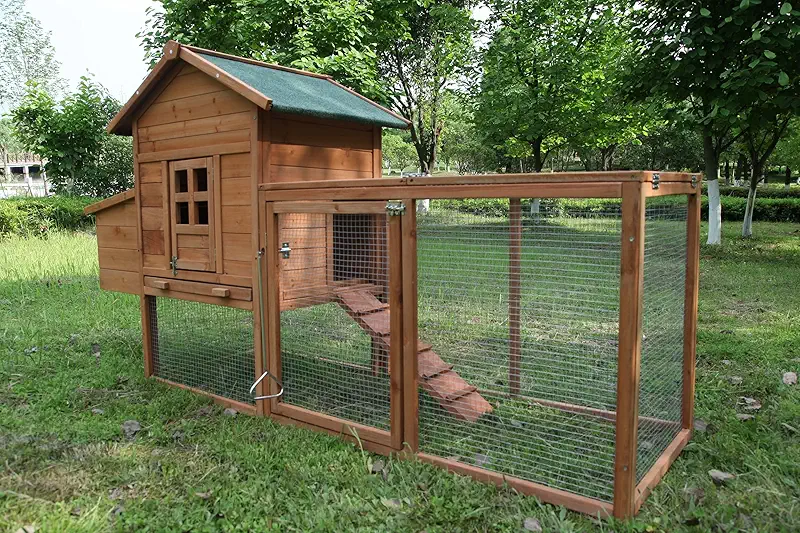
What a chicken coop door really has to do
A lot of folks think a coop door is just a hole with a board over it. I used to think that too. Then one winter a raccoon proved me wrong in about three minutes. Now, when I talk about a door for chicken coop safety, I break it down into a few simple jobs:
- Keep predators out, every single night.
- Let fresh air in without making your hens shiver.
- Open and close easily, even when it is dark, raining, or freezing.
- Stand strong against kicking, pecking, and curious critters.
- Last for years without rotting or warping like a wet pancake.
If your door can do those things, you are already miles ahead of most backyard setups I have seen.
Choosing the right style of door for chicken coop comfort and safety
There are a few main styles of doors you will see when you start looking around. Each has its own personality, just like your hens.
1. Vertical sliding door (guillotine style)
This is my favorite style for most coops. The door slides straight up and down in tracks. When it is down, gravity and the frame make it hard for anything to pry open.
- Good fit for: Tight spaces, automatic openers, and cold climates.
- Why I like it: No swing area needed, and it stays shut even if something leans on it.
2. Side-hinged door
Just like a house door. I use these on larger coops where I want to walk in easily.
- Good fit for: Walk-in coops, people-sized doors, and spots that stay dry.
- Things to watch: Hinges can sag and latches can get clever-raccoon-tested.
3. Pop door with automatic opener
This is the modern farmer’s little miracle. A solid door, usually metal, hooked to a motor that opens in the morning and closes at night, often by timer or light sensor.
- Good fit for: Busy folks, early work shifts, and winter mornings when you like staying in bed.
- Things to watch: Needs a solid power source and good weather protection.
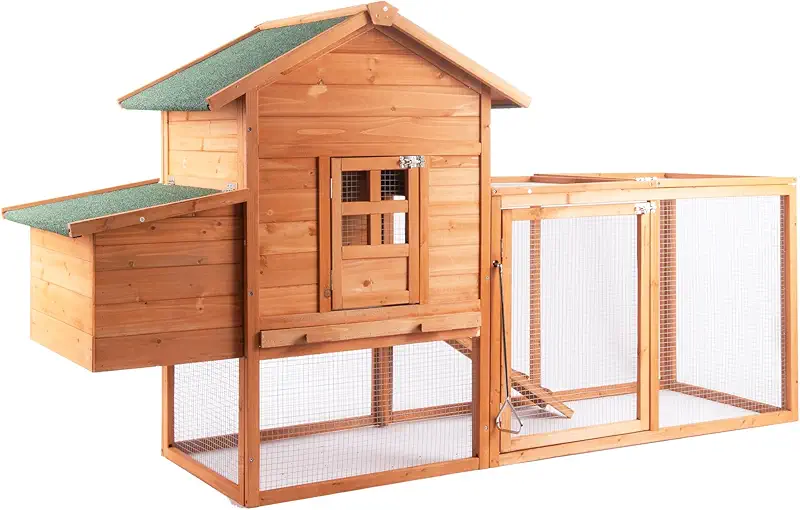
When I finally added an automatic door for my older flock, my wife said it was the first time in years she did not hear my boots hit the floor at sunrise every day. The hens did not seem to miss me at all, by the way.
Material choices for a strong and safe coop door
The material of your door for chicken coop work might seem like a small thing, but it decides how long it lasts, and how much trouble it gives you in bad weather.
Metal doors
Most high-quality automatic doors use aluminum or galvanized steel. I lean toward these for the outside world because predators have teeth, claws, and far more patience than most people.
- Pros: Tough, weather-resistant, hard to chew or claw through.
- Cons: Can be noisy if they slam, and you want smooth edges so hens do not snag feathers.
Solid wood doors
I grew up with wooden doors, and a good one can still serve well if you build it thick and seal it right.
- Pros: Easy to build and repair, looks nice, good insulation.
- Cons: Can warp, swell, or rot if not sealed; soft corners can be chewed.
Plastic or composite doors
Some newer doors use heavy-duty plastic or composite material.
- Pros: Light, weather-resistant, low maintenance.
- Cons: Cheaper plastic can crack in cold weather; I treat them with a bit of suspicion until I see real hardware on them.

Predator-proofing your door for chicken coop peace of mind
If you raise chickens long enough, you learn that predators read the same calendar you do. As soon as the days get shorter and the woods get quiet, they start cruising by the coop more often. Your door is the front line.
Big questions I ask myself about any door
- Can anything pull it up or out from the bottom?
- Is there any gap wider than my thumb where claws or teeth can start working?
- Is the latch something I could open with two fingers? If yes, a raccoon might manage it too.
- Does it slam tight, or does it just kind of bump shut and bounce?
I once lost three young pullets because I trusted a simple hook-and-eye latch on a side door. A raccoon figured it out in one night. From then on, it was carabiners, barrel bolts, or automatic doors with solid locking.

For a serious door for chicken coop setup, I like:
- Doors that drop fully into a frame or track with no side play.
- Metal edges that overlap the opening, so nothing pries from the side.
- A backup block or secondary latch when I know we have heavy predator pressure.
- Solid mounting to the coop wall – screws into studs, not just thin siding.
Manual vs automatic door for chicken coop routine
Let us talk routine. When I was younger, I did the sunrise-and-sunset walk to the coop every single day, rain or shine. Then my back started complaining, and my work hours changed, and an automatic door started looking a lot like common sense.
Manual doors
Manual doors are simple. You walk out, open or close the door, check the flock, and maybe chat with the hens a bit. There is something peaceful about it.
- Best if: You enjoy the daily ritual and you are home most mornings and evenings.
- Watch for: Forgetful evenings, late nights out, and winter wind that makes you rush and skip checks.
Automatic doors
An automatic door for chicken coop feels like hiring a reliable farmhand that only has one job and does it well.
- Best if: You work odd shifts, travel some weekends, or have kids and chores pulling you ten ways at once.
- Watch for: Battery life, wiring that mice might chew, and making sure the timer or light sensor is set right for your area.

On my place now, I run automatic doors on the main flock and one simple manual door on a smaller side coop. That way, if I ever have trouble with power or batteries, I still know how to work a rope and a board, just like the old days.
Size and placement of a good door for chicken coop layouts
Chickens are not picky about décor, but they do care how easy it is to get in and out of the coop. I once built a pop hole so small my biggest hen had to squeeze through like a biscuit in a too-tight pan. She was not amused.
Good door size for hens
- For standard hens: around 10–12 inches wide and 10–14 inches tall works well.
- For big breeds (Orpingtons, Brahmas): lean toward the taller side.
- For bantams: you can go smaller, but I usually keep one size for everyone.
Too small, and they hesitate to use it. Too big, and you invite more drafts and more chances for predators to mess with it.
Where to place the door
- Just above ground level, but not sitting in mud. A small ramp works fine.
- On the drier, more sheltered side of the coop if you can choose.
- Where you can see it from the house or yard light, so you can double-check at night.

Seasonal care: keeping your coop door working in all weather
The best door for chicken coop setups do not quit on you when the weather turns ugly. I have had freezing rain weld a door shut and summer dust pack into tracks like cement. Both taught me to think ahead.
Winter tips
- Keep tracks and moving parts clean and dry when you can.
- A little safe lubricant on metal tracks can stop freezing and sticking.
- Check seals and gaps – you want tight enough to stop drafts, but not so tight the door jams.
Summer and wet weather tips
- Watch for swelling wood if your door is not sealed well.
- Clear mud or bedding that might pile up at the bottom of the door.
- If you use an automatic door, shield the motor and electronics from direct rain.

Once a month, I give each door a quick check: open, close, look for wear, and make sure nothing is chewing the wires or hardware. It takes five minutes and saves me waking up at 2 a.m. wondering if I remembered to check it.
Simple installation thoughts from an old farmer
You do not have to be a carpenter to put in a solid door for chicken coop, but a bit of patience goes a long way. I like to say, “Measure twice, cut once, and then go measure again just to be sure.”
- Make the opening square and level before you mount the door.
- Screw into solid framing, not just thin paneling.
- If you are using a kit or automatic unit, follow the directions even if you think you know better. (Ask me how I know.)
- Test the door for a few days while you are home – watch your flock learn to use it.

FAQ about choosing a door for chicken coop safety
1. Do I really need an automatic door for my chicken coop?
No, you do not need one, but it sure can make life easier. If you are home every morning and evening and you like the routine, a manual door is just fine. If your schedule is messy or you tend to forget things when days get busy, an automatic door adds a big layer of safety for the flock.
2. What is the safest type of door for chicken coop predators?
In my experience, a solid vertical sliding metal door with a good frame is one of the safest options. When it closes all the way down into sturdy tracks, there is very little for a raccoon or fox to grab and pry. Pair that with strong mounting and you are in good shape.
3. How big should the door opening be for my hens?
For most standard laying hens, an opening about 10–12 inches wide and 10–14 inches tall works great. Bigger breeds may like a little more headroom. I would not go smaller unless you only keep tiny bantams, and even then I prefer giving them a bit of extra space.
4. Will an automatic door crush my chickens if one stands under it?
Good quality automatic doors are designed to be safe. Many stop and reverse if they feel resistance, or they close slowly enough that birds just step out of the way. I still like to watch the flock for the first few nights to be sure everyone understands the routine, especially young or timid birds.
5. How often should I check or maintain my coop door?
I give mine a quick look every week when I do other chores, and a closer check once a month. Open and close it a few times, listen for scraping or grinding, check latches, and look for any loose screws or chewed wires. Before winter and before summer heat really hits, I spend a few extra minutes making sure everything is ready.
If you are ready to give your flock a safer, easier way in and out of the coop, take a quiet minute to look through the different chicken coop setups and doors that fit your own little farm.
I’ll browse coops now