
Large Chicken Coop With Run
Large Chicken Coop With Run – How I Keep My Hens Happy, Safe, And Laying Strong
I’ve been raising laying hens in the U.S. long enough to have the gray hairs – and the cracked boots – to prove it. Over the years I’ve tried tiny tractors, old sheds, and just about every style of large chicken coop with run you can imagine. Some worked like a charm. Others… well, let’s just say the raccoons sent me a thank-you card.
If you’re looking at a large chicken coop with run right now, you’re already miles ahead of folks who just toss a few boards together and hope for the best. A good coop with a proper run means safe hens, cleaner eggs, and less chasing birds through the garden while the neighbors pretend not to watch.
In this guide I’ll talk to you the way I talk to my own kids when they set up a new flock: simple, straight, and with a few stories from the barnyard. We’ll walk through what really matters in a big coop-and-run setup, how much space you need, what features are worth it, and the little tricks that keep hens comfortable through hot summers and icy winters.
- How big your large chicken coop with run should actually be.
- The features that save you time every single morning.
- How to keep predators out and your sanity in.
- Practical layout tips from a working farm.
- Simple ways to get more eggs with less stress.
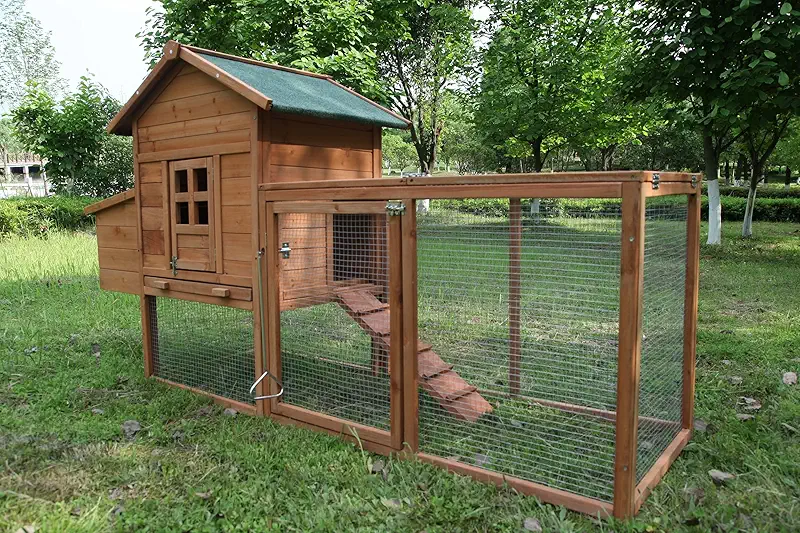
What I Look For In A Large Chicken Coop With Run
When I first started with laying hens, I thought “large” just meant “bigger than a doghouse.” After cleaning frozen droppings with a shovel and chasing muddy birds out of my wife’s flower beds, I learned better. These days, when I say a large chicken coop with run, I mean a setup that can truly give a flock room to live, not just survive.
Over the years I’ve settled on a simple checklist I run through whenever I look at a new coop. Whether it’s a ready-made coop you’re eyeing online or something you’re building with your own hands, the same rules apply.
Space For Sleeping, Eating, And Laying
My rule of thumb is at least 4 square feet of indoor coop space per hen, and 8–10 square feet of run space per hen. More is always better. I once tried squeezing 12 birds into a coop that should’ve held 8. The pecking order turned into a boxing match, and egg production dropped like a rock.
A good large chicken coop with run gives you:
- Enough roost bar space so hens can sit side by side without stepping on each other.
- Nesting boxes where they can lay in peace, not in a traffic jam.
- Feed and water space inside or sheltered, so winter chores are easier.
Strength And Predator Protection
Out here I’ve got raccoons, hawks, foxes, neighborhood dogs, and one very ambitious opossum. A flimsy run is just a snack stand for them. When I’m judging a large coop with run, I check:
- 1/2" hardware cloth on the lower parts of the run, not just thin chicken wire.
- Solid latches you can’t just bump open with a curious nose.
- Floor or skirt protection so nothing can dig in easily.
If I can wiggle a panel with one hand, I picture a 30-pound raccoon doing the same with a lot more motivation.
Little farmer truth: if you build or choose a coop like you’re trying to outsmart the craftiest raccoon in the county, you’ll usually end up keeping everything else out too.
Design Features That Make Daily Chores Easier
The birds are the easy part. It’s the daily bending, scraping, and hauling that wears you down. A good large chicken coop with run should make your morning chores feel like a quick visit with the girls, not a workout video.
Easy Access Doors And Egg Collection
On one of my first coops, I made the door just big enough for the chickens. I forgot that I’d eventually have to fit my shoulders through there with a bucket and a bad back. Now I always look for:
- Human-sized access doors so you don’t have to crawl.
- Side access to nest boxes so you can gather eggs without stepping in droppings.
- Good headroom so you can stand when cleaning, not hunch like a question mark.
A large chicken coop with run that respects your knees will keep you farming longer and grumbling less.
Ventilation, Light, And Weather Protection
Hens don’t complain much, but they sure show it in the egg basket when they’re stressed. I’ve seen production drop from poor ventilation and loud drafts alike.
- Windows or vents high on the walls to let moisture out without chilling the birds.
- Solid roofing so rain doesn’t turn the run into a mud pit.
- Some shaded area in the run for hot summer afternoons.
A large chicken coop with run should feel dry, fresh, and calm when you step in, not stuffy or damp.
Using A Large Chicken Coop With Run For Different Flock Sizes
One thing I’ve learned: “just a few hens” usually turns into “maybe a few more” right after you taste your own fresh eggs. Planning for that from day one will save you money, time, and a whole lot of sawing and cussing later.
For A Small Starter Flock
If you’re starting with 4–6 hens, a modest large chicken coop with run is plenty. You still want the full-size features: nest boxes, good ventilation, safe run. But you don’t need a barn just yet.
I like to start folks with something sturdy, easy to assemble, and easy to move if they change their mind about where it sits. Hens appreciate a routine, but they’d rather move once than live right next to the dog kennel or the kids’ basketball hoop forever.
For A Growing Backyard Flock
Once you get up into the 8–15 bird range, a large chicken coop with run really starts to pay off. That’s where features like:
- Multiple roosting levels, so timid birds can find their spot.
- Extra nest boxes (I like 1 box per 3–4 hens).
- A long, covered run for stretching legs in bad weather.
When I reached a dozen hens, I moved to a bigger setup with a generous run and my stress level dropped overnight. No more crowded ramps, fewer squabbles, and everyone had a dry spot when the freezing rain arrived.
For The “Eggs For The Whole Neighborhood” Flock
If you’re up over 15 hens, you’re playing in my territory now. At that level, the large chicken coop with run becomes more than a cute backyard project – it’s a working part of your homestead.
You want:
- Wide doors for wheelbarrows or at least big buckets.
- A run tall enough for you to walk in comfortably.
- Room to add a separate space for grow-outs or new birds.
That big, roomy run will also keep your yard from turning into one giant dust bath patch. Hens can do more landscaping in a weekend than a mini excavator if you don’t give them their own space.
Real-World Layout Tips From My Farm
A large chicken coop with run isn’t just about dimensions on paper. Where you put it and how you set it up makes just as much difference. Here’s what years of muddy boots has taught me.
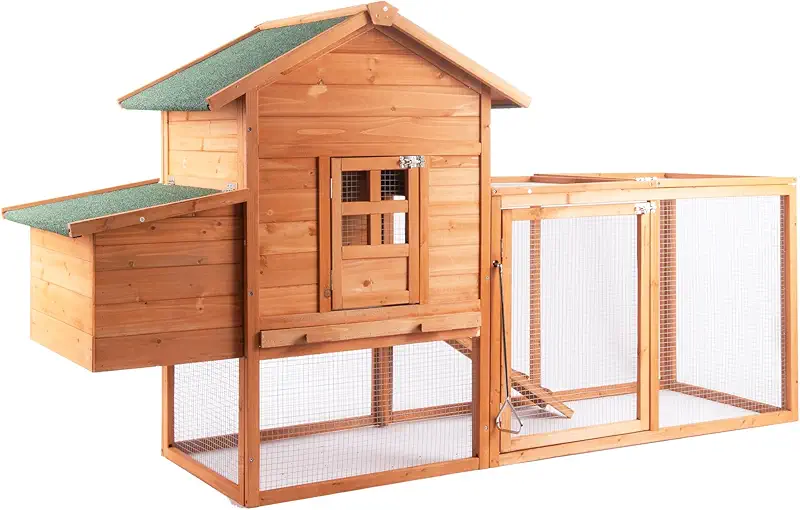


Sun, Shade, And Wind
I like my coop facing east or southeast if I can swing it. Morning sun dries things out and gets the girls moving, while afternoon shade keeps them from roasting in July. A large chicken coop with run tucked behind a windbreak – like a fence line or some trees – will treat you much better in January.
One winter I had a coop sitting right where the north wind came roaring across the open field. Even with good walls, the birds huddled on the downwind side and egg laying slowed down. Moving the next coop behind a shed made a big improvement without changing a thing inside.
Ground And Drainage
A coop set in a low, soggy spot is a swamp waiting to happen. I learned this the hard way when a week of spring rain turned my run into a muddy soup and the hens looked like they were training for a wrestling match.
- Pick a slightly higher spot if you can.
- Add a bit of gravel or sand under the run if your soil holds water.
- Use deep bedding or wood chips in the run to keep feet dry.
Pathways And Winter Access
I like a clear, simple path from the house to the coop. In summer, it doesn’t matter. In winter, when you’re hauling hot water through six inches of fresh snow in the dark, you’ll be grateful the coop is where you can reach it without a mountaineering permit.
A large chicken coop with run that is easy to reach, easy to open, and easy to clean will keep you committed on the cold days. The hens will still need you, even if your couch is calling.
Inside The Coop: Roosts, Nests, And Bedding
I like to say hens are simple souls with very specific opinions. If their roosts feel wrong or their nests don’t feel safe, they’ll let you know by sleeping in weird places and hiding eggs.
Roosting Bars
A good large chicken coop with run gives hens a solid place to sleep off the ground. I prefer wooden roosts about 2–4 inches wide, edges slightly rounded. Metal can get too cold in winter and hurt their feet.
- Give each hen 8–10 inches of roost space.
- Keep roosts higher than the nest box openings.
- Leave room behind or under roosts for easier cleaning.
Nesting Boxes And Bedding
For layers, nest boxes are the heart of the coop. I like them dimmer than the main area and a bit cozy, so a hen can settle without a crowd staring at her.
- About 1 box per 3–4 hens is usually enough.
- Use straw, pine shavings, or chopped hay for soft bedding.
- Keep the nests slightly lower than the roosts so hens don’t sleep in them.
A large chicken coop with run that keeps nests clean and dry will give you nicer eggs and far fewer cracked surprises.
Little story: I once skipped putting enough nesting material in a rush. The hens “fixed” it by dragging half the coop bedding into the boxes. Now I just start with deep, comfy nests and we’re all happier.
The Run: Where Hens Stretch, Scratch, And Gossip
The run is where your flock spends most of their waking hours. A large chicken coop with run treats that space like a real yard, not an afterthought. Happy hens in a roomy run are quieter, healthier, and a whole lot more fun to watch.


Floor, Cover, And Enrichment
A bare dirt run turns to dust in August and mud in April. I like to give my hens something to work with:
- Wood chips, leaves, or straw to scratch through.
- A covered section so the ground stays drier in rain and snow.
- A few logs, stumps, or low perches for them to hop on.
A large chicken coop with run that feels interesting keeps birds busy doing chicken things, not picking on each other out of boredom.
Safety And Peace Of Mind
I sleep better when I know the run is secure. I’ve had hawks circle, foxes pace the fence line at dusk, and stray dogs nose around. The coops and runs that have held up best all had:
- Strong framing and panels that don’t flex too much.
- Hardware cloth buried or flared out around the base.
- Doors that close tight with latches you have to actually think about to open.
When you stand back and look at your large chicken coop with run, you should feel like your flock is truly tucked in behind a fence you’d trust with your best layer.
If you’re ready to let your hens stretch their legs in a safer, roomier space, take a slow look at a large chicken coop with run that fits your yard and your flock. Picture yourself gathering eggs on a cold morning without crawling, slipping, or swearing under your breath. That’s when you know you’ve picked the right setup.
This could workFrequently Asked Questions About A Large Chicken Coop With Run
When you’re ready to see what’s out there, take your time, picture your own yard, and think about how many mornings and evenings you’ll spend walking that path to the coop. A good large chicken coop with run isn’t just for the hens – it makes your everyday chores calmer and a little more satisfying too.
Let me browse coops