
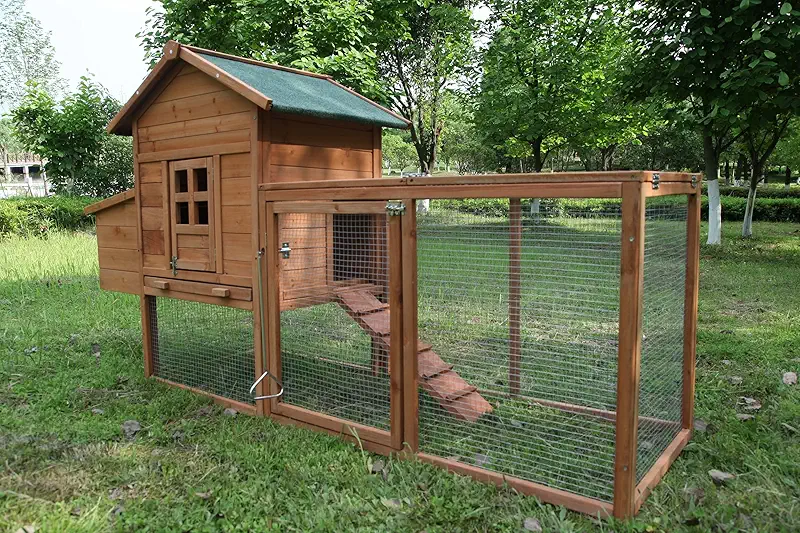
Why a large chicken coop changed my mornings
When I started with chickens, I crammed eight hens into a coop that was meant for four. I told myself, “They’ll be fine, they’re small.” Well, the hens had other opinions. Pecking, squawking, bare backs, and eggs laid in every place except the nest boxes.
The day I switched to a proper large chicken coop, the whole flock seemed to exhale. Fights dropped, egg production picked up, and for the first time in weeks I drank my coffee without running outside to break up a hen argument. Space is not a luxury for hens; it’s part of their peace of mind.
Hens don’t read catalogs, but they do read each other’s body language. When space is tight, that “body language” usually turns into pecking. A large chicken coop gives them room to walk away instead of start a fight.
How big should a large chicken coop really be?
Folks ask me all the time, “How big is big enough?” The answer depends on how many hens you have and whether they free-range or stay penned most of the day. But here are the simple numbers I live by:
- Inside coop space: at least 4 square feet per hen for standard breeds, 5 is even better.
- Run space: at least 8–10 square feet per hen if they’re not free-ranging every day.
- Roost space: about 8–10 inches of perch per hen, more for big girls like Orpingtons.
- Nest boxes: one box for every 3–4 hens, no less.
So if you’ve got a dozen hens, you’re looking at roughly 48–60 square feet inside the coop. Bigger isn’t wasteful; it just means you have room when you tell yourself, “Maybe I’ll add a few more hens this spring.” (We both know you will.)
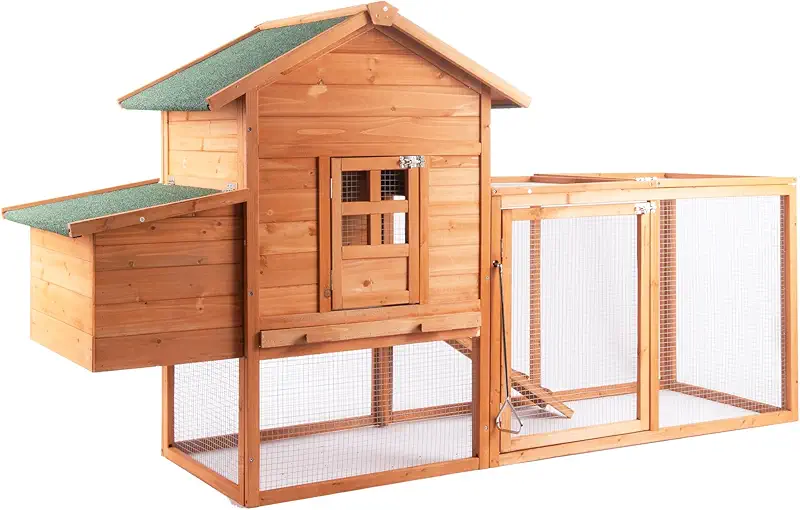
Key features I look for in a large chicken coop
I’ve built coops from scratch, and I’ve used ready-made kits. No matter the style, a solid large chicken coop has a few non‑negotiables. Think of these like your hens’ bill of rights.
1. Strong frame and predator-proof build
Out here, raccoons, foxes, and the neighbor’s dog all think “chicken” means “snack.” A flimsy coop is an invitation. I look for a sturdy wooden frame or strong metal, tight joints, and hardware cloth instead of simple chicken wire where it matters.
- Hardware cloth (½ inch) around windows, vents, and weak spots.
- Locks that a raccoon can’t open—simple slide latches won’t cut it.
- A solid floor or buried wire skirt to stop digging predators.
A large chicken coop is only as good as its weakest corner. If something can slip a paw or nose through, sooner or later it will.
2. Ventilation without cold drafts
Hens breathe out a lot of moisture, and their droppings do too. In winter, that moisture can freeze on combs and wattles if the air can’t escape. Good ventilation high up in the coop is one of the biggest favors you can do for your flock.
In my own large chicken coop, I keep vents up near the roof on opposite sides. That way fresh air moves across the top, not right at the birds’ backs when they’re on the roost.

3. Comfortable roosts and nest boxes
Chickens like to sleep off the ground where they feel safe. A large chicken coop gives you room to set up smooth, rounded roosts higher than the nest boxes. That keeps the hens from sleeping where they lay and turning nest boxes into messy bunk beds.
- Use 2x4 boards with the wide side up for roosts in cold areas—hens can cover their toes.
- Keep roosts all at the same height so nobody fights for the “top bunk.”
- Place nest boxes in a darker, quieter corner to encourage laying.
I once tried fancy round dowels for roosts. Looked nice, felt terrible. The hens kept slipping and choosing the nest boxes instead. Swapped them for wider boards, and suddenly everyone slept where they were supposed to. Hens are pretty clear when they don’t like your ideas.
4. Easy cleaning and daily chores
I’ve learned that if a large chicken coop is hard to clean, it simply won’t get cleaned as often as it should. That’s just human nature. So I look for:
- Big doors I can walk through instead of crawling.
- Removable trays or a wide drop board under roosts to catch droppings.
- Enough headroom that I don’t whack my head every time I collect eggs.
The easier the daily chores, the more likely you are to notice small problems before they turn into big ones—like a loose board, a leaky roof, or a hen that’s not herself.

Designing the inside of your large chicken coop
Think of the inside of the coop like a tiny barn: feed corner, bedroom, bathroom, and nursery all in one small space. When it’s laid out well, your flock moves like a calm little river each morning.
My simple layout that just works
Here’s how I usually set things up inside a large chicken coop:
- Roosts along the back wall, high and sturdy.
- Nest boxes on a side wall, lower than the roosts.
- Feed and water near the door so I can top them off without tracking through droppings.
- A small “people zone” just inside the door for boots, bedding, and tools.
This way, the hens have a clear sleep area, a laying area, and a food area, and I have a path that doesn’t make me step in everything they leave behind.

Large chicken coop and egg production
People love to talk about breeds and feed when it comes to egg production, but living space plays a huge role too. Stressed hens lay fewer eggs, and cramped hens are always stressed.
Once I moved my flock into a bigger coop, I noticed:
- Eggs became more regular, even in late fall.
- Shells were stronger—I saw fewer thin, weak shells.
- Hens spent more time quietly scratching and dust bathing, less time squabbling.
A large chicken coop won’t magically turn a four‑egg‑a‑week hen into a seven‑egg machine. But it will let your birds use all the health and genetics they already have without wasting energy on stress and arguments.

Seasonal tips for a large chicken coop
Hens don’t read calendars, but they know seasons better than we do. A good large chicken coop stays useful in January blizzards and July heat waves with a few smart tweaks.
Winter: dry, draft‑free, and bright
In winter, I focus on keeping the coop dry and out of drafts. I don’t insulate my coop like a house, but I do:
- Block direct drafts at roost level while keeping vents open up high.
- Use the deep litter method on the floor to build a warm, dry base.
- Let in as much natural light as possible to keep hens active.
Summer: shade, airflow, and cool water
In summer, a large chicken coop really earns its keep if it has good airflow. Big windows with predator‑safe wire and shade from trees or a roof overhang make a huge difference. I also hang an extra waterer in the shaded side of the run so it stays cooler longer.

Common mistakes folks make with a large chicken coop
Over the years, I’ve made most of the mistakes so you don’t have to. Here are a few I see again and again when people set up a large chicken coop:
- Counting advertised “chicken capacity” instead of real space per bird.
- Skipping hardware cloth on vents and windows.
- Putting nest boxes higher than the roosts.
- Forgetting space for you—no room to stand or turn around.
- Not planning ahead for the “just a few more hens” decision.
A coop that looks big in a picture can feel small when you’ve got a dozen hens, a feed bucket in your hand, and mud on your boots.

Before you settle on any large chicken coop, ask yourself:
- Can I move around in there without crawling?
- Will this still feel big enough if I add four more hens?
- Where are the weak spots a raccoon would try first?
- How long would a full cleaning take me on a busy day?
If you like the honest answers to those questions, you’re likely looking at a coop that will serve you and your birds well for years.