
Predator proof chicken coop
Out here on my little corner of countryside, we say, “If you keep chickens, you’re feeding something. The question is who.” A solid predator proof chicken coop is what decides whether you’re feeding your family or the local raccoons.
I’ve raised laying hens for decades in the U.S., through coyotes, foxes, raccoons, hawks, owls, neighbor dogs, and one very determined weasel. I’ve lost a few birds learning hard lessons so you don’t have to. In this guide I’ll walk you through what really keeps hens safe and laying strong, and how to spot a coop that can stand up to night visitors.
Let me see coops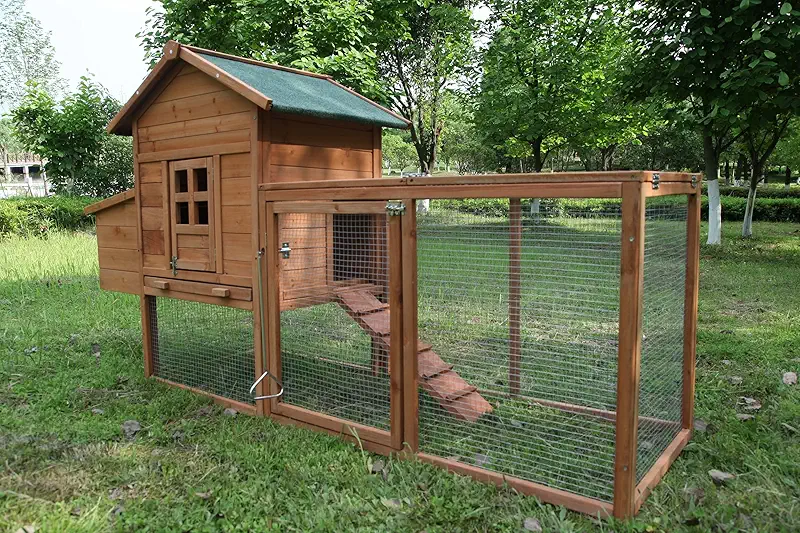
Why a predator proof chicken coop matters more than anything else
Feed is important, breed is important, but if your coop isn’t tight, none of that matters. A stressed hen doesn’t lay well, and a dead hen doesn’t lay at all. I learned that the hard way one fall when a young raccoon found a weak spot in my old coop. I went out at sunrise and the yard was quiet. Too quiet. If you’ve ever walked into a coop after a predator visit, you know the feeling in your gut.
From that day on, “pretty” moved way down my list and “secure” moved to the top. Now, when I look at any predator proof chicken coop, I ask myself one simple question: “Can a hungry raccoon at 2 a.m. beat this?” If the answer might be yes, I fix it or I pass on it.
A good predator proof chicken coop does three things:
- Stops digging, pulling, chewing, and squeezing through gaps.
- Keeps hens calm and comfortable, so they keep laying steadily.
- Makes your chores easy enough that you actually lock up every night.
If closing and opening your coop is a pain, sooner or later you’ll skip a night. That’s the night the predators are waiting for.
Common predators and how they really attack your coop
Let me tell you about the usual suspects on a U.S. homestead. I’ve met them all, usually when I wasn’t quite ready.
Raccoons: the little bandit engineers
Raccoons don’t just push; they twist, pull, and test every weak spot. I watched one on a game camera once work a simple latch for 15 minutes straight. They reach through wire, grab hens, and will peel back flimsy mesh like a can of beans.
Foxes and coyotes: fast and quiet
Foxes slide under, coyotes dig under. If your coop doesn’t have proper wire skirt or buried protection, they’ll find that gap right where you ran out of energy while building. Ask me how I know.
Dogs: friendly faces, bad habits
A neighbor dog can do more damage in five minutes of “play” than a fox does in a week. If your run fence is wobbly, a determined dog will show you.
Hawks, owls, and weasels
Hawks mostly bother you in the daytime in the open run. Owls and weasels slip into gaps you would swear were too small. If I can poke two fingers through a hole, I assume a weasel can get through it.
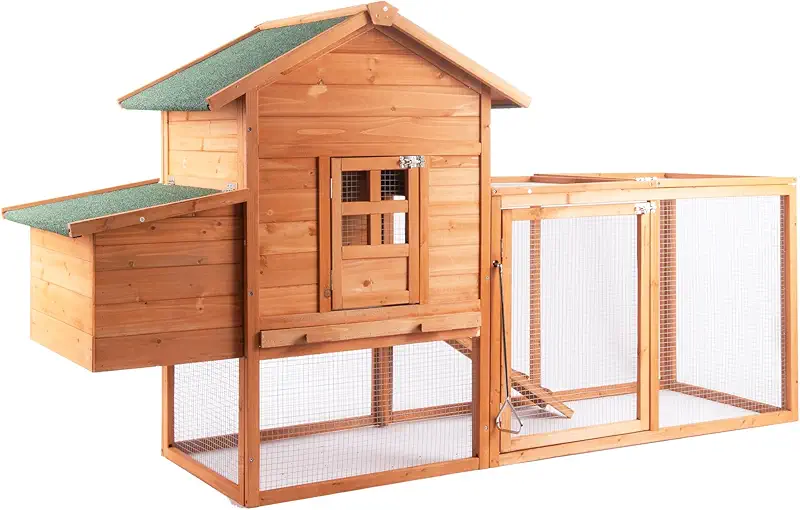
A good predator proof chicken coop is built with these animals in mind. If a design only looks strong from far away, but uses soft wire, cheap locks, or weak hinges, it’s just decoration around an all‑night buffet.
Key features I look for in a predator proof chicken coop
When I walk around a new coop, I don’t start with the color or the cute windows. I start low, I start at the corners, and I run my hands over everything like a suspicious old farmer. Here’s the checklist I use now.
1. Real hardware cloth, not chicken wire
Chicken wire is fine for keeping chickens in. It’s not fine for keeping predators out. Raccoons can tear it, dogs can push through it, and weasels slip right past it.
- Look for 1/2 inch galvanized hardware cloth.
- Ask yourself: could I bend this easily with my hands?
- If the answer is yes, a raccoon will do worse.
2. Strong doors and latches
Every door is a test. Pop‑open handles and little sliding bolts are a raccoon’s favorite puzzle toys.
- Use two-step latches or carabiners on main doors.
- Make sure nest box lids close tight with no gaps.
- Check that wood around hinges isn’t soft or cracking.
3. No easy digging under
Predators don’t always go through; many times they go under. A good predator proof chicken coop makes that a lot of work.

Some folks bury wire at least 12 inches down. Others, like me these days, run a 12–18 inch skirt of hardware cloth flat on the ground all around the coop and run, then cover it with soil or gravel. Predators start to dig at the edge, hit that wire, and usually give up.
4. Tight roof and seams
Don’t forget to look up. I once had a possum come right in through a loose metal panel I kept meaning to fix. Now I always check:
- No open ridges, gaps, or loose roofing sheets.
- Ventilation openings covered in hardware cloth, not plastic mesh.
- All corners joined solidly with screws, not just staples.
5. Easy for you to lock up every night
A predator proof chicken coop isn’t just about brute strength. It’s about routine. If doors are heavy, awkward, or hard to reach, one day you’ll say, “They’ll be fine for one night.” That’s the night trouble knocks.
How a safe coop keeps hens laying better
I’ve noticed something year after year: when predators are sniffing around and the coop isn’t tight, hens get noisy, restless, and egg numbers drop. Once I fixed the weak spots, they settled down and the egg basket filled back up.
Stress and egg production
Chickens are tougher than folks think, but they don’t like feeling hunted. Night after night of scratching at the walls, dogs barking at the run, or shadows slipping through gaps will:
- Slow down laying, especially in young pullets.
- Make hens jumpy and noisy, even during the day.
- Cause hens to sleep on the floor instead of roosts.
When I finally tightened up one old coop and added better wire and a real door latch, the girls went quiet at night within a week. They looked more relaxed in the morning, and egg count ticked up again.
Clean, dry, and draft-free
A predator proof chicken coop usually ends up being weather proof as well. Solid walls, real roofing, and snug doors mean:
- Less dampness, which means fewer respiratory issues.
- Fewer drafts right at roost level.
- Cleaner bedding that lasts a bit longer.

When I step into the coop before sunup and everyone is still dozy and quiet on the roost, I know things are right. If birds are pacing, flapping, or calling, I start checking for what spooked them in the night.
My personal routine to keep predators guessing
A solid predator proof chicken coop is your first line of defense. The second line is your habits. Predators love patterns, and frankly, most of us are pretty predictable. Here’s what I do these days.
Evening walkthrough
Before dark, I make one slow lap:
- Check every door and latch by touch, not just by sight.
- Look for new digging spots or loose soil along the fence.
- Make sure feed is put away and not piled against the wire.
I joke that I tuck my hens in better than I ever tucked in my kids, but these girls pay the feed bill with eggs, so it’s a fair deal.
Lights, sounds, and timing
I don’t rely on gadgets, but I do like a simple motion light or two pointing away from the coop. It startles prowlers without blinding the hens. I also try not to lock up at the exact same time every evening. A little randomness keeps the night crew guessing.

Weekly and seasonal checks
Once a week, I get down low and really look things over.
- Tap at wood near the ground for rot or soft spots.
- Look for rusty staples or loose screws on wire panels.
- Check the roof line after every big wind or snowstorm.
At the change of seasons, I fix anything even slightly questionable. Predators always seem to test fences harder when the weather turns or food gets scarce.
Choosing a ready-made predator proof chicken coop online
Not everyone wants to frame, cut, and haul lumber. These days there are plenty of ready-made coops you can order, haul into the yard, and have your hens sleeping in within a weekend. Some are solid, some are what I’d politely call “decorations.” Here’s how I tell the difference when I’m looking at photos and descriptions.
Things I like to see
- Hardware cloth or clearly labeled heavy-gauge wire on windows and run.
- Straight, thick framing boards instead of thin strips.
- Doors that overlap their frames, not just sit between them.
- Pictures that show hinges, latches, and corners up close.
Things that make me cautious
- Only chicken wire mentioned, or wire that looks thin and floppy.
- Pretty paint and trim, but no details about structure.
- Doors that look small, so you can’t easily step inside.
- Very light total weight for the size of the coop.

What a stronger coop gives you
- Fewer surprise “crime scenes” in the morning.
- Calmer hens and more consistent eggs.
- Less patching and rewiring down the road.
- Peace of mind when you hear coyotes at night.
What cutting corners usually brings
- Emergency repairs in the dark after a loss.
- Extra money spent upgrading weak parts later.
- Hens that hesitate to go into a stressful coop.
When you’re ready to look around, you’ll find a whole range of options, from small backyard setups to larger, walk-in styles. Take your time, zoom in on the construction details, and let the predators in your area guide your choices.
Extra tips for raising healthy laying hens in a secure coop
A predator proof chicken coop is the foundation, but good care keeps your flock thriving once they’re safe. Here are some of the habits that have kept my girls laying strong for years.
Roosts, nests, and space
Give your hens room, and they’ll give you eggs. In tight quarters they bicker, pick, and stress.
- Plan at least 4 square feet per hen inside the coop if possible.
- Use sturdy roosts about 2 inches wide so they can sit flat‑footed.
- Offer one nest box for every 3–4 hens to avoid traffic jams.
Feed, grit, and water
A predator proof chicken coop keeps the bad guys out, but it also helps keep feed dry and clean. I hang my feeders just high enough that hens can reach comfortably but rodents can’t easily jump in.

Clean bedding and fresh air
I like a dry bedding system—pine shavings or chopped straw—stirred regularly and changed when it starts to smell “heavy.” A good predator proof chicken coop has ventilation up high, above roost level, so fresh air moves through without chilling the birds.
Keep dust and ammonia down, and you’ll see brighter combs, clearer eyes, and stronger shells. Chickens don’t complain like people do, but they sure tell you with their health and their eggs.
My little early-warning system
I keep an eye on patterns: where the hens sleep, how quickly they come out in the morning, how much they talk. When something feels “off,” I check the coop first for any new gaps, digging, or chew marks.
More than once, I’ve caught a problem early because the hens were telling me with their behavior long before a predator actually got in. It’s like having 10 or 20 feathery security guards who gossip about everything.

Predator proof chicken coop – Frequently asked questions
How do I know if my coop is really predator proof?
I use a simple rule: if I can kick, pull, or shake something loose with a good farm-boot effort, a predator can too. Walk around your coop and test it like you’re the hungry one. Check wire for flex, latches for play, and corners for gaps. If you see daylight where you shouldn’t, fix it. A predator proof chicken coop should feel solid, with no rattles or wobbles when you lean on it.
Is chicken wire ever enough for a predator proof chicken coop?
I only use chicken wire inside a secure structure, never as the outside defense. It’s fine to keep birds from hopping where they shouldn’t, but not for stopping teeth and claws. For any place where a predator could get a bite or a grip, I use 1/2 inch hardware cloth. Think of chicken wire as decoration and hardware cloth as armor.
Do I really need to lock my chickens up every night?
If you want to keep them, yes. Predators do most of their work between dusk and dawn. Even with a great run, I shut the solid coop door every single night. A predator proof chicken coop is only doing its job if the doors are actually closed. It becomes a quick habit, especially if the latches are easy to work, even when you’re tired and it’s raining.
What’s the best floor for a predator proof chicken coop?
I’ve used both dirt and solid floors. Dirt is fine as long as you protect the edges with hardware cloth buried or skirted out. For smaller coops, I really like a solid floor—wood or concrete—because nothing can dig through and cleaning is simpler. Whatever you choose, make sure there are no gaps where the wall meets the floor. That’s a favorite spot for midnight visitors to test.
How many hens can I keep safely in one coop?
Safety isn’t just about predators; crowding can cause its own sort of trouble. I aim for at least 4 square feet per hen inside the coop and 8–10 square feet per hen in the outside run. A predator proof chicken coop with cramped birds will still give you pecking, feather loss, and stress. Room to move, roost, and nest makes the whole flock calmer and easier to manage.
Ready to look at secure coops?
You’ve heard my stories, you know what to watch for, and you’ve got a good sense of what your local predators can do. The next step is simply finding a predator proof chicken coop that fits your flock, your yard, and your hands.
Take your time, trust your gut, and remember: it’s easier to build strong once than to patch weak spots after something has tested them. Your future self, standing in a quiet coop at sunrise with a basket full of eggs, will thank you.
Let’s see what fits