
Why a solar chicken coop door changed my mornings
I’ve been raising laying hens out here in the States long enough to have frozen my boots to the ground more than once. For years, my alarm clock was not my phone, not a rooster, but a nagging thought: “Did I close the coop last night?” Most mornings I was fine. But once in a while, I wasn’t.
One winter, after a long day fixing fences and hauling feed, I forgot. Just once. A raccoon squeezed in, and by sunrise I had a mess I don’t much like to remember. That was the week I started looking into an automatic door. I ended up with a solar chicken coop door, and I’ve not gone back since.
Now, the sun does the nagging for me. The door opens when the light comes up and shuts when it fades. No extension cords across the yard, no running power out to some awkward spot on the barn. Just a small panel, a smart little controller, and a door that does its job more faithfully than I ever did at 10 p.m. in the rain.
How a solar chicken coop door actually works
Folks sometimes think “solar” means complicated. Truth is, the hens understand it better than we do: light means out, dark means in. The door is built to follow that same simple pattern.
Main pieces you’re dealing with
- Solar panel – collects sunlight and sends power to the door system.
- Battery or capacitor – stores that power so the door still works on cloudy days.
- Motor and track – raises and lowers the door, usually a sliding panel.
- Controller or timer – tells the door when to move, based on light or the schedule you set.
- Safety system – senses if a hen is under the door and stops or reverses.
Most good units let you run in one of three ways: by daylight sensor, by a fixed time, or a mix of both. I prefer using light for opening and a set time for closing, because most predators clock in after dusk, and chickens sometimes drag their feet going to bed.
Why a solar door makes sense for backyard and homestead flocks
Not every coop is built next to an outlet. I’ve seen coops tucked at the back of a field, in the corner of a garden, or along a hedgerow behind the house. You can haul power out there, or you can let the sun do the job.
No trenching, no cords, no drama
Running electric cable underground costs money and time, and leaving a long extension cord on the ground is just asking a mower or a curious dog to chew on it. With a solar chicken coop door, you mount a small panel on the coop roof or the sunny side, tidy up the cable, and you’re done.
On my place, the coop sits far enough from the barn that a trench would’ve meant a whole weekend and a rented trencher. The solar panel went up in under an hour, and the hens never missed a day of scratching.
Simple roof-mounting of a solar panel keeps cords off the ground and out of the way.

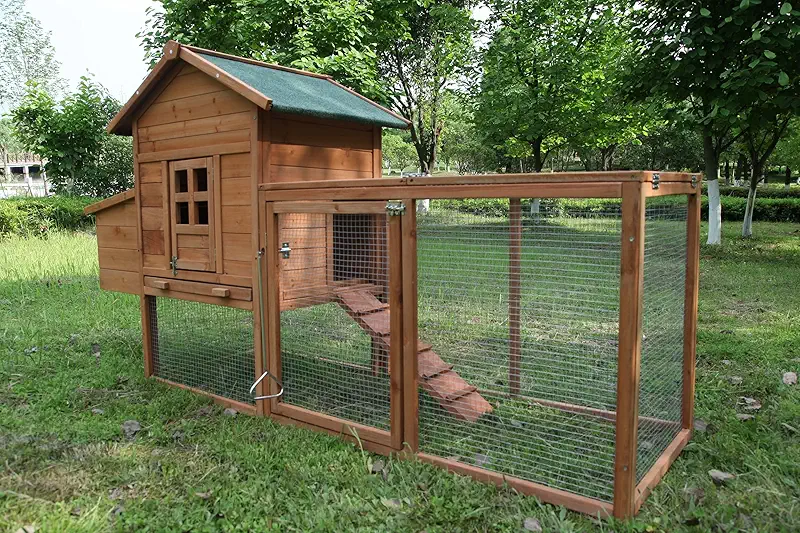
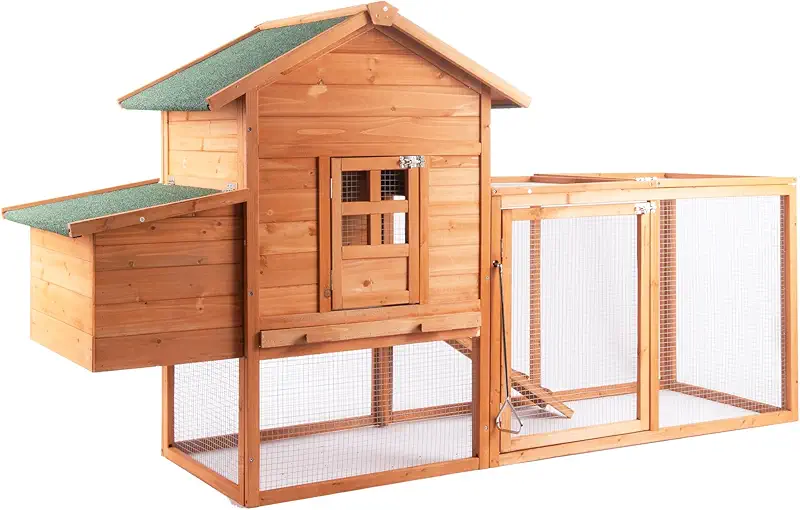
A clean, sturdy coop front makes installing an automatic door much easier.
Predator protection when you’re busy or away
A well-built solar chicken coop door is one of the strongest “locks” you can add to a coop. Raccoons, foxes, opossums, even neighborhood dogs – they all love free-range drumsticks. The weak point is almost always the door and the human who forgets to close it.
Mine has saved my birds more than once. One night, we were an hour away at a ball game that went late. Storm rolled in, lights went out at the field, and my wife nudged me, “Door?” The automatic door had already shut, rain or not. We got home to a dry, quiet coop and some pretty smug-looking hens.
Keeping your laying hens happy with a solar door
A solar chicken coop door isn’t just about predators and sleep. It also sets a good rhythm for your laying hens. Chickens love routine. They like knowing when the day starts and when it ends.
Consistent mornings mean better laying
Hens lay best when they’re not stressed. When the door opens around the same time each morning, the flock stretches, heads out, and gets to scratching and dust-bathing. They find their favorite spots, sort out their little arguments, and start their day calm.
When I used to open manually, some mornings the birds were stuck waiting because I slept in or got distracted with kids or weather. They’d pace and squawk, and sure enough, that stress showed up later in the nest boxes. Still got eggs, but not as steady.
Gentle evenings, less chasing
If you’ve ever tried to round up hens by flashlight, you know the show. You run one way, they slip the other, neighbors wonder what in the world you’re doing. With a solar chicken coop door on a timer, the birds learn fast. When the light starts to fade, most flocks put themselves to bed.
I set my door to close a bit after sunset, giving that one slow old hen, “Mabel,” time to wander in. Within a week, everyone was roosting on time, and I wasn’t out there in my slippers trying to convince them.

A calm coop at dusk helps hens settle in and lay steadily.

Hens feel safer when the door closes firmly and predictably every night.
What to look for in a solar chicken coop door
Not all doors are built the same, and a flimsy one is about as useful as an open window. When I’m helping folks pick a door, these are the points I always walk them through.
1. Solid, predator-resistant design
- Metal or thick composite door that can’t be chewed or bent easily.
- Snug side rails so raccoon paws can’t pry it up or down.
- Weather-resistant housing to protect the motor and electronics.
2. Reliable power and battery backup
A good solar chicken coop door has a decent-sized panel and either an internal battery or one you can swap. Sunlight levels change with seasons. A larger panel and a better battery mean your door still works after several cloudy days.
Up here, winters get gray, and days are short. I pay attention to how many days the battery can hold a charge. Three to five days’ backup is a comfortable margin for me.
3. Smart safety features
No one wants a door that shuts on a hen. Look for:
- Auto-stop or reverse if the door meets resistance.
- Slow, steady travel instead of slamming shut.
- Manual override you can use in a hurry if something goes wrong.
4. Easy setup and simple controls
A controller that needs a college degree to understand isn’t much use out in the yard. I like a setup with plain buttons, clear labels, and maybe a small screen. If you can’t set it without the manual on the third try, that’s a bad sign.
Mounting should be straightforward too: screw the frame over the opening, run the cable to the panel, and tighten everything up. If you’re fighting the design, you’ll rush it, and rushed work is where predators find their chance.
Installing your solar chicken coop door the right way
I’ve helped neighbors put in more than a few of these. The difference between “works okay” and “works flawlessly” is usually in the little details.
Step 1: Choose the best opening
Your door should be:
- On a solid, vertical wall, not sagging framing.
- High enough to keep bedding from spilling out.
- Low enough that heavier hens can step through easily.
Step 2: Mount the frame straight
Use a level. If the rails are crooked, the door can bind and strain the motor. I’ve seen doors fail in a few months just because they were mounted on a warped board. Sometimes I add a small piece of plywood as a flat backing board first, then mount the door to that.
Step 3: Place the solar panel wisely
Angle and direction matter more than most folks think. Here’s what I’ve found works:
- Face it toward the sunniest side of your coop (usually south in the U.S.).
- Keep it clear of shade from trees, buildings, or tall weeds.
- Mount it where you can reach it for cleaning, not so high you avoid checking it.

Position the panel where it gets consistent light through the seasons.

A snug, squared frame lets the door run smoothly without binding.
Step 4: Test, watch, and adjust
For the first week, I stand by for a couple of openings and closings. I make sure:
- The hens figure out the new “wall” just fine.
- No bird gets pinned or panics near the opening.
- The timing suits my yard’s light and shade pattern.
If the door is closing a little too early in the evening because of a tree line or a hill, I switch to timer mode or nudge the closing time later. You’re teaching the birds and the door at the same time.
Living with a solar chicken coop door year-round
Like everything on a farm, even a smart door needs a little attention now and then. Not much – but enough to keep it honest.
Seasonal checks that save headaches
- Spring: Clean the panel, check for loose screws, watch for birds nesting on top of it.
- Summer: Make sure climbing vines or tall weeds aren’t shading the panel.
- Fall: Clear off leaves, confirm your closing time still fits the earlier sunsets.
- Winter: Brush off snow, knock off ice, and make sure the track isn’t frozen with wet litter.
I keep an old soft brush hanging near the coop just for the solar panel. Takes ten seconds, and that little habit keeps the door working smooth while I’m sipping coffee instead of chasing wayward pullets.

Regular quick checks of the coop and door keep your flock safe through every season.
Raising laying hens with less worry and more joy
Hens are simple creatures with simple needs: safety, food, water, and a dry spot to sleep. A solar chicken coop door covers a big chunk of that “safety” part so you can focus on the rest.
I still walk out to the coop most evenings. Not because I have to, but because I want to. I like to hear the soft clucks, smell the clean bedding, and check the nest boxes. The difference now is: if life gets in the way – if a kid’s game runs late, or a storm blows through – I know the door will still shut.
I always tell new chicken keepers this: make the hard parts automatic and the fun parts personal. Let a solar chicken coop door handle the “did I close up?” anxiety, and you spend your time handing out treats, checking feathers, and visiting with your birds. That’s the part that keeps us all in this for the long haul.