
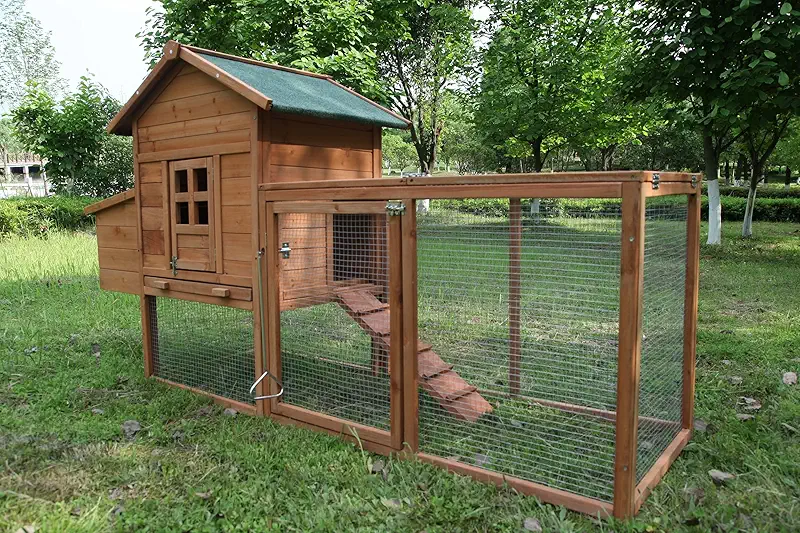
Why a tractor chicken coop feels like cheating (the good kind)
I’ve kept laying hens most of my life. When I was young, our first coop was a stubborn, crooked little shed that refused to move. The hens were happy enough, but the ground under them turned to bare dirt and the flies held family reunions out there every summer.
The day I brought home my first tractor chicken coop, my wife looked at it and said, “So you finally bought something that actually moves?” She had a point. A good coop tractor rolls across the yard, gives your birds fresh grass, and keeps the smell from knocking you over when the wind shifts.
Over the years I’ve learned what makes a chicken tractor a joy to use, and what turns it into a rusty yard ornament. I’ll walk you through the details the pictures don’t show, and how to pick a tractor chicken coop that fits your birds, your body, and your backyard.
The real job of a tractor chicken coop
Folks think a coop tractor is just a coop with wheels. That’s like saying a pickup is just a car with a bed. The whole point is movement with as little fuss as possible. Every time you pull that coop to fresh ground, you’re doing four things:
- Giving the hens clean grass and fresh bugs
- Spreading manure so it feeds the soil instead of burning it
- Knocking down smell and flies before they get bad
- Keeping the hens working for you, not against your lawn
A well-built tractor chicken coop turns your birds into little feathered farmhands. They mow, fertilize, and till the top inch of soil, one patch at a time. You just steer the operation.
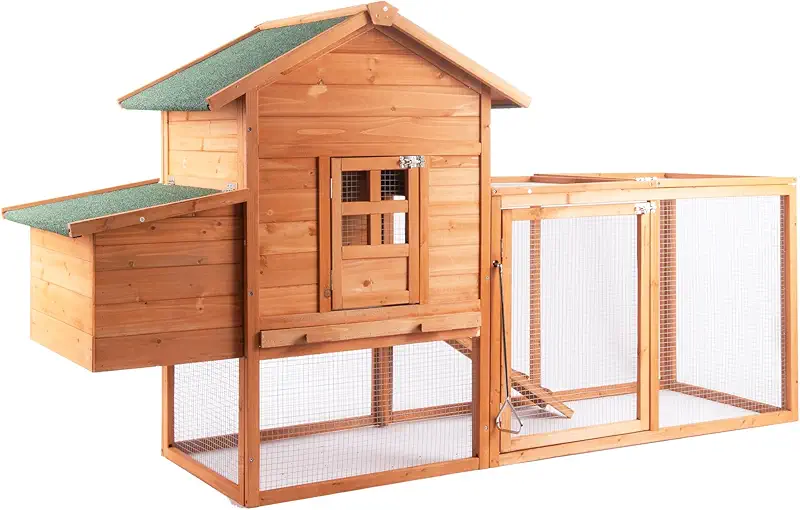
If you can’t move the coop with one hand when it’s empty, you won’t be happy moving it when the ground is wet and you’re in your work boots. Test the weight in your head before you trust the pictures.
How many hens can live in a tractor chicken coop?
I get this question more than any other. People want a number, but chickens don’t read charts. They care about space, air, and boredom. Here’s how I think about it for a typical backyard tractor:
- Interior sleeping/nesting area: aim for about 3–4 square feet per hen.
- Run area on the ground: at least 8–10 square feet per hen if you move them often.
- Height: enough room for them to hop on a roost without bonking their heads.
Many store-bought tractors say they hold “up to 8–10 chickens.” That’s marketing talk. That number might work for tiny bantams who drink herbal tea and read quietly. For full-size laying hens, I cut that number down hard.
As a rule, I take the “up to” number, cut it in half, and then see if that looks honest. Six hens in a decent mid-sized tractor chicken coop is usually comfortable if you move it daily.
What makes moving a tractor chicken coop easy (or miserable)
Moving the coop is where most folks get surprised. It looks light on the screen, but once you add hens, feeders, and a bit of dried manure, it suddenly feels like dragging a wet mattress across the yard.
Here’s what I look for to keep my shoulders from filing a complaint:
1. Wheel size and placement
Little wheels sink into soft ground. Big, wide wheels roll over bumps and ruts. If I had to pick one single feature that decides whether I like a tractor chicken coop, it would be the wheels.
- Bigger is better: think lawnmower or wagon, not office chair.
- Mounted at the balance point: so the weight is shared and you’re not lifting it all.
- Sturdy axle: thin metal bends, then nothing rolls right again.
2. The handle or pulling point
I’ve had tractors with a flimsy rope, and tractors with a solid bar handle. The bar wins every time. Cold fingers and flimsy rope are a bad mix at 6 a.m.
Look for something you can grab with both hands, around waist height, without stooping. If you have to crouch to pull, your back will complain louder than a broody hen.
3. Weight and balance
Metal coops last, but they can be heavy. Wood coops look nice, but soak up water. A mix of lighter framing with metal mesh is usually a good balance for a tractor chicken coop.

Picture the coop with wet bedding, full feeder, and a light rain the night before. If it still seems easy to move in your imagination, that’s a good sign.
Keeping hens safe in a tractor chicken coop
A tractor chicken coop sits on the ground where every fox, raccoon, and curious neighborhood dog can stroll by. I’ve lost birds before. Nothing sours your evening faster than finding feathers and tracks where your girls should be.
Here’s what I watch for to keep predators frustrated and hens calm:
Strong wire, not flimsy mesh
Thin “chicken wire” keeps chickens in, but it doesn’t always keep teeth out. I like heavier welded wire, especially along the lower sides where critters test the fence.
Gaps around the edges
Most predators don’t attack from the top like a hawk in a movie. They test the corners and the bottom edge. A good tractor chicken coop sits low to the ground with no big gaps.
Some folks add a simple wire apron that sticks out along the ground edge. I’ve done that on soft soil, and it works like a charm. The fox digs at the edge, hits wire, and moves on.

Nighttime security
Chickens go to bed on their own when the sun drops. All you really have to do is make sure the doors and latches are solid while they sleep.
- Look for simple, sturdy latches that can’t wiggle open.
- A solid roosting area inside, protected from drafts.
- Good ventilation high up so moist air can escape.
Daily and seasonal care of a tractor chicken coop
People ask if a tractor chicken coop is “low maintenance.” I always laugh a little. Chickens are living creatures, not lawn ornaments. But a well-designed tractor does make the work easier and quicker.
Daily routine
Most days, my routine looks like this:
- Move the tractor to fresh ground, just one length forward.
- Check water and top it off if needed.
- Fill the feeder, shake out any clumps.
- Quick glance at each hen for bright eyes and clean feet.
That’s ten minutes, maybe fifteen if I get to daydreaming and talking to the birds like they’re coworkers. The movement is what keeps the smell down and the grass from turning into a bald spot.
Handling mud and winter
A lot of glossy photos of tractor chicken coops are taken on sunny days in June. Life isn’t all June. You’ll have mud, heavy rain, and maybe snow if you live where I do.
I like to park the tractor on higher, well-drained spots after a big rain. In winter, I sometimes give them a semi-permanent spot with deep bedding and only move the coop on mild, dry days. The wheels still help when it’s time for a big clean-out.

Cold doesn’t bother hens as much as damp and drafts do. Make sure your tractor has a snug sleeping area and good roof, then focus more on keeping them dry than on making it toasty.
Features that actually matter when choosing a tractor chicken coop
I’ve seen coops with more “extras” than a new truck, but most of the fancy bits don’t move the needle. These are the features that really do change your daily life:
- Easy egg access: Can you reach the nest boxes without crawling or bending too far?
- Roof you can trust: Solid panel or metal that won’t leak after the first storm.
- Simple cleaning: Removable tray or wide door so you can scrape bedding without cussing.
- Good airflow: Vents high up, with mesh that keeps varmints out.
- Roomy run: Enough space for them to scratch, dust bathe, and spread out.

When I look at any tractor chicken coop, I imagine doing chores on a cold, gray Tuesday when I’d rather be inside. If it still looks easy in my mind, that coop has a chance.
How often should you move a tractor chicken coop?
The honest answer: as often as your grass and your nose tell you. But to give you something more useful than that:
- Small flock (3–4 hens): every 2 days on good grass, daily on smaller yards.
- Medium flock (5–8 hens): daily is best.
- Heavy use or weak grass: sometimes twice a day, morning and evening.
If the ground looks bare and pecked to death, you waited too long. If you start to smell ammonia when you open the coop, you definitely waited too long.

If the patch behind the coop still looks like a lawn that just had a party, you’re doing it right. If it looks like it lost a bar fight, move earlier next time.
My personal take after years with tractor coops
I’ve built coops from scratch out of scrap lumber and baling wire. I’ve bought fancy ones in boxes that claimed they could be assembled in an hour. (Maybe if you have three neighbors and a pot of coffee.)
The tractors I’ve kept and used for years all share the same traits:
- They move easily even when I’m tired.
- The hens have room to act like chickens, not sardines.
- Cleaning and egg-gathering don’t feel like punishment.
- Predators walk by, sniff, and keep going.
A tractor chicken coop won’t fix every problem in your life, but it will give you a steadier supply of good eggs, richer soil, and something peaceful to look at in the evenings. Sometimes I watch the hens scratch, and for a few minutes, nothing else on the farm seems quite as urgent.

If you’re just starting with laying hens, a good tractor coop can save you a lot of beginner mistakes. And if you’ve kept chickens for years in a fixed coop, a tractor can make you wonder why you waited so long.