
Walk-in chicken coop plans
I’ve been raising hens in walk-in coops for more than thirty years on my little patch of dirt here in the States. I’ve seen coops that worked like a charm and coops that made chores a daily wrestling match. On this page I’ll walk you through real-world walk-in chicken coop plans that keep your birds safe, dry, and laying steady, without turning your back or knees into scrap metal.
We’ll talk about size, layout, roosts, nesting boxes, ventilation, predator proofing, and a few lessons I learned the hard way so you don’t have to. If you’re dreaming about stepping into a solid, roomy coop with a coffee in your hand and happy hens at your feet, you’re in the right place.
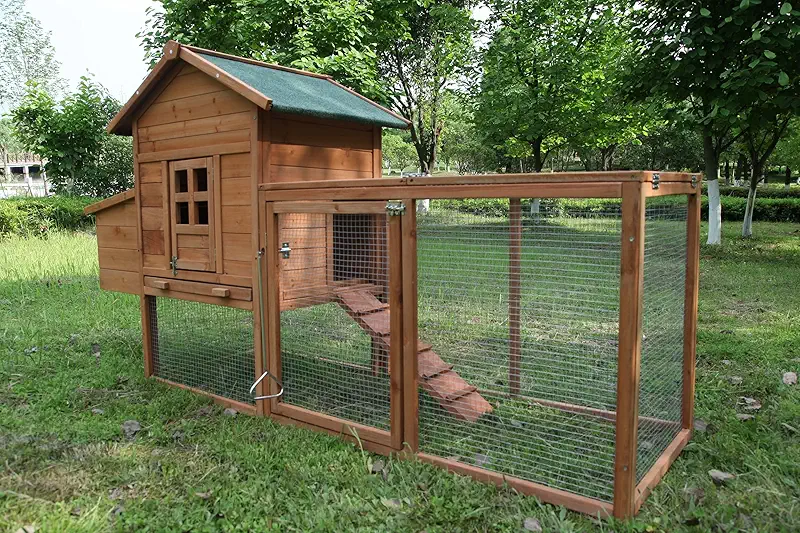
A sturdy walk-in coop makes chores easy and hens relaxed.
Why a walk-in coop beats a tiny box
When I started with chickens, I bought a cute little coop that looked great in the catalog. It had a tiny door, a tiny run, and after one muddy March I had a tiny amount of patience left. Cleaning was a pain, I banged my head every time I tried to reach a corner, and the hens were packed tighter than church on Easter.
Then I built my first walk-in coop. I still remember stepping inside for the first time, rake in hand, standing up straight instead of crawling like a raccoon under a porch. That moment sold me for life. A walk-in coop isn’t just about comfort for you; it changes how your birds behave and how healthy they stay.
- Easier chores: You walk in, not crawl in. Cleaning, feeding, collecting eggs – all faster and kinder on your back.
- Better air: More space and height mean better ventilation, drier litter, and fewer respiratory issues.
- Calmer hens: You move smoothly among them, so they stay used to you and easier to handle.
- Room to grow: We all start with “just six hens.” Then we see more breeds… a walk-in coop gives you some breathing room.
“My granddad used to say: ‘Build the coop you’ll need next year, not the one you think you need today.’ He was right. Chickens are like potato chips; folks rarely stop at one bag.”
If you’d rather start from solid readymade ideas than a blank sheet of plywood, have a look at different walk-in style setups, shapes, and sizes. Seeing what’s out there can spark the right plan for your own yard.
Let me browseHow big should your walk-in coop be?
Most folks ask me first, “How many square feet per chicken?” That’s a fair question, but I like to flip it: “How often are they locked inside, and how muddy is your ground?” Space needs change if your birds are cooped up all winter versus free-ranging on dry pasture.
As a simple rule of thumb for walk-in chicken coop plans:
- 4 square feet per hen inside the coop is the bare minimum if they have good outside run time.
- 6–8 square feet per hen inside if they’re confined more often due to predators, neighbors, or winter.
- Run space: 8–10 square feet per bird outside keeps the ground from turning into a swamp of mud and droppings.
I run my main flock of 12 layers in a walk-in coop that’s about 8×10 feet inside. That gives me space for a full row of nesting boxes, a nice high roost, and still room for me to turn around with a wheelbarrow without smacking a wall.
If you’re on the fence between two sizes, go one step bigger. I’ve never heard a farmer complain that his coop was too easy to clean or that his hens had too much elbow room.
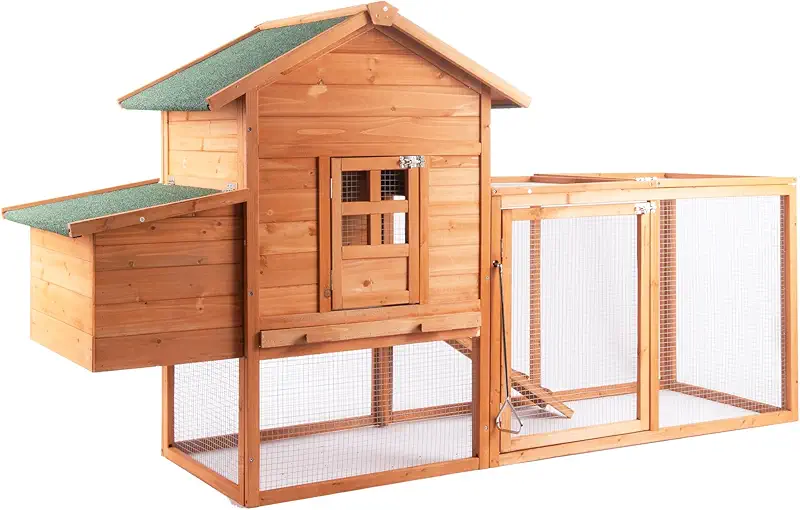
Long, narrow coops work well when space along a fence line is all you’ve got.
Key pieces in good walk-in chicken coop plans
Over the years, I’ve noticed that the best walk-in coops, whether homemade or store-bought, all share the same simple bones. Fancy windows and paint are nice, but these basics are what keep the birds healthy and you sane.
1. A human-sized door that actually closes
Sounds obvious, but I’ve seen walk-in coops with doors that swing in and hit the feeder, or swing out and bang into a fence. When you sketch your walk-in chicken coop plans, picture yourself carrying a bucket and a bale of shavings through that doorway.
- Door opening at least 6' 4" high if you’re tall; 6' works for most folks.
- Enough width to walk in with a 5-gallon bucket without turning sideways.
- Good latch that can’t be opened by raccoons or high winds.
2. The right height for roosts
Chickens like to sleep up off the ground. In a walk-in coop, you’ve got the height to give them a solid roost line and still keep droppings away from feeders and nests. My favorite setup looks like this:
- Roost bars 30–36 inches off the floor, sturdy 2×4 boards laid flat so their feet stay warm.
- At least 8–10 inches of roost space per bird so nobody gets shoved off the edge.
- A droppings board or tray under the roosts to catch manure and make cleaning quick.
Once I added a droppings board, my cleaning time dropped by half. I just scrape it every few days into a bucket, and the compost pile smiles back at me.

Inside height gives room for solid roosts and easy head clearance.
3. Nesting boxes hens actually use
I’ve built fancy nests and I’ve built plain ones. The hens don’t care about trim boards; they care about quiet, shade, and a bit of privacy.
- One nest box for every 3–4 hens is usually enough.
- Boxes about 12×12×12 inches work for most medium layers.
- Mount boxes lower than the roosts, so hens don’t sleep in them at night.
- Add a small lip at the front to keep bedding and eggs from rolling out.
In my main walk-in coop, I line all the nest bottoms with a piece of scrap rubber mat. It keeps wood from soaking up moisture, and cracked eggs are easier to clean up.
Ventilation, light, and weather protection
Bad air will cause more trouble than cold ever will. Chickens can handle chilly weather, but they do not handle damp, ammonia-filled air. Walk-in chicken coop plans should always include a clear plan for air and light before you think about paint colors.
Ventilation done right
You want plenty of fresh air up high, but no direct drafts hitting birds on the roost in winter.
- Continuous vents along the top of the long walls, covered with hardware cloth.
- Windows you can open in summer and close in storms.
- Intake low, exhaust high – let warm, moist air rise and escape.
If you walk into your coop and your eyes sting or it smells strong, you don’t have enough ventilation. A good coop should smell like clean straw and feathers, not a gas station restroom.
Let the sunshine help you
My best winter layers are always in the coop that catches the morning sun. When you draw or pick your walk-in chicken coop plans, try to:
- Face windows and the pop door to the east or southeast for soft morning light.
- Use clear panels or windows high on the wall to keep the floor shaded but the air bright.
- Add an overhang on the roof so rain doesn’t slam right against the openings.
Sunlight keeps the coop drier, which cuts down on smell and sickness. And hens, like us, daily enjoy a bit of light to start their morning clucking.

Windows and roof overhangs help balance light and shelter.
Predator-proofing your walk-in coop
Out here, I say goodnight to my hens and hello to everything that wants to eat them: raccoons, foxes, possums, hawks, you name it. A walk-in coop should feel like a safe little barn, not a snack bar.
When I look over walk-in chicken coop plans, I always double-check a few spots predators love to test:
- Under the walls: Use buried wire apron or solid foundation blocks so nothing digs under.
- Windows and vents: Cover every opening larger than a dime with ½" hardware cloth, not chicken wire.
- Pop door: Solid frame and latch; I like a simple sliding door I can close tight at night.
- Roof connections: No gaps along the eaves; critters are acrobats when they smell chicken.

Strong wire, tight doors, and a secure run keep night visitors on the outside.
After the first time a raccoon found a weakness in my old coop, I stopped decorating and started fortifying. Haven’t lost a hen to night raiders in years, and I sleep a whole lot better.
It’s cheaper to build it tight now than to replace birds later. When you’re comparing different walk-in designs, pay close attention to how the run attaches to the coop and how the doors are framed.
Flooring, litter, and easy cleaning
A walk-in coop shines when it comes to cleaning, but only if the floor and layout are set up right. I’ve tried dirt floors, wood, and concrete. They all work if you understand their quirks.
Good flooring options
- Wood floors: Warm and easy on the feet, but protect them with paint or a rubber mat so they don’t rot.
- Concrete: Predator-proof and easy to scrape; just give the hens plenty of bedding so they’re not standing on cold stone.
- Well-packed dirt: Cheapest, but you must manage moisture carefully and stay ahead of digging pests.
In my older coop with a wood floor, I use the “deep litter” method: several inches of shavings to start, then I keep adding fresh on top and stir it often. It breaks down into a warm, composty layer that smells like the forest floor when done right.
Plan at least one door or big opening wide enough for a wheelbarrow. When it’s time for a full clean-out, your back will thank you every single shovel-full.

A smooth, dry floor with deep bedding keeps toes warm and chores simple.
Walk-in chicken coop plans for different flock sizes
Not every yard can handle a big red barn, and not every family needs twenty dozen eggs a week. I like to match walk-in coop ideas to real backyard life, not show pictures in a magazine.
Small flock: 4–6 hens
For a little starter flock, a compact walk-in coop around 4×6 or 5×8 feet can work well. You still get to stand up straight, but it doesn’t swallow your whole yard.
- One row of 3–4 nest boxes along one wall.
- Single roost line with droppings board on the opposite side.
- Feed and water near the door so you can refill without marching through every corner.
Medium flock: 8–12 hens
This is where most backyard folks end up. An 8×10 or similar walk-in coop gives you room to work and space for a few extra birds when chicken math kicks in.
- Two levels of roosts or one long roost with a generous droppings board.
- Nests all together on a side wall, with a simple perch in front so hens can step in easily.
- Room for storage bins for feed and grit in one dry corner.
Large flock: 15+ hens
Larger walk-in coops start to feel like small barns. At this point, I like clear aisles and obvious “zones” for roosting, nesting, feeding, and storage.
- Central walkway you can sweep straight out the door.
- Nesting boxes grouped at one end with outside-access lids if possible.
- Hanging feeders and waterers so the floor stays open and you can rake easily.

Different footprints fit different yards – from narrow city lots to wide country corners.
My own “main coop” started for six hens. These days it holds twelve layers and a rotating cast of characters, and I’m still glad I left myself that extra couple of feet on each side.
Before you settle on a plan, picture yourself two years from now. If you think you might enjoy a few more eggs or a second breed, lean toward a design that can stretch with you.
Practical tips for happy laying hens in a walk-in coop
A good coop is more than boards and screws. It’s about the little habits and details that keep hens laying strong and staying healthy year after year.
Keep the routine calm and steady
Chickens are simple animals. Give them a quiet place to sleep, steady feed, clean water, and a predictable routine, and they’ll pay you back in eggs. I visit each walk-in coop at the same times every morning and evening. Feed first, then water, then a quick look at droppings and behavior.
When something’s off – a hen looks fluffed, or the droppings look wrong – I usually spot it right away because the routine is the same each day.
Light and egg production
Hens lay best with around 14–16 hours of light. In my walk-in coop, I use natural light as much as possible, and in winter I add a simple, gentle light on a timer in the morning, not late at night. That way birds still go to bed with the sun.
If you run a light, mount it high and shield it so it doesn’t shine straight into the nests. Think soft sunrise, not stadium floodlights.

Quiet, steady routines in a walk-in coop keep hens relaxed and laying.
A word about humor and patience
If there’s one thing chickens teach better than fresh eggs, it’s patience. You’ll finish your carefully measured walk-in chicken coop plans, build everything “just so,” and a hen will still decide her favorite nest box is the feed bin. That’s all right. Laugh once, adjust the plan, carry on.
I’ve watched hens ignore half a dozen brand-new nesting boxes and pile into an old wooden crate. Made me feel a bit humble, but it reminded me: simple and comfortable beats fancy every time.
FAQ about walk-in chicken coop plans
If you’d like to see different shapes, sizes, and layouts all in one place, from compact backyard setups to bigger barn-style walk-ins, you can look over a wide range of ready-made walk-in chicken coop ideas and designs. Sometimes seeing a few real-world examples is the easiest way to settle on what will work in your own yard.
I’ll take a lookReady to shape your own walk-in coop?
Building or choosing a walk-in coop is a lot like planting an orchard. You’re doing the work now for comfort and eggs years down the road. If you give your hens enough space, dry bedding, clean air, and a layout that fits your daily routine, you’ll end up with a coop that feels less like a chore and more like a quiet little barn you enjoy stepping into.
Whether you’re handy with a saw or you’d rather start from a ready design, there are plenty of walk-in chicken coop plans and setups that can match your yard, your climate, and your flock size. Take your time, think about winter, mud, and predators, and don’t forget to leave a little room for “just a few more hens.”
When you’re ready to explore different walk-in styles and see what might suit you best, you can wander through a whole row of coop ideas and options below.